
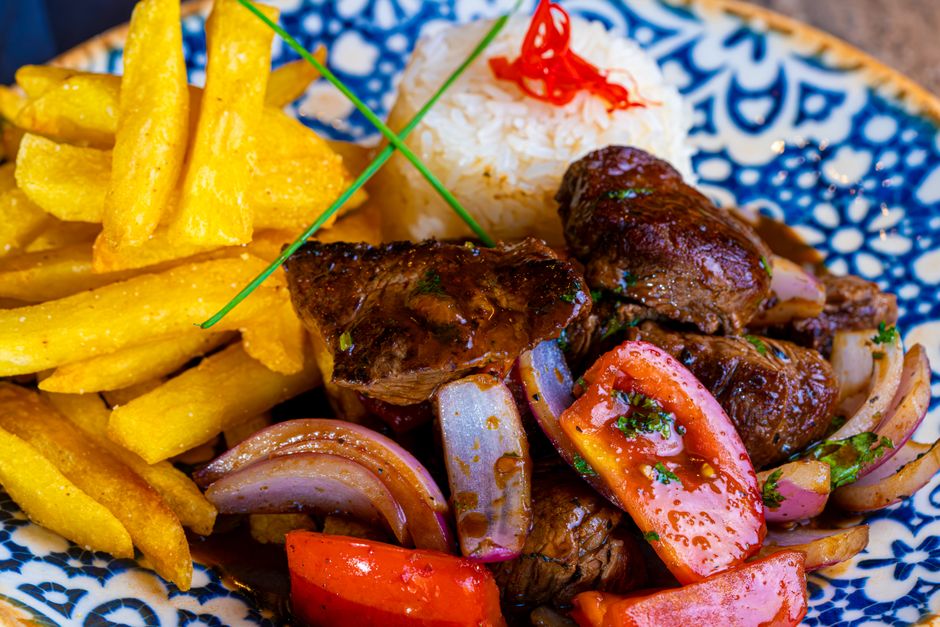
Lomo Saltado is a popular Peruvian stir-fry that combines marinated beef, onions, tomatoes, french fries, and rice. It offers a solid amount of protein from the beef, a significant carbohydrate load from the potatoes and rice, and sodium that can vary widely depending on how it is prepared. Whether it is healthy depends on portion size, cooking methods, and how often you eat it.
What Is Lomo Saltado Made Of?
Lomo Saltado starts with strips of beef sirloin or tenderloin. The beef is marinated in soy sauce, vinegar, garlic, and cumin. It is stir-fried quickly with red onions, tomatoes, and sometimes ají amarillo (a Peruvian yellow chili). The dish is served over white rice and topped with crispy french fries. Cilantro is often added at the end.
This combination creates a meal with all three macronutrients: protein from the beef, carbohydrates from the fries and rice, and fat from the cooking oil and beef. The soy sauce and other seasonings add sodium. The overall nutrient profile depends heavily on the proportions of each ingredient and how much oil is used for frying.
How Much Protein Does Lomo Saltado Provide?
Beef is the primary protein source in Lomo Saltado. A typical serving uses about 4 to 6 ounces of beef. That amount provides roughly 25 to 35 grams of protein. The exact number depends on the cut and how much fat is trimmed. Sirloin is a leaner choice, while tenderloin adds more fat.
This protein content makes Lomo Saltado a satisfying meal for muscle repair and satiety. Most adults need about 0.8 grams of protein per kilogram of body weight per day. A single serving of Lomo Saltado can cover a significant portion of that need, especially for smaller individuals. For active people or those trying to build muscle, the protein content is a clear benefit.
How Do the Carbohydrates in Lomo Saltado Compare?
Lomo Saltado typically contains two sources of carbohydrates: french fries and white rice. A standard serving might include 1 cup of rice and 1 cup of fries. That adds up to roughly 80 to 100 grams of total carbohydrates. Most of these are simple starches that digest quickly and raise blood sugar.
For comparison, the Dietary Guidelines for Americans recommend that carbohydrates make up 45 to 65 percent of total daily calories. On a 2,000-calorie diet, that is 225 to 325 grams per day. A single Lomo Saltado serving could provide about one-third of that upper limit. For someone managing diabetes or watching their blood sugar, this carb load requires attention. The lack of fiber in white rice and fries means the meal has a high glycemic impact. Choosing smaller portions or swapping some rice for vegetables can help.





Is Lomo Saltado High in Sodium?
Yes, Lomo Saltado can be high in sodium. The soy sauce and often additional salt in the marinade and fries contribute most of it. One tablespoon of soy sauce contains about 900 milligrams of sodium. A restaurant serving may use two or more tablespoons, plus salt in the fries. Total sodium for a typical plate can easily exceed 1,500 to 2,000 milligrams.
The American Heart Association recommends limiting sodium to 2,300 milligrams per day, with an ideal limit of 1,500 milligrams for most adults. A single Lomo Saltado serving could get close to or exceed that daily limit. This is a concern for people with high blood pressure, kidney disease, or heart conditions. Choosing low-sodium soy sauce and controlling added salt can bring the sodium down significantly, though restaurant versions are harder to modify.
Is Lomo Saltado Healthy Protein Carbs Sodium?
The answer depends on your individual health goals and how the dish is prepared. The protein is a clear strength, offering high-quality beef that supports muscle maintenance and fullness. The carbohydrate content is moderate to high, which can be a problem for people with blood sugar concerns but is also a source of energy for active individuals. The sodium is the main drawback, especially in restaurant versions where soy sauce and salt are used generously.
Overall, Lomo Saltado is not inherently unhealthy. It is a balanced meal that provides protein, carbs, and fat. The healthiest version uses lean beef, less oil, baked or air-fried potatoes instead of deep-fried fries, a smaller portion of rice, and low-sodium soy sauce. If you order it out, ask for sauce on the side and limit the rice and fries. Eaten occasionally and in reasonable portions, Lomo Saltado fits into a balanced diet. Eaten frequently and in large servings, the carbs and sodium can add up quickly.
How Can You Make Lomo Saltado Healthier?
Several small changes can improve the nutritional profile without losing the flavor. Use a lean cut of beef like sirloin and trim visible fat. Swap white rice for brown rice or quinoa to add fiber and slow digestion. Replace french fries with baked sweet potato wedges or a side salad. Use reduced-sodium soy sauce and cut the amount in half. Add extra onions, tomatoes, and maybe bell peppers or zucchini to increase vegetable volume.
Another important step is controlling oil. Traditional recipes may pan-fry the potatoes in several tablespoons of oil. Baking or air-frying the potatoes cuts the fat and calories significantly. Cooking the beef and vegetables in a nonstick pan with minimal oil also helps. These adjustments can cut the calorie count by several hundred while keeping the dish satisfying.
Are There Healthier Alternatives to Traditional Lomo Saltado?
If you want the same flavors with a different nutritional profile, consider a deconstructed version. Serve the beef and vegetables over a bed of greens or cauliflower rice. Skip the white rice and heavy fries entirely. The soy sauce and spices still provide the signature taste, but without the high carb and sodium load.
Some people also make a chicken or tofu version for less saturated fat. Chicken breast or firm tofu can replace beef with a similar protein content but less saturated fat. The cooking method remains the same. These alternatives may be more suitable for people with specific dietary restrictions, such as low-sodium or low-carb needs, while still enjoying the dish.
Frequently Asked Questions
Is Lomo Saltado good for weight loss?
It can be, if you control portions and preparation. A typical restaurant serving is high in calories from rice, fries, and oil, but a homemade version with less starch and lean beef can fit into a weight loss plan.
Is Lomo Saltado keto-friendly?
No, not in its traditional form. The rice and french fries make it very high in carbohydrates, which exceed the limits of a ketogenic diet. You can make a keto version by replacing rice and fries with low-carb vegetables.
Is Lomo Saltado gluten-free?
It depends on the soy sauce. Traditional soy sauce contains wheat, so it is not gluten-free. Using tamari or a certified gluten-free soy sauce makes the dish gluten-free, provided no other gluten-containing ingredients are added.
How many calories are in Lomo Saltado?
A typical restaurant serving can range from 800 to 1,200 calories. Homemade versions with smaller portions and less oil can be 500 to 700 calories. The exact number depends on the amounts of rice, fries, beef, and oil used.
