
Locust bean gum is a plant-based thickener used in ice cream, cream cheese, infant formula, and dozens of other foods. For most people, it is not bad for you. It is a fiber that passes through the gut largely undigested, and food regulators in the US and Europe consider it safe at the amounts used in food.
The honest answer has two parts. As a food additive, locust bean gum has a long safety record. As a concentrated supplement or a large daily dose, the evidence is much thinner, and digestive side effects become more likely. Those are very different situations, and most online warnings blur them together.
What Is Locust Bean Gum?
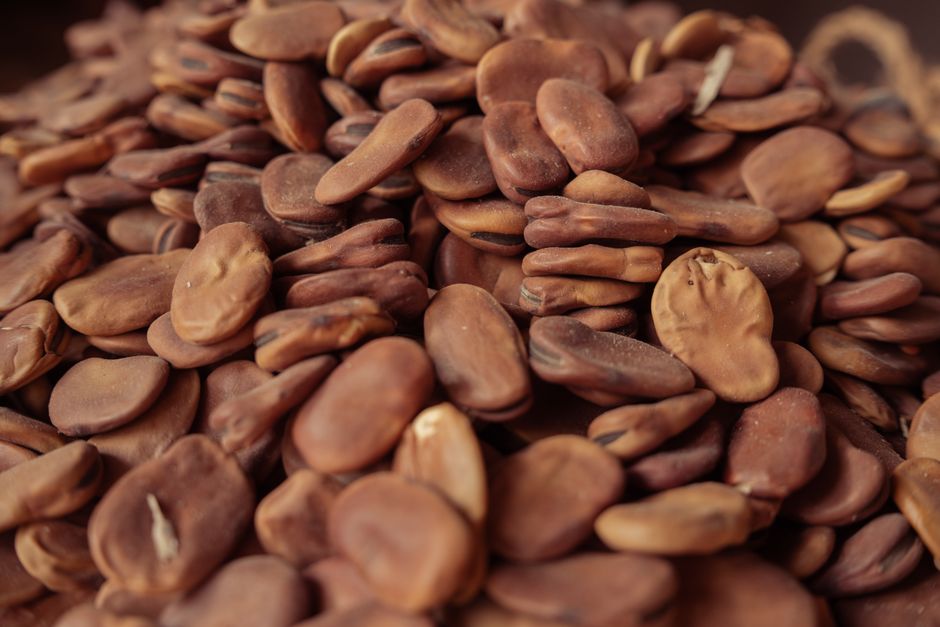
Locust bean gum comes from the seeds of the carob tree, an evergreen that grows around the Mediterranean. The seeds are split, the inner kernel is ground, and the result is a fine powder called locust bean gum or carob bean gum. It has been used as a food thickener for decades.
The powder is a galactomannan — a long chain of sugar molecules that human digestive enzymes cannot break down. That makes it a soluble fiber. When it meets liquid, it swells and forms a gel, which is exactly why food makers want it.
You will find it on labels as locust bean gum, carob bean gum, or E410. It appears in ice cream, yogurt, cream cheese, salad dressings, sauces, and some plant-based milks. Infant formula often contains it as a thickener for babies who spit up frequently.
Is Locust Bean Gum Bad For You in Food?
No. Food regulators in the United States and the European Union have reviewed locust bean gum and concluded it is safe for use in food. In the US, it holds GRAS status — Generally Recognized As Safe — a designation based on a long history of use and scientific review.
That safety assessment applies to the small amounts used in processed foods. A typical serving of ice cream might contain a fraction of a gram. This is not a substance you are likely to consume in large quantities through normal eating.
One point that gets lost in online discussions: locust bean gum is a fiber, and fiber is generally something most Americans do not get enough of. That does not make locust bean gum a health food. It simply means the additive itself is not the villain some articles suggest.
Does Locust Bean Gum Cause Digestive Problems?
It can, in some people, at higher intakes. Because locust bean gum is a fiber that ferments in the colon, eating a lot of it can cause gas, bloating, and loose stools. This is the same effect you would get from suddenly eating more beans, oats, or psyllium.
Here is where dose matters enormously. The amount in a single food product is small. The amount in a fiber supplement or a thickener used in large quantities is much bigger. Most reported digestive complaints come from concentrated sources, not from a scoop of ice cream.
If you have irritable bowel syndrome or another condition where you are sensitive to fermentable fibers, you may notice symptoms from foods containing locust bean gum. That is an individual sensitivity, not evidence that the additive is harmful to the general population.
Some people also report allergic reactions to carob. Carob is in the legume family, so people with certain legume allergies could in theory react. Documented cases of true allergy to locust bean gum are rare, but they exist in the medical literature.




Is Locust Bean Gum Safe in Infant Formula?
This is the area where parents ask the most questions, and where the answer needs the most care. Some infant formulas use locust bean gum as a thickening agent, mainly for babies who spit up often. Regulators have approved it for this use.
That said, thickened formulas are not right for every baby. They are typically recommended by a pediatrician for specific feeding problems. They are not appropriate for premature infants or for babies with certain medical conditions, and they should never be used without medical guidance.
If you are considering a thickened formula, talk to your baby’s doctor first. Feeding decisions for infants carry real consequences, and no article — including this one — can replace that conversation.
What About Locust Bean Gum Supplements?
Locust bean gum is sold as a standalone fiber supplement and as an ingredient in weight-loss and digestive products. The evidence for these uses is limited. No large human trials have confirmed that locust bean gum supplements produce meaningful weight loss or other health benefits.
Some small studies have looked at locust bean gum and blood sugar or cholesterol, but the results are not strong enough to support a recommendation. Marketing claims about appetite control or detox are not backed by solid clinical evidence.
If you want more fiber, food sources like oats, beans, lentils, and vegetables have far more evidence behind them than any single fiber supplement. A supplement is not automatically better because it comes in a capsule.
How Does Locust Bean Gum Compare to Other Thickeners?
Locust bean gum is one of several gums used in food. They behave differently, and that matters for people trying to avoid specific ingredients.
- Guar gum — from guar beans, thickens cold liquids well, similar digestive effects
- Xanthan gum — made by bacterial fermentation, common in gluten-free baking
- Cellulose gum — derived from plant fiber, used for texture and stability
- Carrageenan — from seaweed, more debated in the research literature
All of these are approved food additives. None has been shown to cause harm in the general population at typical food amounts. If you react to one, you may react to others, because the issue is usually the fiber load rather than the specific source.
Is Locust Bean Gum Bad For You? The Bottom Line
For the average person eating normal amounts of processed food, locust bean gum is not a health concern. It is a fiber that regulators have reviewed and approved. The fear-driven headlines about it do not match the evidence.
The real considerations are narrower. Large doses from supplements can cause digestive upset. People with IBS or legume allergies may need to watch their intake. Parents using thickened infant formula should do so only under medical guidance.
If a product’s label worries you, read the whole ingredient list rather than fixating on one item. The sugar, sodium, and saturated fat in a food usually matter far more to your health than the thickener keeping it smooth.
Frequently Asked Questions
Is locust bean gum safe to eat every day?
Yes, at the amounts found in food, it is considered safe for daily consumption by US and EU regulators. Problems are more likely with concentrated supplement doses than with normal food use.
Does locust bean gum cause gas or bloating?
It can, because it is a fermentable fiber that gut bacteria break down. Symptoms are usually tied to larger intakes rather than the small amounts in most foods.
Is locust bean gum the same as carob?
It comes from the carob tree, but it is not the same as carob powder or carob chips. Locust bean gum is made only from the ground seed kernel and is used as a thickener.
Can babies have locust bean gum?
Some infant formulas contain it as a thickener, and regulators have approved that use. Thickened formula should only be given under a pediatrician’s guidance.
