
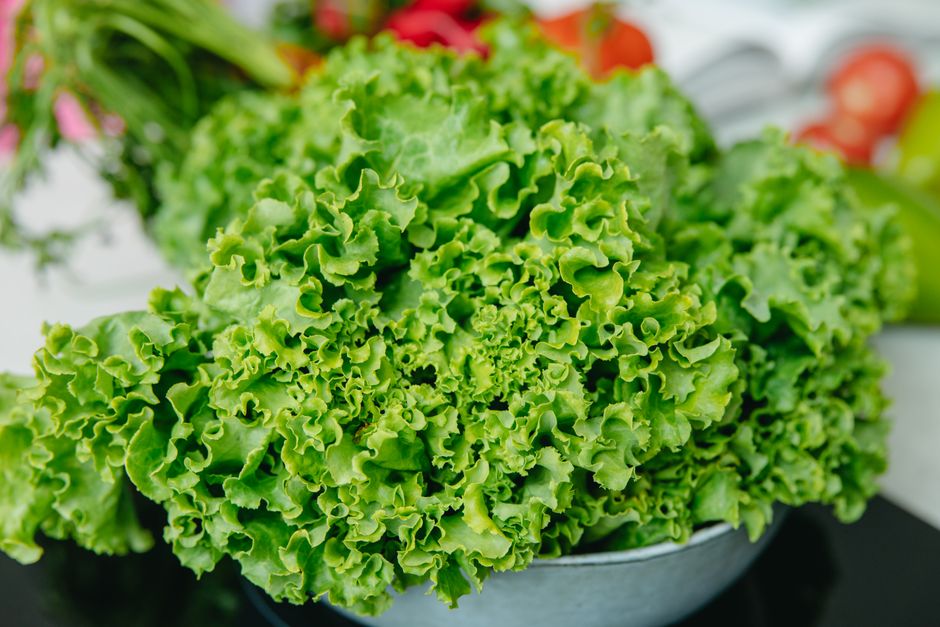
Yes, lettuce is a vegetable. More precisely, it is the edible leaf of a plant in the daisy family, and it belongs to a group of vegetables we call leafy greens. That answer is simple. The more interesting question is why so many people pause before answering it.
Part of the confusion comes from how we use the word “vegetable” in everyday speech versus how scientists use it. A botanist and a chef do not always mean the same thing. There is also the old iceberg-versus-kale debate about whether some lettuces are “just water.” Both of those threads are worth pulling on, because they explain a lot about how lettuce fits into a healthy diet.
Is Lettuce A Vegetable Or A Leafy Green?
It is both. “Vegetable” is the broad category, and “leafy green” is a subcategory within it.
Nutritionists and dietitians generally group vegetables by the part of the plant you eat. Lettuce is a leaf vegetable, the same broad group as spinach, kale, arugula, and chard. Other vegetables come from roots (carrots), stems (celery), flowers (broccoli), or the fruit of the plant (tomatoes, cucumbers, peppers).
One clarification worth making: lettuce is not a “fruit vegetable” the way a tomato is. Botanically, a fruit develops from the flower of a plant and contains seeds. Lettuce leaves do not. So there is no botanical argument that lettuce is secretly a fruit. It is a leaf, and leaves are vegetables.
Why Do People Question Whether Lettuce Counts?
The doubt usually comes from one of two places: the iceberg lettuce reputation, or confusion about how “vegetable” is defined.
Iceberg lettuce is about 95% water by weight, which is high even for a vegetable. That fact gets repeated in a way that makes iceberg sound like it has no nutritional value at all. That is not accurate. Iceberg does contain fiber, some vitamin K, and small amounts of other nutrients. It is simply less nutrient-dense than darker greens. Water content and nutritional value are two different things.
The second source of confusion is that “vegetable” is a culinary and cultural term, not a strict scientific one. Botanists classify plants by their structure and reproduction. Cooks and nutritionists classify them by how we use them in meals. Those systems overlap but do not match perfectly. The tomato is the classic example: botanically a fruit, culinarily a vegetable. Lettuce happens to be a vegetable under both systems, so there is no real dispute there.
Is Lettuce Nutritious Or Mostly Water?
Lettuce is nutritious, but the amount depends heavily on the variety.
Darker, more intensely colored lettuces tend to carry more nutrients than pale ones. Romaine, red leaf, and green leaf lettuces generally provide more vitamin A (as beta-carotene), vitamin K, and folate than iceberg. Iceberg is not empty, but it is the lightest of the common lettuces.
Across all types, lettuce is low in calories. A cup of shredded lettuce typically provides well under 20 calories, which makes it a useful way to add volume and fiber to a meal without adding much energy. The fiber and water content also contribute to a feeling of fullness, though lettuce alone is not a filling food.
What lettuce does not provide much of is protein and fat. It is not a meaningful protein source. Treating it as a complete food would be a mistake. As part of a mixed meal, though, it does real work.





How Does Lettuce Compare To Other Leafy Greens?
Lettuce sits at the lighter end of the leafy green spectrum. Kale, spinach, and collard greens generally deliver more nutrients per cup than most lettuces.
The table below gives a general sense of how common greens compare. Values vary by variety, growing conditions, and how the greens are prepared, so these are approximate relationships rather than fixed numbers.
| Green | Water content | Nutrient density | Typical use |
|---|---|---|---|
| Iceberg lettuce | Very high (~95%) | Lowest of the group | Salads, sandwiches, wraps |
| Romaine lettuce | High | Moderate | Salads, Caesar salads |
| Leaf lettuce (red/green) | High | Moderate | Mixed salads |
| Spinach | High | High | Salads, cooking |
| Kale | Moderate | High | Salads, cooking, smoothies |
A practical takeaway: if you eat salad regularly, mixing lettuces with darker greens gets you more nutrients without giving up the crisp texture lettuce provides. There is no need to abandon iceberg. It just should not be the only green you eat.
Does It Matter How You Prepare Lettuce?
How you serve lettuce affects both what you get from it and how safe it is to eat.
Raw lettuce keeps its heat-sensitive nutrients intact. Cooking lettuce, which is common in some cuisines, wilts it and reduces some vitamins, particularly vitamin C. That does not make cooked lettuce worthless, but raw is generally the more nutritious option.
The bigger issue is food safety. Lettuce has been linked to a number of foodborne illness outbreaks, largely because it is often eaten raw and can be contaminated in the field or during processing. Washing leafy greens under running water helps remove dirt and some surface contamination, but it does not remove all bacteria. If a recall is issued for a specific lettuce product, following it matters.
People with weakened immune systems, young children, older adults, and pregnant women face higher risk from foodborne illness. For those groups, paying attention to recalls and choosing cooked greens when there is an active outbreak is a reasonable precaution.
Is Lettuce A Vegetable In Every Sense Of The Word?
Yes, across every framework that matters to most people.
In nutrition, it is a vegetable. In cooking, it is a vegetable. In botany, it is a leaf vegetable. There is no respected definition under which lettuce stops being a vegetable.
The confusion tends to come from the word “vegetable” being used loosely in everyday talk, and from iceberg lettuce’s reputation as nutritionally thin. Neither of those changes what lettuce actually is. It is a low-calorie, hydrating, fiber-containing leaf vegetable that ranges from modest to solid in nutrient content depending on the type.
If you are building a plate, lettuce earns its place. It is not a nutritional powerhouse on its own, and it is not a replacement for darker greens. But it is a genuine vegetable, and treating it as one is accurate.
Frequently Asked Questions
Is lettuce a vegetable or a fruit?
Lettuce is a vegetable, specifically a leaf vegetable. Botanically, a fruit develops from a flower and contains seeds, which lettuce leaves do not.
Is iceberg lettuce a real vegetable?
Yes, iceberg lettuce is a genuine vegetable, though it is less nutrient-dense than darker greens. It is roughly 95% water by weight and still provides fiber and small amounts of vitamins.
Is lettuce as healthy as kale or spinach?
Generally no. Kale and spinach tend to provide more nutrients per cup than most lettuces, especially iceberg. Lettuce is still nutritious, just lighter.
Can you count lettuce toward your daily vegetables?
Yes, lettuce counts toward vegetable intake. Because it is low in calories and lighter in nutrients, it works best alongside other vegetables rather than as your only source.
