
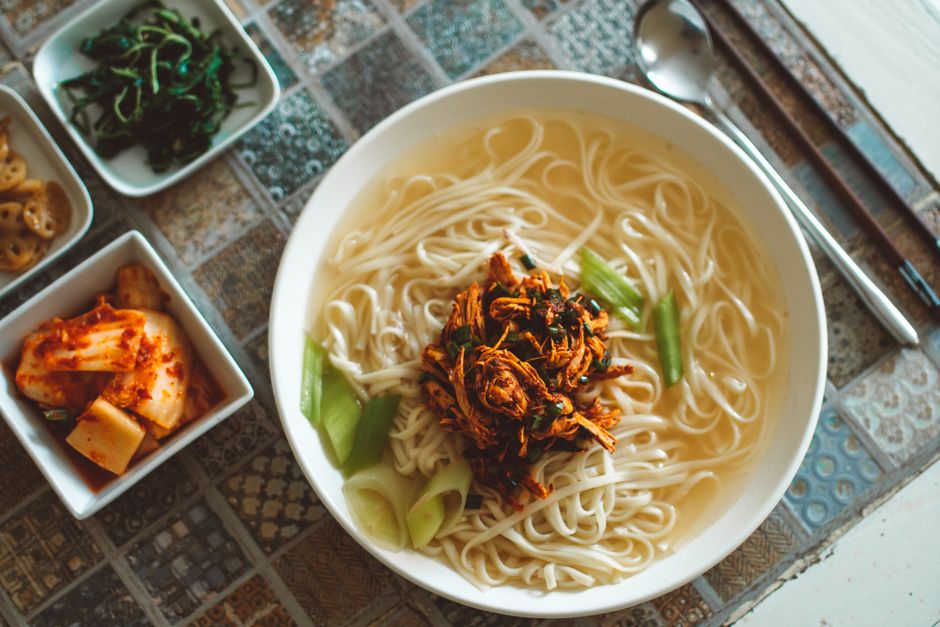
Korean food is not all spicy. Some of its most common dishes are completely mild, and even the spicy ones vary widely in heat. The idea that Korean cooking equals fire is a stereotype built on a handful of famous dishes, not the full picture of what people actually eat every day.
Gochujang (fermented red chili paste) and gochugaru (red chili flakes) give many Korean dishes their heat. But a large share of the cuisine is built on soy sauce, sesame oil, garlic, and fermented beans — ingredients that add deep savory flavor with no burn at all.
So the honest answer to “Is Korean food spicy?” is: sometimes, and often less than you expect. This guide breaks down which dishes are mild, which are hot, and how to order if you want to avoid chili entirely.
Why Do People Think All Korean Food Is Spicy?
Because the dishes that traveled abroad first were the spicy ones. Korean barbecue, kimchi, and fiery stews like tteokbokki got the most attention in Western restaurants and food media. That shaped the reputation.
Inside Korea, the everyday plate looks different. A typical home meal is built around rice, soup, and several small side dishes called banchan. Some banchan are spicy. Many are not. Steamed spinach, seasoned bean sprouts, egg dishes, and braised potatoes show up constantly and contain no chili.
The other reason is that Korean cuisine does use a lot of chili — just not everywhere. Gochugaru has a smoky, slightly sweet character that is milder than many people expect from a “hot” cuisine. It is not the same as biting into a raw jalapeño or a habanero. The heat is often rounded out by sugar, soy sauce, or fermented paste, which softens the burn.
Restaurant cooking also exaggerates the heat. Dishes made for export tend to be spicier and bolder than the versions served at a Korean family table. What you taste in a restaurant is not always what a Korean home cook makes.
Which Korean Dishes Are Mild?
A long list of Korean dishes contain no chili at all. If you avoid spice, these are safe starting points.
- Bulgogi — marinated grilled beef. The marinade is soy sauce, sugar, sesame oil, garlic, and pear. No heat.
- Japchae — glass noodles with vegetables and sometimes beef, dressed in soy sauce and sesame oil.
- Gyeranjjim — a steamed egg dish, soft and savory, with no chili.
- Samgyetang — a whole chicken soup with ginseng and rice. Mild and clean-tasting.
- Seolleongtang — a milky beef bone soup. Rich but not spicy.
- Bibimbap — a mixed rice bowl. The base is mild; the gochujang sauce comes on the side or can be left off.
- Kimbap — rice and fillings rolled in seaweed. Usually mild, similar to a sushi roll.
- Tteokguk — a rice cake soup in clear broth, traditionally eaten on New Year’s Day.
- Mandu — Korean dumplings, steamed or pan-fried, typically mild.
Notice how many of these are soups, rice dishes, and grilled meats. That reflects how a real Korean meal is structured: one spicy element often sits alongside several mild ones.
Which Korean Dishes Are Actually Spicy?
The spicy reputation comes from a specific group of dishes. These are the ones to watch if you have a low tolerance.
- Kimchi — fermented cabbage with gochugaru. Heat level ranges from mild to quite hot depending on the recipe and how long it has fermented.
- Tteokbokki — chewy rice cakes in a sweet-spicy gochujang sauce. Often genuinely hot.
- Jjigae — stews like kimchi jjigae and soft tofu stew, usually made with chili and often served bubbling hot.
- Buldak — “fire chicken,” one of the spiciest common Korean dishes.
- Nakji bokkeum — stir-fried octopus in a chili sauce, frequently very spicy.
- Ramyeon — Korean instant noodles. Heat varies a lot by brand, but many are spicy by design.
Even within this group, heat is not fixed. The same dish can be mild at one restaurant and intense at another. Kimchi made with more sugar and less chili can taste almost sweet. Tteokbokki sauce can be dialed up or down. Spice in Korean cooking is a dial, not a switch.




How Spicy Is Gochujang Compared to Other Chili Sauces?
Gochujang is usually milder than most people assume. It is a fermented paste, and fermentation adds sweetness and depth that balance the chili. The heat tends to be gentle and slow rather than sharp.
Gochugaru, the flake form, is milder than many common chili powders. It carries more color and aroma than pure heat. This is part of why Korean food can look fiery red while tasting far less hot than the color suggests.
That gap between appearance and taste surprises a lot of first-timers. A bright red stew may be far milder than a small amount of a hotter chili would be. Color is not a reliable guide to heat in Korean cooking.
For comparison, Korean chili ingredients generally sit below the heat of Thai bird’s eye chilies, habaneros, or many Indian and Mexican chili varieties. They are not the hottest in the world — they are used in large amounts for flavor as much as burn.
How Can You Eat Korean Food If You Don’t Like Spice?
Ordering mild Korean food is easier than most people think. The cuisine gives you several built-in ways to control heat.
First, ask for sauces on the side. Bibimbap, for example, is served with gochujang that you mix in yourself. Leave it out and the dish is mild. Many restaurants will also make a stew less spicy on request.
Second, build your meal around the mild anchors. Rice, clear soups, grilled meats, and egg dishes form the base of countless Korean meals. Add one spicy side dish if you want, or skip it entirely.
Third, know that banchan are separate. The small side dishes arrive individually, so a spicy kimchi on the table does not make the rest of the meal hot. You can simply eat the mild ones.
Fourth, watch for hidden chili. Some dishes you might assume are mild, like certain noodles or marinades, can carry a little gochugaru for color. If you want zero heat, say so clearly — “no chili” is a request most Korean kitchens understand.
Is Korean Food Spicier Than Other Asian Cuisines?
No, not as a whole. Korean food sits in the middle of the range among Asian cuisines, and its spiciest dishes are milder than the hottest dishes of several other traditions.
Thai food includes curries and salads built on very hot chilies. Some regional Chinese cuisines, particularly from Sichuan and Hunan, use intense heat and numbing spice. Certain Indian, Malaysian, and Indonesian dishes can also run hotter than most Korean food.
What sets Korean cuisine apart is not peak heat. It is how often chili appears across the menu and how it is layered with fermentation, sweetness, and savory depth. The result is a cuisine that tastes bold without always being hot.
The confusion comes from conflating “flavorful” with “spicy.” Korean cooking is deeply seasoned — salty, sweet, sour, and savory all at once. Chili is one note among many, not the whole song.
Does Korean Food Have to Be Spicy?
No. Spice is a seasoning choice, not a requirement. Korean home cooking has always included mild dishes, and they are not an afterthought — they are central to the table.
Historically, chili peppers did not arrive in Korea until the 16th century or later, brought through trade with the Americas and Asia. Before that, Korean cooking relied on soy, salt, fermentation, and native ingredients. Gochugaru became widespread over time, but it never replaced the milder foundation of the cuisine.
That foundation is still there. Rice, soup, grilled protein, and vegetables remain the backbone. Chili is added to some dishes and left out of others. If you want to explore Korean food without the burn, the cuisine has more than enough to offer.
Frequently Asked Questions
Is all Korean food spicy?
No. Many common Korean dishes contain no chili at all, including bulgogi, japchae, steamed egg, and several clear soups. Spice appears in a well-known subset of dishes, not across the whole cuisine.
What is the mildest Korean dish to try first?
Bulgogi, japchae, and gyeranjjim (steamed egg) are all reliably mild and easy to find. Bibimbap is also a good choice if you leave the gochujang sauce on the side.
Is gochujang very spicy?
Gochujang is usually milder than people expect because fermentation adds sweetness that balances the chili. Its heat tends to be gentle and rounded rather than sharp.
Is kimchi always spicy?
Most kimchi contains gochugaru, but the heat varies widely by recipe and fermentation time. Some versions are quite mild, and white kimchi (baek-kimchi) is made without chili entirely.
