
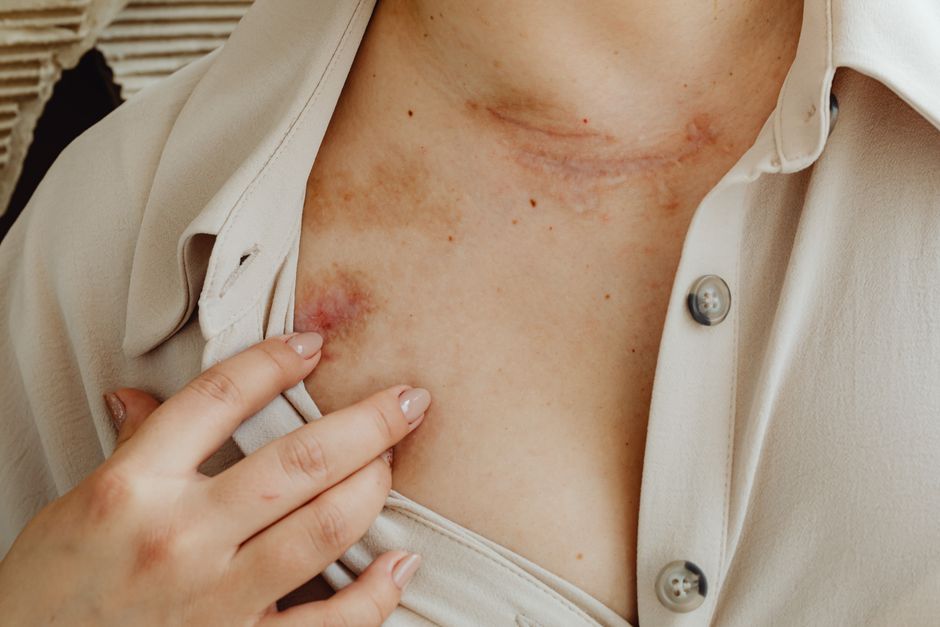
When people ask “Is it scarred or scared for a wound,” they are usually looking at a healing injury and wondering whether the tissue underneath is permanently damaged or simply still healing. The answer depends on which word you mean. A wound can leave a scar — a permanent change in the skin. A wound does not become “scared” — that word describes fear, and it is not a medical term for tissue. If you meant scarring, the honest answer is that some wounds scar and some do not, and several factors decide which.
Is It Scarred Or Scared For A Wound?
The word you want is almost always “scarred.” A scar is the body’s normal replacement tissue after an injury breaks through the deeper layers of skin. “Scared” is an emotion, not a wound state, so it does not describe tissue at all.
The confusion is easy to understand. The two words sound nearly identical in speech, and both get used loosely when people talk about an injury that “left a mark.” A cut, burn, or surgical incision can leave a scar. It cannot leave a person “scared” in any physical sense.
What actually happens is this. When a wound is shallow — only the top layer of skin — the tissue can often rebuild itself without a visible mark. When the injury reaches deeper, the body fills the gap with collagen instead of the original skin structure. That collagen patch is a scar. It looks and feels different from the skin around it because it is different.
So the plain-language answer is: a wound is not “scared.” It may or may not be scarred, and whether it scars depends on depth, location, healing conditions, and individual biology.
What Is A Scar And How Does It Form?
A scar is the fibrous tissue your body creates to close a wound that is too deep to heal by rebuilding normal skin. It is not a sign that healing failed. It is the repair itself.
The process runs in stages. First, the wound is closed with a clot. Then immune cells clear debris and fight infection. Next, cells called fibroblasts lay down collagen — a protein that gives skin its strength. In normal skin, collagen is arranged in a neat woven pattern. In a scar, it is laid down in a denser, more disorganized way. That difference in structure is why scars look shinier, paler, or firmer than the skin around them.
Over months to years, a scar often softens and fades somewhat. It rarely disappears completely. This is well established in wound-healing research and is not a matter of debate.
There are a few main types:
- Flat scars — most common, initially pink or red, then fading over time.
- Raised scars (hypertrophic) — stay within the original wound boundary and often improve over time.
- Keloids — grow beyond the original wound edge and can keep enlarging; more common in people with darker skin tones.
- Contractures — tightening scars, usually after burns, that can restrict movement if they cross a joint.
One detail that surprises many people: a scar has no hair follicles and no sweat glands. That is why scarred skin does not grow hair or sweat the way normal skin does. It is a structural fact, not a sign of poor healing.
Why Do Some Wounds Scar And Others Do Not?
Depth is the biggest factor. A scrape that only grazes the surface often heals without a lasting mark. A cut that goes through the full thickness of the skin almost always leaves some scar tissue.
Several other things shape the outcome:
- Location — skin over joints and the chest tends to scar more; the face often heals with less visible scarring.
- Infection — an infected wound heals more slowly and usually scars more.
- Wound care — keeping a wound clean and covered, and avoiding picking at scabs, supports better healing.
- Age — younger skin tends to form more pronounced scars.
- Genetics and skin tone — some people are simply more prone to raised scars and keloids.
- Tension on the wound — wounds under constant pulling heal with more scar tissue.
What you cannot do is control all of these. Genetics and skin tone are fixed. What you can influence is infection risk, wound care, and how much tension the area is under while it heals.
How Can You Tell If A Wound Will Scar?
You often cannot know for certain in the first days. But a few signs point toward scarring being more likely.
If the wound needed stitches, went through multiple layers of skin, or was caused by a burn, scarring is more probable. If it healed slowly or became infected, the odds rise. If it is in a spot that stretches with movement, the same applies.
What you can watch for during healing:
- Redness and firmness that persist well beyond the expected healing time
- A raised ridge forming along the wound line
- Growth beyond the original wound edges (this suggests a keloid)
- Tightness or pulling that limits movement
If any of these appear, a clinician can assess whether the scar needs treatment. Some scars respond to silicone sheets, pressure therapy, or steroid injections. Others are best left alone. The evidence for these treatments varies, and results differ from person to person.
Can Scars Be Prevented Or Faded?
You cannot reliably prevent a scar once the deeper skin is injured. You can sometimes make it less noticeable.
Good wound care matters most in the early days. Keep the wound clean, keep it covered as advised, and do not pick at it. Protect it from sun exposure once healed — ultraviolet light can make a scar darker and more visible, and this effect is well documented.
Silicone gel and silicone sheets have the most consistent support in clinical use for improving scar appearance. Pressure garments are commonly used after burns. Steroid injections are used for raised scars and keloids. Laser therapy is used in some cases. These approaches can help, but none erases a scar entirely, and responses vary.
Be cautious with products that promise to “remove” scars. No topical product currently removes a scar. Some may improve texture or color over time. That is a different claim from removal, and the two should not be confused.
When Should A Wound Be Checked By A Doctor?
Some wounds need medical attention, and waiting can make scarring worse or allow infection to spread.
Seek care if:
- The wound is deep, gaping, or will not stay closed
- Bleeding does not stop with steady pressure
- There is increasing redness, swelling, warmth, or pus
- You develop a fever
- The wound is on the face, hands, or over a joint
- It was caused by an animal bite or a dirty object
- You have diabetes, poor circulation, or a weakened immune system
These are general signs of concern, not a complete list. When in doubt, get it looked at. A clinician can clean the wound, close it if needed, and advise on aftercare.
Is It Scarred Or Scared — Understanding The Difference
To return to the original question: a wound is scarred, not scared. Scarring is a physical process. Fear is an emotional one, and the two words simply happen to sound alike.
Whether a specific wound scars depends on how deep it went, where it is, how it healed, and your own biology. Some wounds leave no lasting mark. Others leave a scar that fades over time but does not fully vanish. Both are normal outcomes of the body’s repair process.
If you are unsure whether a wound is healing well, that is a question for a clinician, not a search engine. A quick look can answer in seconds what no article can.
Frequently Asked Questions
Is it “scarred” or “scared” for a wound?
The correct word is “scarred.” “Scared” means afraid and does not describe a wound or tissue.
Does every wound leave a scar?
No. Shallow wounds that only affect the top layer of skin often heal without a visible scar, while deeper wounds usually leave some scar tissue.
Can a scar go away completely?
No. A scar can fade and soften over time, but the tissue does not fully return to normal skin.
What makes a wound more likely to scar?
Depth, infection, tension on the wound, and your genetics all play a role. Deeper wounds and infected wounds tend to scar more.
