
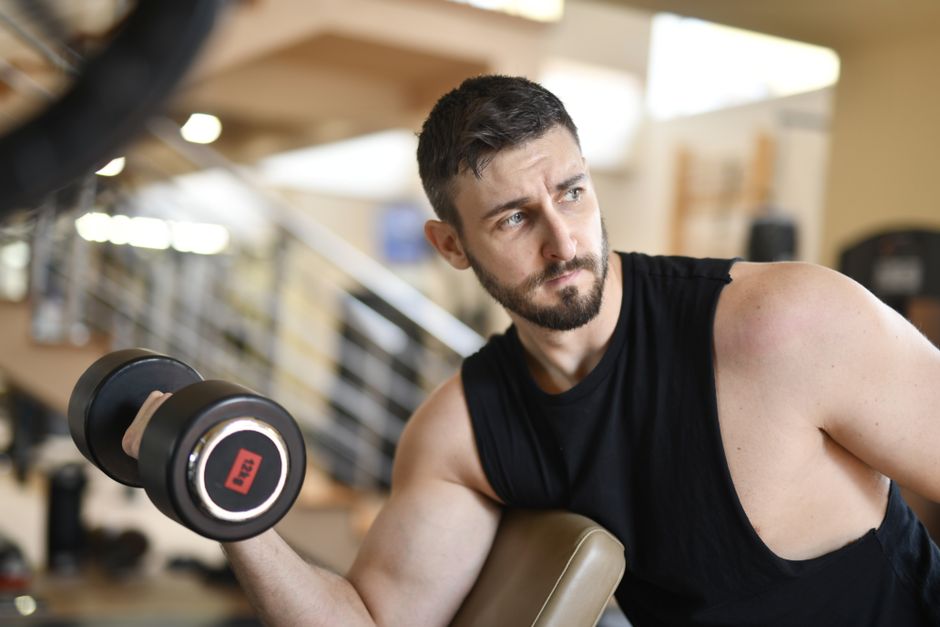
Yes, it is possible to gain muscle while losing fat, but the conditions are specific and the process is slower than doing either one alone. This is often called body recomposition, and it works best for beginners, people returning from a break, and those with more body fat to lose. For experienced lifters already at a low body fat percentage, building muscle and losing fat at the same time becomes much harder and less likely.
What Does Body Recomposition Actually Mean?
Body recomposition is the process of losing body fat while gaining lean muscle mass at the same time. Your weight on the scale might stay the same or change very little because you are losing fat and gaining denser muscle tissue. This is why tracking waist measurements or body fat percentage is more useful than watching the scale.
The body is not a simple calorie bank. Fat loss and muscle gain are driven by different hormonal and metabolic signals. Fat loss requires a calorie deficit. Muscle growth requires a calorie surplus, or at least enough energy and protein to build new tissue. The challenge is meeting both conditions at once.
Can You Build Muscle in a Calorie Deficit?
Yes, but the deficit must be small. A modest deficit of around 300 to 500 calories per day is the range where body recomposition is most realistic. A larger deficit makes muscle building very difficult because the body does not have enough energy to support both fat loss and muscle protein synthesis.
The body does not need a huge surplus to build muscle. It needs adequate protein, a training stimulus, and enough energy to recover. In a small deficit, the body can use stored body fat for energy while still using dietary protein to repair and build muscle tissue. This is the core mechanism behind body recomposition.
Who Can Realistically Achieve This?
Body recomposition is not equally possible for everyone. The people most likely to gain muscle while losing fat are:
- Beginners who are new to resistance training
- People returning to training after a long break
- Individuals with higher body fat levels, especially men over 20 percent and women over 30 percent
- People who have never done structured strength training before
For experienced lifters who have been training consistently for years, the body has already adapted. Their muscle growth potential in a deficit is very low. For lean individuals, the body is already efficient at using energy, so losing fat and gaining muscle simultaneously is rare. Training experience and starting body composition matter more than almost anything else.




How Much Protein Do You Need?
Protein is the most important nutrient for body recomposition. Research consistently shows that higher protein intakes help preserve muscle mass during fat loss. A common recommendation is 1.6 to 2.2 grams of protein per kilogram of body weight per day. For a person weighing 80 kilograms, that is roughly 130 to 175 grams of protein daily.
Protein does more than provide building blocks. It increases satiety, which helps you stick to a calorie deficit. It also has a higher thermic effect than carbohydrates or fat, meaning your body burns more calories digesting it. Spreading protein across three to five meals per day appears to support muscle protein synthesis better than eating it all at once.
What Kind of Training Supports Muscle Gain?
Resistance training is the primary stimulus for muscle growth. Without it, a calorie deficit will result in muscle loss along with fat loss. The training does not need to be complicated. Compound movements like squats, deadlifts, presses, and rows are effective because they recruit large muscle groups and allow progressive overload.
Progressive overload is the key principle. This means gradually increasing the weight, repetitions, or sets over time. If you lift the same weight for the same reps every week, your body has no reason to build more muscle. Training each muscle group two to three times per week is generally more effective than training once per week.
Cardio can support fat loss, but it should not replace resistance training. Excessive cardio can interfere with recovery and make it harder to build muscle. Moderate cardio, such as walking or cycling, can help create the calorie deficit needed for fat loss without compromising muscle growth.
How Long Does Body Recomposition Take?
Body recomposition is a slow process. You will not see dramatic changes in a few weeks. Visible changes in body composition typically take three to six months of consistent training and nutrition. Beginners may see measurable changes sooner because their bodies are highly responsive to new training stimuli.
The scale can be misleading during this period. Your weight may stay the same for weeks while your waistline shrinks and your strength increases. This is a positive sign that you are losing fat and gaining muscle. Taking progress photos and measuring waist circumference are better ways to track changes than relying on the scale alone.
What Are the Limits of Body Recomposition?
There is a ceiling to how much muscle you can build in a deficit. Even under ideal conditions, the rate of muscle gain during body recomposition is slower than during a dedicated bulking phase. For experienced lifters, the rate may be so slow that it is not worth the effort.
There is also a limit to how much fat you can lose while building muscle. The larger the calorie deficit, the harder it becomes to preserve muscle. Very low-calorie diets are not compatible with muscle gain. If your goal is to lose a significant amount of fat quickly, you may need to accept some muscle loss and plan a separate muscle-building phase afterward.
Is It Better to Bulk and Cut Separately?
Traditional bulking and cutting phases are still the most effective approach for experienced lifters. A bulk phase involves eating in a calorie surplus to maximize muscle gain, followed by a cut phase to lose the fat gained. This approach is time-tested and produces results, but it takes longer and involves periods where you are either gaining fat or losing muscle.
For beginners and people with more weight to lose, body recomposition is often a better starting point. It allows you to improve body composition without the psychological challenge of gaining weight first. The choice depends on your starting point, your experience level, and your goals.
What Role Do Hormones Play?
Hormones influence how your body responds to training and nutrition. Insulin sensitivity, testosterone, and cortisol all play roles in muscle building and fat storage. Resistance training improves insulin sensitivity, which helps the body use nutrients more effectively. High cortisol levels from chronic stress can promote fat storage and make muscle building harder.
Sleep is a critical factor that is often overlooked. Poor sleep increases cortisol, decreases testosterone, and impairs recovery. Research consistently shows that people who sleep less than seven hours per night have a harder time losing fat and building muscle. Prioritizing sleep is not optional for body recomposition.
What Should You Eat Around Your Workouts?
Meal timing matters less than total daily protein and calories. The most important thing is that you eat enough protein throughout the day and enough total calories to support recovery. Eating a meal with protein and carbohydrates within a few hours before or after training can support performance and recovery.
There is no evidence that you must eat within a narrow window immediately after training. The so-called anabolic window is much wider than once believed. What matters more is that your total daily intake meets your needs and that you are consistent day to day.
How Do You Know If It Is Working?
Track multiple measures, not just weight. Waist circumference, progress photos, and strength levels in the gym are all useful indicators. If your waist is getting smaller and your lifts are going up, body recomposition is working even if the scale has not moved.
Give the process time. Body recomposition is not a quick fix. It requires consistent training, adequate protein, a modest calorie deficit, and patience. If you are not seeing changes after two to three months, review your calorie intake, protein intake, and training program for areas that need adjustment.
Frequently Asked Questions
Can beginners gain muscle while losing fat?
Yes. Beginners are the most likely to achieve body recomposition because their muscles have not yet adapted to resistance training. A modest calorie deficit with adequate protein and consistent training is the most reliable approach.
How much protein do I need to gain muscle while losing fat?
Aim for 1.6 to 2.2 grams of protein per kilogram of body weight per day. This range is supported by research as the most effective for preserving muscle during fat loss.
Why is my weight not changing if I am losing fat and gaining muscle?
Muscle is denser than fat, so you can lose fat and gain muscle without a change on the scale. Track waist measurements and progress photos instead of relying on weight alone.
Is body recomposition possible for experienced lifters?
It is possible but very slow and unlikely to produce significant results. Experienced lifters typically see better results from separate bulking and cutting phases.
