
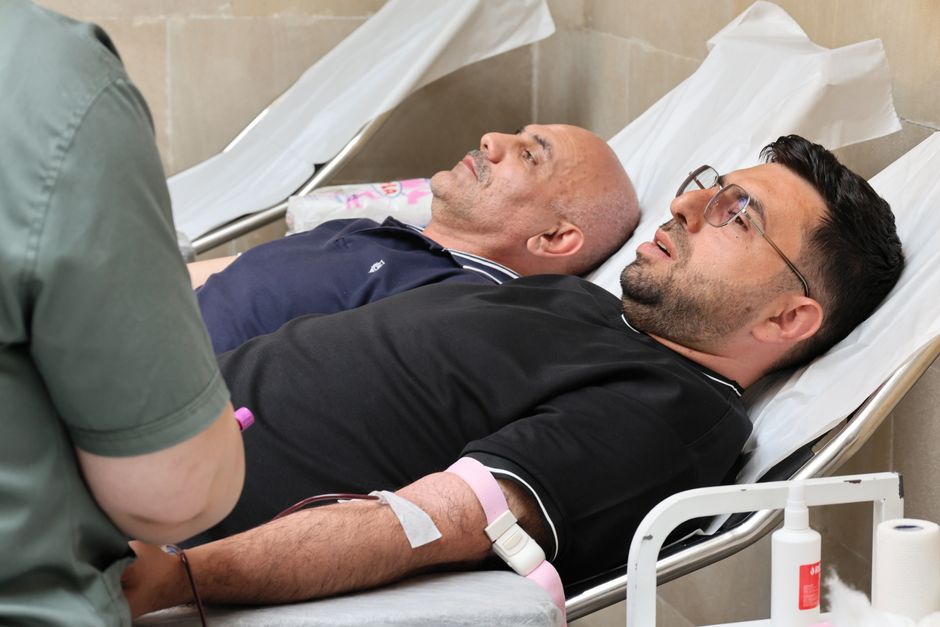
Donating blood is one of the few things you can do that takes about an hour and may help save up to three lives. For most healthy adults, the evidence shows that donating blood is safe — the body replaces the fluid within about 24 hours and rebuilds red blood cells over the following weeks. The main short-term risk is feeling lightheaded, which affects a small share of donors and usually passes quickly.
That said, “safe for most people” is not the same as “no effect on you.” Donating blood does temporarily lower your iron stores and red blood cell count. Whether that is neutral, helpful, or a problem depends on your health, your iron levels, and how often you donate.
What Happens to Your Body When You Donate Blood?
A standard whole-blood donation removes about 450 to 500 milliliters — roughly one pint, or close to 10 percent of the blood circulating in an average adult. Your body responds in two stages.
The first stage is fluid. Plasma is mostly water, and the volume you lose is largely replaced within 24 to 48 hours as you drink fluids and your body shifts water back into the bloodstream. This is why you are asked to hydrate before and after donating.
The second stage is red blood cells. These carry oxygen and take longer to rebuild. Your body needs iron to make new hemoglobin, the protein inside red blood cells that binds oxygen. Replacing the red cells lost in a whole-blood donation typically takes several weeks. This is why donation centers require a waiting period between whole-blood donations — commonly eight weeks in the United States — so your red cell count and iron can recover.
Donation centers check your hemoglobin before every donation for exactly this reason. If your level is too low, you are deferred, not because you are sick, but because your body has not fully recovered from a previous donation or because your iron stores are running low.
Is It Healthy To Donate Blood for Most People?
For a healthy adult who meets eligibility criteria, the medical consensus is that donating blood is safe. Blood banks screen donors carefully, and the screening itself sometimes catches a problem a person did not know about — low hemoglobin, high blood pressure, or an irregular pulse.
What donation is not is a treatment. There is no strong evidence that donating blood improves your health in a general sense. Some claims circulate that it “detoxifies” the blood or improves circulation. Your liver and kidneys handle waste removal continuously; donation does not meaningfully change that. Be skeptical of any framing that presents donation as a wellness practice.
There is one area where the picture is more interesting: iron. Because menstruation causes regular iron loss, menstruating women tend to have lower iron stores than men. For people with high iron levels, regular donation can lower iron. This matters for a specific inherited condition discussed below — but for the average donor, the iron drop is simply something the body manages.
Who Should Not Donate Blood?
Eligibility rules exist to protect both you and the person receiving your blood. You should not donate if any of the following apply:
- You have a current infection or are feeling unwell
- Your hemoglobin is below the minimum threshold the center uses
- You are pregnant
- You have certain chronic conditions that the center screens for, such as some heart conditions or untreated infections
- You have recently traveled to or lived in areas with specific infectious disease risks
- You take certain medications, or have a history that affects blood safety
One important point: the specific rules vary and change over time. Rather than relying on a general list, check with the blood bank you plan to use. They will walk you through a confidential questionnaire.
Age and weight matter too. Many centers set a minimum weight, often around 110 pounds, because a smaller body has less blood volume to spare. Some centers have upper age limits or additional requirements for donors over a certain age. Again, confirm with the center.
What Are the Risks and Side Effects of Donating Blood?
The most common side effect is feeling lightheaded or faint. It usually happens during or shortly after donation and passes within minutes once you sit or lie down and have something to drink. A smaller number of donors feel tired for the rest of the day.
Bruising at the needle site is common and harmless. It fades on its own.
More significant but less common issues include:
- Iron depletion. Frequent whole-blood donation can gradually lower iron stores, especially in people who already have low iron. Over time this can lead to iron deficiency, and if it progresses, anemia.
- Fainting. A small share of donors faint. This is why you are asked to rest and eat afterward.
- Needle-related injury. Rare, but nerve irritation or injury at the puncture site can occur.
The iron issue deserves attention because it is the one risk that builds quietly over repeated donations rather than showing up once. If you donate regularly, it is reasonable to ask your doctor to check your iron and ferritin levels periodically. Ferritin reflects your stored iron and can be low even when your hemoglobin looks normal.
How Often Can You Donate Blood Safely?
The waiting periods between donations are set to give your body time to recover. In the United States, the typical intervals are:
- Whole blood: every 8 weeks (about 56 days)
- Platelets: more frequently, often every 7 days, up to a set number of times per year
- Plasma: more frequently than whole blood, with limits per month
These intervals are minimums, not targets. Some regular donors are deferred because their hemoglobin has not recovered by the time they return. Listening to that signal matters. If you are repeatedly deferred for low hemoglobin, that is worth a conversation with your doctor about your iron status.
Double red cell donations remove more red cells at once and therefore require a longer recovery period between donations than whole blood. The center will tell you the specific interval.
Can Donating Blood Be Beneficial for Certain Conditions?
There is one well-established situation where regular blood removal is a treatment rather than a donation: hereditary hemochromatosis. In this inherited condition, the body absorbs too much iron and stores the excess in organs, which can damage the liver, heart, and pancreas over time.
For people with hemochromatosis, removing blood is the standard way to lower iron. Some of these patients donate through therapeutic programs, though the blood may or may not be usable for transfusion depending on the program and the recipient’s needs. This is a genuine medical use of blood removal, distinct from routine donation.
Apart from this, claims that donating blood lowers heart disease risk or improves metabolic health are not well supported. Some observational studies have suggested associations between blood donation and cardiovascular markers, but observational data cannot show cause and effect, and the findings have not been consistent. The honest position is that the evidence here is limited and mixed.
How Should You Prepare and Recover?
Preparation is straightforward and it genuinely reduces your chance of feeling unwell.
- Drink extra water in the 24 hours before donating
- Eat a normal meal beforehand — do not donate on an empty stomach
- Avoid alcohol before and after
- Get a good night’s sleep
- Bring your ID and a list of medications
After donating, rest for the recommended time, have a snack and a drink, and keep the bandage on as instructed. Avoid heavy lifting or intense exercise for the rest of the day. If you feel lightheaded, sit or lie down with your feet up until it passes.
If you feel faint, develop a fever, or have pain or swelling at the needle site that gets worse, contact the blood center or your doctor. Serious complications are uncommon, but they are worth taking seriously if they appear.
Frequently Asked Questions
Is it healthy to donate blood regularly?
For most healthy adults who meet eligibility criteria, regular donation within the recommended intervals is considered safe. The main concern with frequent donation is gradual iron depletion, so periodic checks of your iron and ferritin levels are reasonable.
How long does it take to recover from donating blood?
Fluid volume is largely replaced within 24 to 48 hours. Red blood cells and hemoglobin take several weeks to fully rebuild, which is why whole-blood donations are spaced about 8 weeks apart.
Does donating blood lower your iron?
Yes. Each whole-blood donation removes iron along with red blood cells, and this is the main cumulative risk of donating often. If your hemoglobin is low at a donation, the center will defer you so your iron can recover.
Can donating blood be harmful?
Serious harm is uncommon, but possible side effects include lightheadedness, fainting, bruising, and iron deficiency with frequent donation. People who are pregnant or have certain health conditions should not donate.
