
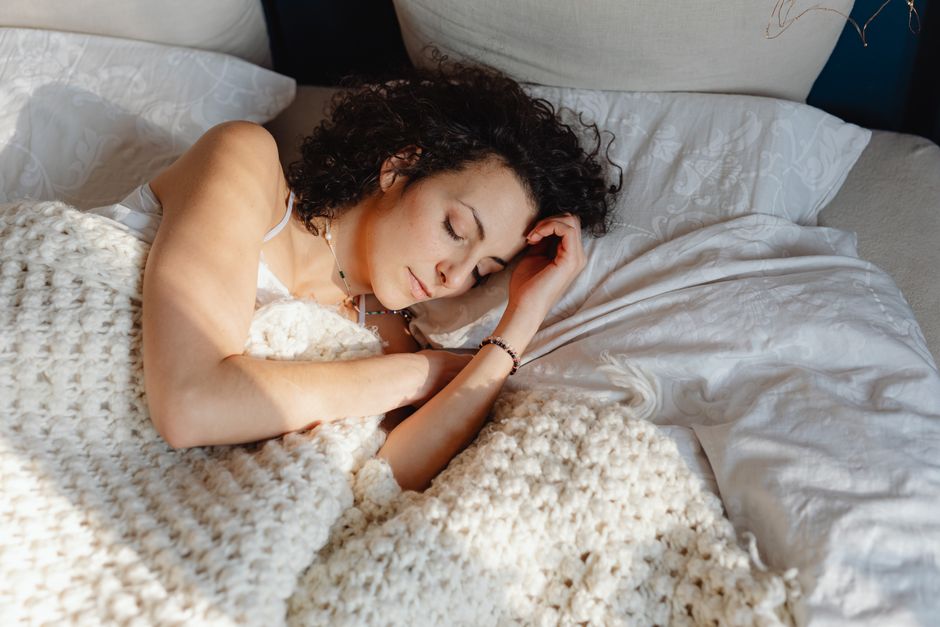
Sleeping naked is not medically necessary, and it is not medically harmful for most healthy adults. Whether it is good for you depends on your body temperature, your skin, your sleep environment, and the people you share a bed with. For some people it genuinely improves sleep quality. For others it creates problems that are easy to avoid.
What Happens to Your Body When You Sleep Without Clothes?
Your body follows a daily temperature rhythm. Core temperature begins to drop in the evening and reaches its lowest point in the early morning hours. This drop is not a side effect of sleep. It is part of the signaling that helps initiate and maintain sleep.
Sleeping without clothing removes a layer of insulation. That can help your body shed heat more efficiently during the evening. For people who run warm, or who sleep in a room that stays above the ideal sleep temperature range, this can make falling asleep easier.
The effect is modest. Your mattress, blankets, and room temperature matter far more than whether you are wearing pajamas. A naked sleeper under a heavy duvet is warmer than a clothed sleeper under a sheet.
There is also a skin factor. Skin needs airflow. Occlusion, meaning skin kept covered and moist for long periods, can contribute to irritation and some fungal skin conditions. Sleeping without clothes allows the skin in the groin, underarms, and other folded areas to dry and breathe overnight. For people prone to heat rash or recurring fungal infections in skin folds, this is a reasonable practical benefit.
Does Sleeping Naked Actually Improve Sleep Quality?
The evidence here is indirect. Researchers have studied thermoregulation and sleep extensively. They have not run large trials comparing naked sleepers to clothed sleepers with sleep quality as the outcome.
What is well established is that thermal comfort affects sleep. Being too warm disrupts sleep architecture, particularly the deeper stages. Being too cold does the same. The goal is not to be cold. The goal is to be comfortably cool.
So the honest position is this: sleeping naked can improve sleep if it helps you reach thermal comfort. If you sleep in a cool room under adequate covers, clothing makes little difference. If you tend to overheat, removing a layer may help.
Some research suggests that skin temperature, not just core temperature, plays a role in sleep regulation. Skin blood flow and heat loss from the hands and feet are part of how the body cools itself at night. This is one reason a warm bath before bed can help some people sleep — it promotes heat loss afterward. Sleeping without clothes fits into the same general principle of allowing heat to escape.
That said, no study has confirmed that naked sleeping produces better sleep than well-chosen lightweight sleepwear. The mechanism is plausible. The direct comparison evidence is not there.
Are There Real Risks to Sleeping Naked?
For most healthy adults in a private bed, the risks are minimal. There are a few situations worth thinking through.
- Skin infections: If you have an active skin infection, open wounds, or a condition like eczema that is flaring, exposing affected skin to bedding may not be ideal. Bedding can harbor irritants and allergens.
- Genital and urinary health: There is no established evidence that sleeping naked causes vaginal infections or urinary tract infections. Some women find that wearing tight, non-breathable underwear at night contributes to irritation. Sleeping without underwear may reduce that specific trigger. This is common clinical advice, though it has not been tested in large controlled trials.
- Bed sharing: If you share a bed with a partner, a child, or a pet, consider comfort and boundaries. This is a personal matter, not a medical one.
- Emergency situations: In a fire, earthquake, or medical emergency at night, being undressed can slow your response. This is a practical consideration, especially for people in shared housing or areas with higher emergency risk.
- Cold environments: If your bedroom is genuinely cold, sleeping naked without adequate blankets can drop your body temperature enough to disrupt sleep or cause discomfort.
None of these are reasons to avoid naked sleeping across the board. They are reasons to think about your specific situation.


Is Sleeping Naked Good for You if You Have a Skin Condition?
It depends on the condition. Skin conditions vary widely in how they respond to airflow and fabric contact.
For intertrigo, a rash that develops in skin folds from friction and moisture, reducing moisture and friction is part of standard management. Sleeping without clothing in affected areas can help. So can keeping the area clean and dry during the day.
For atopic dermatitis and eczema, the picture is different. These conditions involve a compromised skin barrier and often respond well to moisturizing and, in some cases, protective clothing. Some clinicians recommend soft, breathable cotton clothing at night to reduce scratching and keep moisturizers in place. Sleeping naked may expose dry skin to bedding that can irritate it.
For tinea infections such as jock itch or athlete’s foot, keeping the area dry and exposed to air is generally helpful. Sleeping without underwear is commonly suggested as part of that.
If you have a diagnosed skin condition, the right answer depends on which one. A dermatologist can tell you whether airflow helps or hurts your specific situation.
How Does Sleeping Naked Affect Body Temperature and Hormones?
Temperature regulation and sleep are tightly linked. The body’s core temperature drop at night is driven partly by melatonin and partly by the circadian system. Being too warm interferes with this process.
There is a persistent claim that sleeping naked lowers cortisol or boosts growth hormone. The evidence for this is thin. Growth hormone is released mainly during deep sleep. Anything that improves deep sleep may indirectly support normal growth hormone release. But no study has shown that naked sleeping specifically changes hormone levels in a meaningful way.
Similarly, claims that sleeping naked “boosts metabolism” or “burns calories” are not supported by clinical evidence. Being slightly cool does increase energy expenditure modestly in some research settings, but the effect is small and has not been studied in the context of naked sleeping.
What is established is simpler: if you sleep cooler, you tend to sleep better. If you sleep better, your body’s normal hormonal rhythms have a better chance of staying on track. That is the chain of reasoning, and it is reasonable but not directly proven for this specific habit.
What About Sleeping Naked With a Partner?
Skin-to-skin contact triggers the release of oxytocin, a hormone involved in bonding and relaxation. This is well established in research on physical touch. For couples who are comfortable with it, sleeping naked may support feelings of closeness.
Some research suggests that oxytocin can lower heart rate and blood pressure in certain contexts. Whether this translates into measurable health benefits from naked sleeping specifically is not established.
Comfort matters more than theory. If one partner runs hot and the other runs cold, naked sleeping may not work for both. There is no medical reason to force it.
Is Sleeping Naked Good for You? The Bottom Line
For most healthy adults, sleeping naked is neither medically beneficial nor medically risky. It can help if you tend to overheat, if you have skin folds prone to moisture, or if you simply find it more comfortable.
It may not help if you sleep cold, if you have a skin condition that worsens with airflow or bedding contact, or if you need to be ready to respond quickly at night.
The most important factors for sleep quality remain consistent: a cool, dark, quiet room, a regular sleep schedule, and a comfortable mattress. Whether you wear pajamas is a minor variable. Choose what helps you sleep and what fits your life.
Frequently Asked Questions
Is sleeping naked better for your health than wearing pajamas?
No study has shown that sleeping naked is healthier than wearing well-chosen sleepwear. It may help if you overheat easily or have skin fold moisture issues, but the evidence is indirect.
Can sleeping naked cause infections?
There is no established evidence that sleeping naked causes vaginal, urinary, or skin infections in healthy people. In fact, airflow may help prevent irritation in some skin conditions.
Does sleeping naked help you sleep better?
It can help if it keeps you comfortably cool, since being too warm disrupts sleep. The effect depends more on your room temperature and bedding than on clothing alone.
Is it safe to sleep naked every night?
For most healthy adults in a private, temperature-controlled bedroom, yes. Consider your emergency readiness, skin condition, and bed-sharing situation.
