
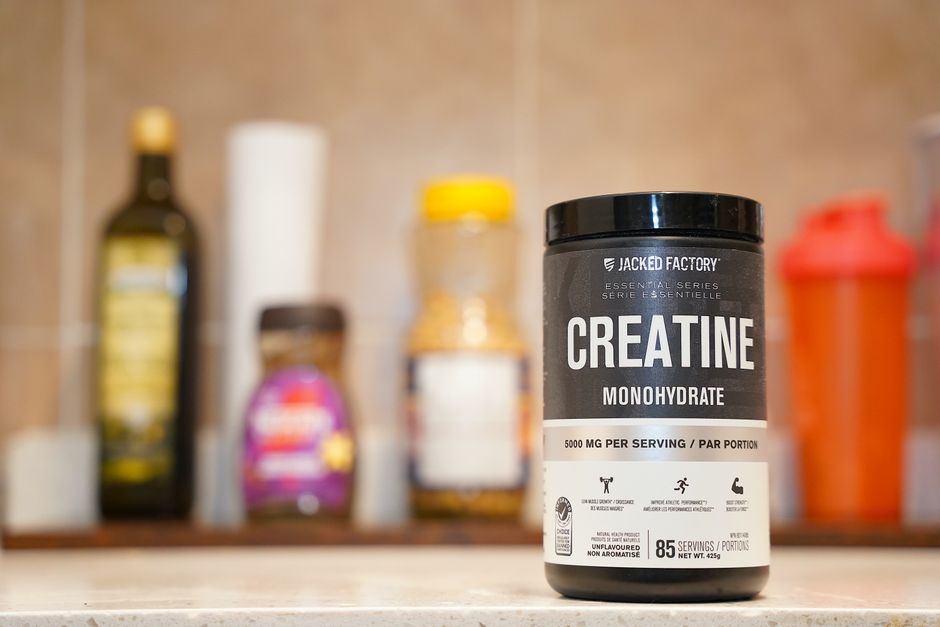
No, taking creatine before bed is not bad for most healthy adults. Creatine does not act like a stimulant, so it will not keep you awake the way caffeine can. The one real drawback is practical: a large dose taken close to bedtime can leave you thirsty or send you to the bathroom during the night, since creatine pulls water into your muscle cells.
Creatine is one of the most studied sports supplements in existence. Its core purpose is to help your muscles regenerate energy during short, intense efforts. Timing it around sleep changes very little about how it works. What matters more is taking it consistently and staying hydrated.
What Does Creatine Actually Do In The Body?
Creatine is a nitrogen-containing compound your body makes in small amounts and stores mostly in skeletal muscle. Once inside muscle cells, it gets converted into phosphocreatine, which acts as a rapid backup energy source.
During short bursts of hard effort — a heavy lift, a sprint, a jump — your muscles burn through ATP, the basic energy currency of cells. Phosphocreatine helps rebuild ATP fast. That is why creatine supplementation is linked to better performance in short, explosive activities rather than long endurance work.
You also get creatine from food, mainly red meat and fish. People who eat little or no animal products tend to have lower baseline muscle creatine stores, which is one reason vegetarians often respond more noticeably to supplementation.
The key point for this topic: none of this process is tied to your sleep-wake cycle. Creatine works by topping up a fuel reserve in your muscles. It does not stimulate your nervous system or block sleep signals.
Is It Bad To Take Creatine Before Bed?
There is no established harm in taking creatine in the evening. Creatine is not a stimulant, and research has not shown that it disrupts sleep in healthy adults.
Some people assume any supplement taken at night must affect sleep. That logic fits caffeine, which blocks adenosine — a molecule that builds up during the day and makes you sleepy. Creatine does not work that way at all.
The honest limitation: sleep research on creatine specifically is thin. Most studies look at performance and muscle outcomes, not sleep quality. So the claim “creatine is fine before bed” rests mostly on the absence of a known mechanism for harm, not on a large body of sleep trials. That is a reasonable position, but it is worth stating plainly.
There is also a common misconception worth clearing up. Creatine does not “build muscle while you sleep” in any special way. Muscle repair happens overnight regardless of when you took your dose. Timing does not create a magic window.
Does Creatine Keep You Awake Or Affect Sleep?
Creatine has not been shown to keep people awake. It does not raise heart rate or act on the brain’s alertness pathways the way stimulants do.
Some early research explored creatine’s effects on brain energy metabolism and mood, and a few small studies have looked at creatine and sleep deprivation. These are not the same as showing creatine disrupts normal sleep, and the evidence is not strong enough to draw firm conclusions either way.
If you notice you sleep worse after taking creatine at night, the more likely culprits are:
- Drinking a large shake or a lot of water right before bed, leading to bathroom trips
- Taking it alongside a pre-workout or coffee late in the day
- Training intensely late at night, which can raise alertness on its own
Those are practical, fixable issues. They are not evidence that creatine itself harms sleep.





Why Does Creatine Make Some People Thirsty At Night?
Creatine draws water into muscle cells. This is a well-established effect and part of why some people gain a small amount of weight — mostly water — in the first weeks of use.
If you take a dose and go straight to bed without drinking enough water, you may wake up thirsty. Drinking a large glass right before lying down can then cause nighttime bathroom trips. The simple fix is to spread your fluid intake across the day rather than chugging it at bedtime.
Staying well hydrated matters more broadly with creatine. The general guidance is to drink enough water throughout the day, not to force extra fluids at any single moment. There is no official rule that you must drink a set amount with each dose, and no clinical guideline sets a creatine-specific water target for healthy adults.
When Should You Take Creatine For Best Results?
Consistency matters far more than timing. Creatine works by keeping your muscle stores topped up, and that depends on taking it regularly over weeks, not on the clock.
Muscle creatine stores build up gradually with daily use. Once saturated, they stay elevated as long as you keep taking it. Missing a specific “window” after a workout does not undo the benefit.
Some research has looked at whether taking creatine near a workout is better than other times. Results are mixed, and any difference appears small compared with simply taking it every day. The practical takeaway: pick a time you will remember and stick with it.
For many people, morning or around a meal works well because it is easy to remember and pairs with food and fluids. Evening is fine too if that suits your routine. The best time is the one you will not forget.
Who Should Be Careful With Creatine Timing Or Use?
Creatine is generally considered safe for healthy adults when used as directed, and it is one of the better-studied supplements. That said, some groups should approach it with more caution or talk to a clinician first.
- People with kidney disease should not start creatine without medical advice. The kidneys handle creatine and its byproduct creatinine, and this is a genuine reason for caution.
- People taking medications that affect the kidneys or hydration should check with a clinician or pharmacist.
- Pregnant or breastfeeding women — no clinical guidelines currently establish safe use in these groups, so it should not be assumed safe.
- Children and adolescents — guidance is limited and varies; this is a conversation for a pediatrician rather than a general rule.
For these groups, “before bed” versus any other time is not the main question. Whether to use it at all is the question, and that belongs with a qualified clinician.
What About The Common Creatine Myths?
Several myths about creatine persist, and a few are worth correcting directly.
Myth: Creatine damages healthy kidneys. Research in healthy people has not shown that standard creatine use harms kidney function. Creatine does raise creatinine levels on blood tests, though, which can look like reduced kidney function to a clinician who does not know you take it. Tell your doctor you use creatine before kidney-related blood work.
Myth: Creatine is a steroid. It is not. Creatine is a compound found naturally in food and made by your body. It works through energy metabolism, not hormones.
Myth: You need to “load” with large doses. Loading can raise muscle stores faster, but a smaller daily dose reaches similar levels over a few weeks. Loading is optional, and smaller doses tend to cause less bloating and stomach upset.
Myth: You must cycle off creatine. There is no established need to cycle it. Consistent daily use is what maintains your muscle stores.
None of these myths involve timing around sleep. They come up because creatine is popular and heavily marketed, and marketing tends to invent rules that the evidence does not support.
How Should You Take Creatine In The Evening?
Keep it simple. Take your usual dose with water or a meal, and do not force a large amount of fluid right before lying down.
If you tend to wake up thirsty, shift more of your water intake to earlier in the day. If you take creatine in a shake, have it with dinner or earlier in the evening rather than in bed.
A note on dosing: standard creatine monohydrate use in research typically involves a few grams per day, and product labels carry directions. Follow the label or your clinician’s advice rather than guessing, and remember that no official guideline sets a special dose for evening use — the daily amount is the same whenever you take it.
Frequently Asked Questions
Is it bad to take creatine before bed?
No, it is not bad for most healthy adults. Creatine is not a stimulant, though a large dose with lots of water close to bedtime may cause thirst or nighttime bathroom trips.
Does creatine keep you awake?
Creatine has not been shown to keep people awake. It does not act on the brain’s alertness pathways like caffeine does.
Can I take creatine at night after a workout?
Yes. Consistency matters more than timing, so taking it at night after training is fine as long as you take it regularly.
Why do I feel thirsty after taking creatine?
Creatine pulls water into muscle cells, which can leave you feeling thirsty. Spreading fluids across the day helps more than drinking a lot right before bed.
