
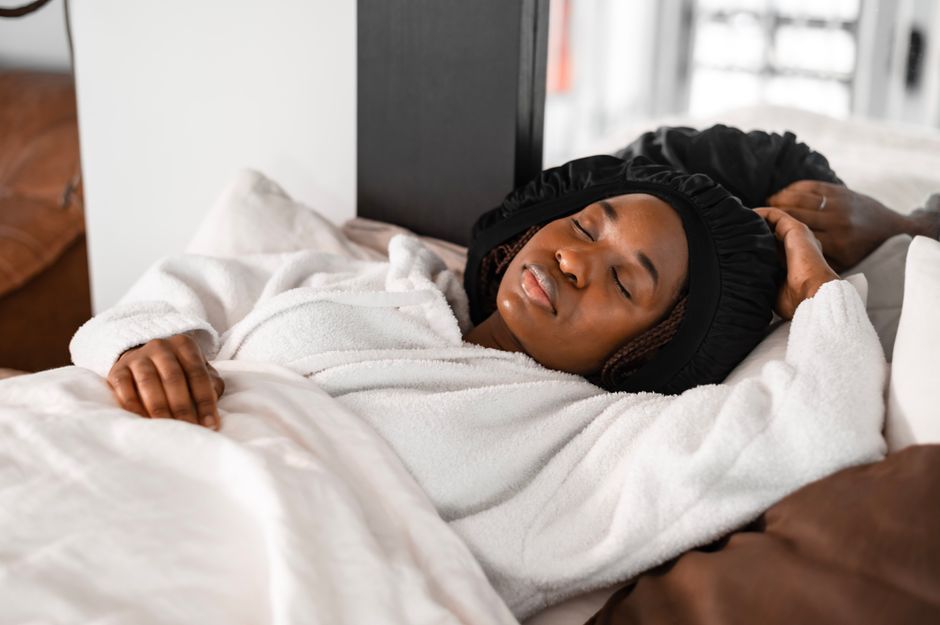
Sleeping with gel in your hair is not dangerous in any medical sense, but it is not ideal for your scalp or your hair. The main issues are product transfer to your pillow and skin, possible irritation or clogged pores, and a higher chance of breakage or matting overnight. If you wash it out before bed or sleep on a clean pillowcase and cleanse properly in the morning, most people will not run into problems.
That is the short version. The longer version depends on what kind of gel you use, how much you apply, and how your scalp tends to react. Hair gel is not toxic. It does not “suffocate” hair follicles, and it will not cause baldness. But leaving a heavy styling product on your scalp for eight hours is different from wearing it for a few hours during the day, and it is worth understanding why.
Is It Bad To Sleep With Gel In Your Hair?
For most people, the answer is no in the sense of serious harm, but yes in the sense of avoidable minor problems. Hair gel is designed to sit on the surface of the hair shaft, not to be absorbed into the scalp. It is not a medication and it is not formulated for overnight contact with skin.
The most common complaint is scalp irritation. Gels contain film-forming polymers, alcohol, fragrance, and preservatives. On the scalp for a full night, those ingredients stay in contact with skin longer than they would during the day. People with sensitive skin, eczema, or seborrheic dermatitis may notice itching, flaking, or redness. This is contact irritation, not an allergy in most cases, though true allergic contact dermatitis to fragrance or preservatives is documented and does occur.
There is also the mechanical issue. Wet or gelled hair is more fragile. Hair is weakest when wet, and if you sleep on gelled hair that is still damp, the friction against a pillowcase can stretch and snap strands. Over time, that can contribute to split ends and breakage, especially on fine or chemically treated hair.
The third issue is simpler. Gel transfers. It ends up on your pillowcase, then on your face. For people prone to acne, that residue can contribute to breakouts along the jawline and cheeks. Pillowcases should be washed more often if you regularly sleep with product in your hair.
Does Sleeping With Gel In Your Hair Cause Hair Loss?
No. There is no evidence that hair gel causes pattern hair loss or any form of permanent hair loss. The idea that gel “clogs” follicles and starves hair of oxygen is a myth. Hair follicles get oxygen from the bloodstream, not from the air, so a coating of gel on the surface cannot cut off their supply.
What gel can do is contribute to breakage, which is different from hair loss. Breakage means the hair shaft snaps along its length. Hair loss means the follicle itself stops producing hair. These are separate processes with separate causes. Androgenetic alopecia, the most common form of hair loss, is driven by genetics and hormones, not styling products.
One caveat worth stating plainly. If you pull your hair back tightly while it is gelled and sleep that way, you can cause traction damage. Repeated tension on the same areas of the scalp can lead to a type of hair loss called traction alopecia. That is not caused by the gel itself. It is caused by the pulling. Traction alopecia is well documented in dermatology, and early stages are usually reversible if the tension stops, but long-term continuous tension can cause permanent damage.
So the gel is not the problem. The tension is.
What About Scalp Health And Acne?
Leaving product on the scalp overnight can disrupt the scalp’s natural environment. The scalp has its own microbiome, a community of bacteria and yeast that normally lives there in balance. Heavy, occlusive products can trap oil and dead skin cells, and some people find this worsens flaking or itching.
This matters most for people who already have a scalp condition. Seborrheic dermatitis, which causes flaking and greasy scales, is associated with an overgrowth of a yeast called Malassezia that naturally lives on the scalp. Whether gel makes this worse is not well studied, but occlusive products that trap oil are generally not helpful for a scalp that is already inflamed.
For acne, the mechanism is more direct. When you sleep on gelled hair, product residue transfers to your pillowcase and then to your face. This is a form of mechanical acne trigger, similar to how resting your face on a phone or dirty hands can contribute to breakouts. It is not the sole cause of acne, and it will not cause acne in someone whose skin is not already prone to it. But for people who are prone, it is one more variable worth controlling.
If you notice breakouts concentrated along your hairline, temples, or jaw, product transfer is worth considering as a contributor. Washing your pillowcase more often and rinsing your face after your hair touches it can help.
Which Ingredients In Gel Should You Watch For?
Not all gels are the same. The ingredients most often linked to scalp irritation are alcohol, fragrance, and certain preservatives.
- Alcohol (often listed as SD alcohol, denatured alcohol, or ethanol) can dry out the scalp and hair, especially in high concentrations.
- Fragrance is one of the most common causes of allergic contact dermatitis in cosmetics. “Fragrance” on a label can represent dozens of individual compounds.
- Preservatives such as methylisothiazolinone and other isothiazolinones are effective at preventing mold and bacteria, but they are also recognized contact allergens. Some regions have restricted their use in leave-on products for this reason.
- Propylene glycol is generally well tolerated but can irritate sensitive skin in some people.
If your scalp reacts, the practical approach is to switch to a fragrance-free, alcohol-free gel and see whether the irritation resolves. If it does not, the issue may not be the product at all.
One clarification worth making. “Natural” or “herbal” gels are not automatically gentler. Botanical extracts can be just as allergenic as synthetic ingredients, and essential oils are a well-known cause of contact dermatitis. The label does not determine the reaction. The specific ingredients and your individual skin do.
How To Sleep With Gel In Your Hair Without Problems
If you need to keep a style overnight, there are ways to reduce the downsides. None of these are medical recommendations. They are practical steps based on how hair and skin behave.
- Let the gel dry fully before lying down. Damp, gelled hair is more fragile and transfers more product.
- Use a silk or satin pillowcase. These create less friction than cotton, which reduces breakage.
- Wrap or loosely tie your hair rather than pulling it tight. Avoid tension on the scalp.
- Wash your pillowcase frequently, especially if you sleep with product regularly.
- Rinse your face after your hair has touched it, or cleanse in the morning before applying anything else.
- Wash the gel out in the morning with a gentle shampoo. A single wash is usually enough for water-based gels. Heavy waxes or pomades may need more.
If you have a scalp condition, sensitive skin, or are prone to acne, the simplest answer is to wash the gel out before bed. It takes a few minutes and removes most of the risk in one step.
When Should You See A Doctor?
Most reactions to hair gel are mild and resolve when you stop using the product. See a doctor or dermatologist if you develop persistent scalp redness, swelling, oozing, or severe itching that does not improve after stopping the product.
Also seek medical advice for hair loss that is patchy, sudden, or accompanied by scaling or scarring. These patterns suggest causes other than styling products, and they are worth evaluating properly rather than assuming gel is to blame.
If you have a known allergy to fragrance, preservatives, or any cosmetic ingredient, check labels carefully. Patch testing by a dermatologist can identify specific allergens if you are unsure what is triggering a reaction.
Frequently Asked Questions
Can sleeping with gel in your hair cause hair loss?
No. Hair gel does not cause permanent hair loss. Breakage from friction or tight styling is possible, but that is damage to the hair shaft, not loss of the follicle.
Is it bad to sleep with gel in your hair every night?
It is not dangerous, but regular overnight contact with product can irritate the scalp and contribute to breakouts for some people. Washing it out before bed avoids most of these issues.
Does hair gel clog hair follicles?
No. Follicles receive oxygen and nutrients from the bloodstream, not from the air, so a surface coating of gel cannot block them. This is a common myth.
What should I do if my scalp itches after sleeping with gel?
Stop using the product and wash your hair and scalp thoroughly. If itching, redness, or flaking persists after you stop, see a doctor or dermatologist.
