
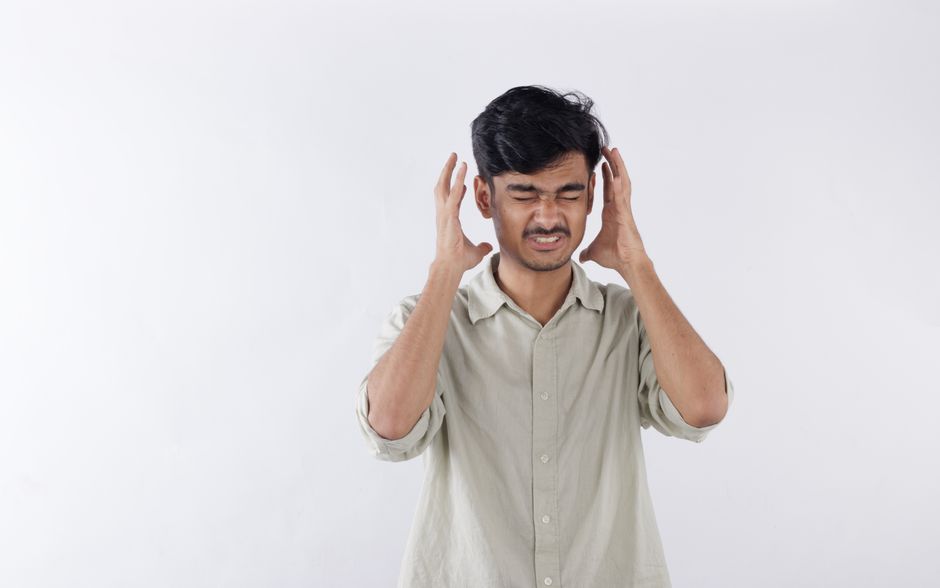
Indecisiveness can be a symptom of both anxiety and depression, but it is not a standalone diagnosis. The struggle to make decisions often stems from the specific thought patterns of each condition—anxiety fuels fear of making the wrong choice, while depression drains the energy and motivation needed to choose at all. Understanding which pattern fits your experience is the first step toward managing it effectively.
What Does Indecisiveness Look Like in Anxiety?
Anxiety-driven indecisiveness comes from a place of fear. The brain perceives the decision as a high-stakes situation where the wrong choice could lead to failure, embarrassment, or harm. This is not a rational thought process—it is the amygdala, the brain’s threat detector, overriding the logical prefrontal cortex.
People with anxiety often experience a specific loop. They gather information, weigh options, then re-examine everything again. They may ask multiple people for opinions and still feel unsettled. The decision itself becomes a source of distress, not the outcome.
Common signs of anxiety-related indecisiveness include:
- Replaying the same pros and cons list repeatedly
- Feeling physically tense or restless when forced to choose
- Needing constant reassurance from others
- Catastrophizing—imagining the worst-case scenario for each option
- Choosing the “safe” option even when it is not the best one
The key difference is that the anxious person usually knows what they want. They just cannot trust their own judgment enough to act on it.
How Depression Affects Decision-Making
Depression-related indecisiveness is different. It is not driven by fear but by a lack of mental energy and reduced interest in outcomes. When depression is present, the brain’s reward system is underactive. Options look equally unappealing because nothing feels like it will make a difference.
This creates a specific symptom called psychomotor retardation, which is a slowing of thought processes and physical movement. Decisions that once took minutes now take hours or days. The person may feel like they are moving through fog, unable to prioritize or even identify what matters to them.
Depressive indecisiveness often includes:
- Feeling indifferent to the outcome of the decision
- Difficulty starting even simple tasks like choosing what to eat
- Forgetting important details related to the decision
- Feeling exhausted by the mere act of considering options
- A sense that nothing matters, so why bother choosing
This type of indecisiveness is more likely to affect life-sustaining decisions. A person may struggle to schedule medical appointments, pay bills, or maintain basic hygiene routines. It is not laziness—it is a neurological symptom of a treatable illness.
Is Indecisiveness A Symptom Of Anxiety Or Depression—Or Both?
Indecisiveness appears in the diagnostic criteria for both conditions, but in different ways. The Diagnostic and Statistical Manual of Mental Disorders (DSM-5) lists “diminished ability to think or concentrate, or indecisiveness” as a symptom of major depressive disorder. It also lists “difficulty concentrating or mind going blank” as a symptom of generalized anxiety disorder.
Many people experience both conditions simultaneously. Research consistently shows that anxiety and depression co-occur at high rates—roughly half of people diagnosed with one meet criteria for the other at some point. When both are present, indecisiveness can feel even more paralyzing because the fear of choosing wrong combines with the exhaustion of caring at all.
There is also a third possibility. Indecisiveness can be a personality trait that exists independently of any mental health condition. Some people are simply more cautious or take longer to commit to choices. This becomes a problem only when it causes significant distress or impairs daily functioning.
The distinction matters for treatment. Anxiety-driven indecisiveness often responds to therapy that targets fear of uncertainty. Depression-driven indecisiveness may improve as the underlying mood disorder is treated with therapy, medication, or both.





When Does Indecisiveness Become a Clinical Concern?
Everyone hesitates before making important decisions. The line between normal caution and clinical indecisiveness is crossed when the pattern interferes with your ability to function. This is not about the size of the decision—it is about the impact of the hesitation.
Clinical indecisiveness may be present when:
- You miss deadlines at work because you cannot finalize choices
- Relationships suffer because you cannot commit to plans
- You avoid opportunities entirely to escape the pressure of choosing
- Simple daily decisions take hours of mental energy
- You experience significant distress, panic, or despair around decisions
- Others have commented on your inability to make up your mind
If indecisiveness is accompanied by other symptoms—persistent low mood, loss of interest in activities, sleep changes, appetite changes, or overwhelming worry—it is worth discussing with a healthcare provider. These are treatable conditions, and indecisiveness often lifts as the underlying issue improves.
What Actually Helps with Indecisiveness?
Treatment for indecisiveness depends on the root cause. There is no single technique that works for everyone, but several evidence-based approaches have shown real benefit.
Cognitive behavioral therapy (CBT) is the most researched approach for both anxiety and depression. For anxiety-driven indecisiveness, CBT helps you identify and challenge the catastrophic thoughts that make choices feel dangerous. You learn to tolerate uncertainty and test whether your feared outcomes actually happen.
For depression-related indecisiveness, behavioral activation is often more effective. This approach focuses on taking action first and letting motivation follow—rather than waiting to feel ready. Small, manageable choices are made first, building momentum for larger decisions.
There are also practical strategies that clinicians commonly recommend:
- Set a decision deadline and commit to it
- Limit information gathering to a specific time frame
- Use a simple pros-and-cons list, then stop reviewing it
- Make smaller decisions quickly to build confidence
- Ask yourself what you would advise a friend in the same situation
- Accept that most decisions are reversible
Medication may be appropriate if the underlying anxiety or depression is moderate to severe. Antidepressants—particularly SSRIs—have been shown to improve concentration and decision-making as mood symptoms lift. This is not a quick fix; it typically takes several weeks to see improvement.
When to Seek Professional Help
Indecisiveness alone does not always require treatment. But when it is part of a larger pattern of anxiety or depression, professional support can make a significant difference.
Consider reaching out to a mental health provider if indecisiveness has been present for more than two weeks alongside other symptoms. A primary care physician or psychiatrist can assess whether you meet criteria for an anxiety disorder or depression. They can also rule out other conditions that affect cognition, such as thyroid disorders, vitamin deficiencies, or ADHD.
If you have thoughts of self-harm or suicide, seek immediate help. The Suicide and Crisis Lifeline is available by calling or texting 988 in the United States. This is a crisis resource, not a substitute for ongoing mental health care.
Frequently Asked Questions
Can anxiety make it hard to make even small decisions?
Yes, anxiety can make even minor decisions feel overwhelming because the brain treats every choice as a potential threat. Small decisions like what to eat or what to wear can trigger the same worry loop as major life choices.
Why do I freeze when I have to make a choice?
Freezing is a common stress response where the brain’s threat detection system overrides logical thinking. This can happen with anxiety, where fear of the wrong choice dominates, or with depression, where low energy makes the effort of choosing feel impossible.
Is chronic indecisiveness a sign of a mental illness?
Chronic indecisiveness can be a symptom of anxiety or depression, but it can also be a personality trait. It becomes a clinical concern when it causes significant distress or interferes with work, relationships, or daily functioning.
Does treating depression or anxiety help with indecisiveness?
Yes, indecisiveness typically improves when the underlying condition is treated effectively. Both therapy and medication have been shown to restore concentration and decision-making ability as mood symptoms lift.
