
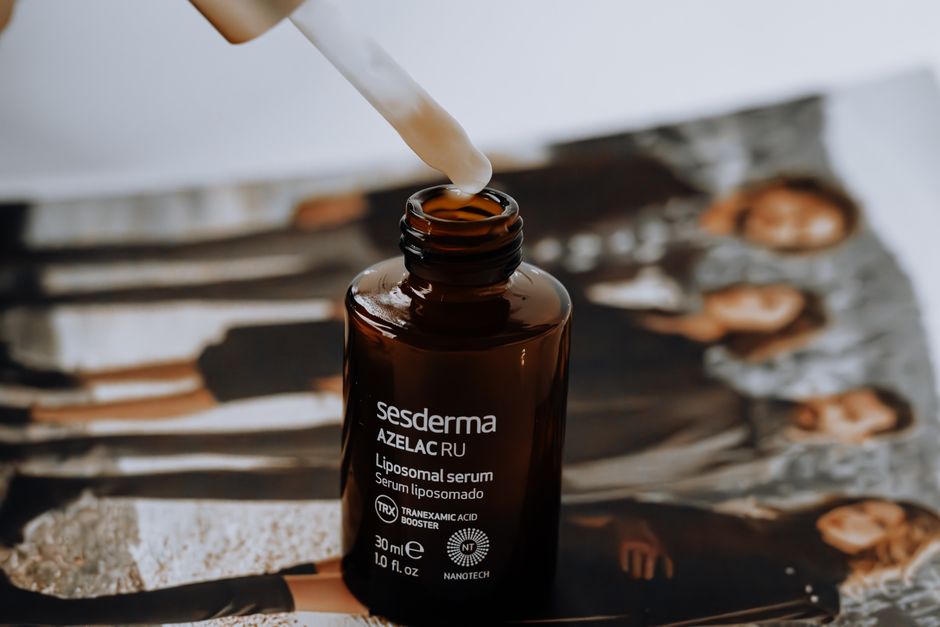
Hyaluronic acid is not inherently bad for sensitive skin. It is a molecule your body makes naturally, and it is generally well tolerated. Problems usually come from how a product is formulated or how it is used — not from the ingredient itself.
That distinction matters because sensitive skin is not one condition. It is a set of symptoms that can have different causes. The same hyaluronic acid serum can calm one person’s skin and sting another’s. Understanding why helps you figure out which camp you are in.
What Is Hyaluronic Acid and What Does It Do in Skin?
Hyaluronic acid is a sugar molecule found throughout the body, with high concentrations in skin, joints, and eyes. In the skin it sits in the space between cells and holds water. A single gram can hold several times its weight in water.
This water-binding capacity is why it shows up in so many moisturizers and serums. Applied to the surface, it draws water into the outer layers of skin and can temporarily plump the appearance of fine lines. That effect is real but short-lived. It is a surface hydration effect, not a change to skin structure.
One detail worth knowing: the molecule comes in different sizes, and size changes behavior. High-molecular-weight hyaluronic acid is a large molecule that mostly sits on the surface and forms a film that limits water loss. Low-molecular-weight versions are smaller fragments that can penetrate deeper into the outer skin layers.
That penetration sounds like a benefit, and in some formulations it may be. But smaller fragments also have a potential downside for sensitive skin, which we will get to.
Why Does Hyaluronic Acid Sometimes Sting or Burn?
Most reactions to hyaluronic acid serums are not reactions to hyaluronic acid. They come from something else in the bottle or from the state of your skin barrier when you apply it.
Common culprits include preservatives, fragrance, alcohol, and pH adjusters. Preservatives are necessary in any water-based product to prevent microbial growth, and some are more likely than others to irritate reactive skin. Fragrance is a frequent trigger. If a product stings, the ingredient list is the place to look first.
The second factor is your skin barrier. The outermost layer of skin works as a brick-and-mortar wall that keeps water in and irritants out. When that barrier is compromised — by over-washing, harsh exfoliants, retinoids, eczema, or cold dry air — almost anything applied to it can sting, including plain water.
There is also a mechanical issue specific to hyaluronic acid. In dry conditions, a humectant applied to the surface can pull water from the deeper skin layers toward the surface and then lose it to the air. This is why some people find that a hyaluronic acid serum leaves their skin feeling tighter and drier rather than softer. It is a formulation and environment problem, not proof that the ingredient is harmful.
Is Hyaluronic Acid Bad For Sensitive Skin It Depends on These Factors
Four things determine whether hyaluronic acid helps or hurts your skin.
- Molecular weight. Larger molecules stay on the surface and mainly reduce water loss. Smaller fragments penetrate further. Some research suggests low-molecular-weight fragments may trigger irritation or immune signaling in certain skin, though this has mostly been studied in laboratory and animal models rather than in large human trials.
- Concentration. More is not better. Very high concentrations can feel sticky and, in dry air, may draw moisture out of skin rather than hold it in. Products in the low single-digit percentage range are common; there is no established evidence that higher percentages work better.
- The rest of the formula. A short, fragrance-free ingredient list is generally better tolerated by reactive skin than a long one with botanicals and perfume.
- What you layer on top. A hyaluronic acid serum needs an occlusive layer over it — a cream or ointment that seals in water. Without that, the water it attracted can evaporate.
If your skin is sensitive and you want to try hyaluronic acid, the practical approach is a plain, fragrance-free product applied to damp skin, followed by a moisturizer that contains occlusive ingredients. If it stings, stop. Stinging is information, not something to push through.



Does Hyaluronic Acid Trigger Inflammation in Sensitive Skin?
This is the most interesting question in the field, and the evidence is genuinely mixed.
Hyaluronic acid in its large, native form appears to be broadly inert or even soothing on skin. But when the molecule is broken into small fragments — which happens naturally during inflammation and wounding, and also happens when manufacturers intentionally make low-molecular-weight versions — those fragments can interact with immune receptors.
In laboratory studies, small hyaluronic acid fragments have been shown to activate inflammatory pathways in some cell types. This has led to a hypothesis that low-molecular-weight hyaluronic acid in skincare could aggravate skin that is already inflamed.
What is missing is the clinical picture. There is no large body of human trial evidence showing that low-molecular-weight hyaluronic acid in cosmetic products causes measurable irritation in people with sensitive skin. The concern is plausible and biologically grounded, but it has not been confirmed as a real-world problem at typical cosmetic use.
The honest summary: the mechanism exists, the human evidence is thin, and individual variation is large. Some people with rosacea or eczema report that low-molecular-weight formulas sting while high-molecular-weight ones do not. That is worth paying attention to in your own skin, even without a definitive study behind it.
Who Should Be Careful With Hyaluronic Acid?
People with an actively inflamed skin barrier should be cautious. That includes anyone in the middle of an eczema flare, a rosacea flare, or a reaction to another product. When the barrier is disrupted, adding any new product — including a gentle one — is likely to sting.
People with very dry skin in low-humidity environments are another group that often does better without it. In dry air, the humectant effect can work against you. A plain occlusive moisturizer may serve you better than a hyaluronic acid serum.
Anyone who has reacted to a hyaluronic acid product before should look at the full ingredient list rather than assuming the hyaluronic acid was the problem. It may have been a preservative or fragrance. But if you cannot identify the trigger, avoiding the product is reasonable.
There is no established guidance suggesting hyaluronic acid is unsafe during pregnancy or breastfeeding when used topically. Topical hyaluronic acid is not the same as injectable hyaluronic acid fillers, which are a medical procedure with their own risks and should be discussed with a clinician.
What Are Better Options for Very Sensitive Skin?
If hyaluronic acid does not work for you, several alternatives hydrate without the same mechanism.
Glycerin is the most studied humectant in skincare and is generally very well tolerated. It is often the workhorse humectant in products that also contain hyaluronic acid. If a product with both works and one with only hyaluronic acid does not, glycerin may be doing the heavy lifting.
Occlusive ingredients — petrolatum, dimethicone, squalane, and various plant oils — reduce water loss by forming a barrier rather than by attracting water. For a compromised barrier, these are often the more useful choice.
Ceramides and cholesterol are lipids that make up part of the skin barrier itself. Products containing them aim to replace what is missing in dry or damaged skin. The evidence for barrier-repair formulations in conditions like eczema is stronger than the evidence for humectants alone.
Panthenol and colloidal oatmeal are other options with reasonable tolerability data in sensitive skin.
The simplest rule: fewer ingredients, no fragrance, and a patch test on your inner forearm before you commit to your face.
How Should You Test a Hyaluronic Acid Product?
Apply a small amount to a small area — the inner forearm or the side of your jaw — once daily for a few days. If no reaction appears, try it on a larger area of your face.
Apply it to slightly damp skin, then seal it with a moisturizer. This is the step most people skip, and it is the step that most often determines whether the product feels hydrating or drying.
If you get stinging, redness, or tightness, stop using it. Do not layer it with exfoliating acids or retinoids while you are testing. If your skin is mid-flare, wait until it settles before introducing anything new.
What the Evidence Actually Shows
Hyaluronic acid is a well-characterized molecule with a clear role in skin hydration. Topical use is generally well tolerated. The main risks are formulation-related irritation and the drying effect that can happen when a humectant is used without an occlusive layer or in dry air.
The question of whether low-molecular-weight fragments drive inflammation in sensitive skin is unresolved. The biology is plausible. The human evidence is not there yet. Treating that uncertainty as a reason to avoid all hyaluronic acid would be overcorrecting. Treating it as settled science in either direction would be inaccurate.
For most people with sensitive skin, the ingredient is not the problem. The formula and the routine around it usually are.
Frequently Asked Questions
Can hyaluronic acid make sensitive skin worse?
It can, but usually because of other ingredients in the product or because it was applied without a moisturizer on top. In dry air, a hyaluronic acid serum alone can pull moisture from skin and leave it feeling tighter.
Is low-molecular-weight hyaluronic acid bad for sensitive skin?
Some laboratory research suggests small hyaluronic acid fragments can activate inflammatory pathways, but human studies confirming irritation at typical cosmetic use are lacking. The concern is plausible rather than proven.
What should I use instead if hyaluronic acid stings my skin?
Glycerin, ceramides, squalane, and petrolatum-based moisturizers are generally well tolerated alternatives. Look for fragrance-free products with short ingredient lists.
Should I apply hyaluronic acid to damp or dry skin?
Damp skin is generally recommended, followed by a moisturizer to seal in water. Applying it to dry skin in a low-humidity room can make it feel drying rather than hydrating.
