
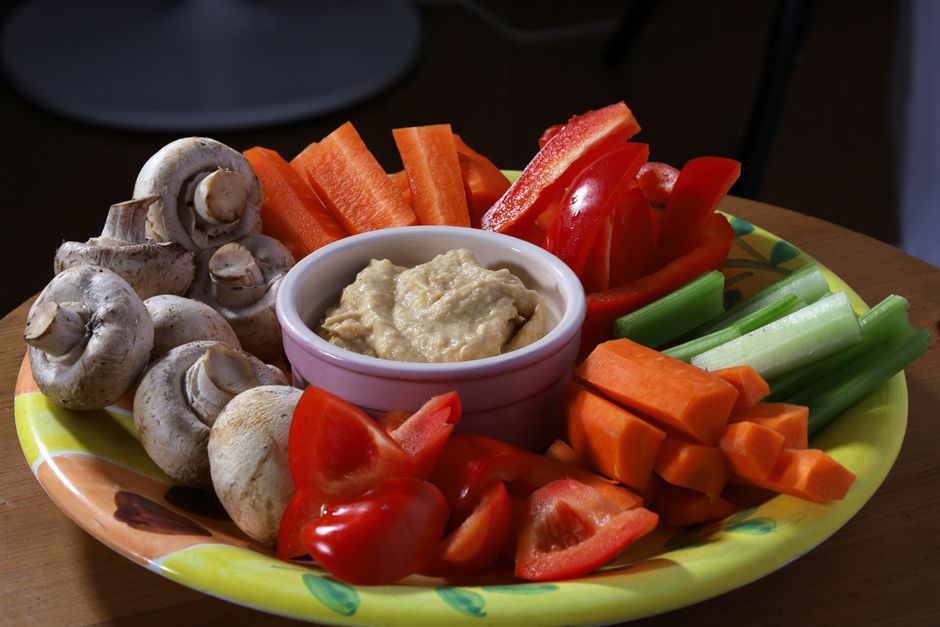
Yes, traditional hummus is a vegan food. Its classic ingredients are chickpeas, tahini (sesame paste), olive oil, lemon juice, garlic, and salt — all plant-based. No animal products are required to make it.
That short answer covers the standard recipe. The details get more interesting when you look at store-bought versions, restaurant preparations, and the many flavored varieties now on shelves. Some of those contain ingredients a vegan would not eat. Knowing what to check takes about ten seconds once you know where to look.
What Is Hummus Made Of?
Traditional hummus is a blend of cooked chickpeas and tahini, thinned with olive oil, lemon juice, and water, then seasoned with garlic and salt. Every one of those ingredients comes from plants. There is nothing in the base recipe that requires eggs, dairy, or meat.
The word hummus is Arabic for “chickpea,” which tells you what the dish is built around. Chickpeas supply the body and protein. Tahini — ground sesame seeds — supplies fat and the creamy texture. Lemon juice adds acid and brightness. Olive oil adds richness.
Regional versions vary. Some add cumin, paprika, or sumac. Others blend in roasted red pepper, beet, or jalapeño. These additions are still plant-based. The core recipe has been vegan for centuries, long before the word existed.
Is All Hummus Vegan?
No. Not every product labeled hummus is vegan. The base recipe is plant-based, but commercial and restaurant versions sometimes include animal-derived ingredients.
Common additions that are not vegan include:
- Yogurt or Greek yogurt, added for tang or creaminess
- Mayonnaise, used in some cheaper or shelf-stable formulas
- Honey, sometimes used as a sweetener in flavored varieties
- Whey or other milk-derived proteins in “protein” versions
- Butter or ghee in some restaurant recipes
None of these belong in traditional hummus. They show up in products built for a different taste or texture. A caramelized onion hummus, for example, might use butter. A “creamy” dip might use yogurt.
The practical takeaway: the recipe is vegan by default, but the product in your hand is only vegan if the label says so.
How Do I Check If Store-Bought Hummus Is Vegan?
Read the ingredient list, not the front of the package. Marketing words like “plant-based” or “dairy-free” are not regulated the same way as “vegan,” and they do not always mean the same thing.
Here is what to look for:
- Ingredient list: Scan for milk, yogurt, whey, honey, butter, ghee, or eggs.
- Allergen statement: In the US, milk and eggs must be declared as allergens. If milk appears, it is not vegan.
- Certification logos: A certified vegan mark means an independent body verified the product. This is the strongest signal.
- “May contain” warnings: These refer to cross-contamination risk, not an added ingredient. They do not make a product non-vegan, but strict vegans may choose to avoid them.
Honey is the tricky one. It is an animal product, so it is not vegan. But it is not a regulated allergen, so it will not appear in the allergen statement. You have to spot it in the ingredient list.



Is Hummus Healthy, and Does That Matter for Vegans?
Hummus is a nutrient-dense food. Chickpeas provide plant protein, fiber, and complex carbohydrates. Tahini and olive oil provide mostly unsaturated fats. The combination makes hummus a filling, satisfying dip.
For vegans, hummus fits easily into a balanced diet. It contributes protein and fiber, two things worth tracking on a plant-based diet. It is not a complete protein on its own — chickpeas are low in one amino acid, methionine — but that is rarely a problem in practice. Eating a variety of plant proteins across the day covers the gap.
One thing worth knowing: tahini is a good source of calcium and iron, though the amounts vary by brand and how much is used. Hummus is not a reliable stand-alone source of vitamin B12. Vegans need B12 from fortified foods or supplements, since it does not occur naturally in plant foods.
Portion size matters more than most people expect. Hummus is calorie-dense because of the tahini and oil. A few tablespoons is a serving. It is easy to eat far more than that with a bag of pita chips.
Does Hummus Contain Any Hidden Animal Products?
The ingredients themselves are the main concern, but a few less obvious points are worth knowing.
Some commercial hummus is made with mono- and diglycerides or other emulsifiers. These can be plant-derived or animal-derived, and labels rarely specify which. The amounts are tiny, but strict vegans sometimes avoid them because the source is unclear. This is a personal judgment call, not a health issue.
Restaurant hummus is harder to verify than packaged hummus. A chef might finish a plate with a drizzle of yogurt, a dusting of cheese, or a butter-brushed pita. If you are eating out and it matters to you, ask. The base dip is usually vegan, but the garnish may not be.
Cross-contamination is a separate question. A vegan product made on shared equipment with dairy is still considered vegan by most definitions, since no animal ingredient was added. Whether that matters to you is your call.
Can Vegans Eat Hummus Without Worry?
Yes, for the vast majority of people. Traditional hummus is a plant food, and it fits a vegan diet without qualification. The only real work is checking labels on processed versions and asking about garnishes at restaurants.
There is one group that should pay attention for a different reason. People with a sesame allergy need to avoid tahini, which is a core ingredient. Sesame is now a recognized major allergen in the US and must be declared on labels. That is an allergy concern, not a vegan one.
For everyone else, hummus is one of the easier foods to fit into a vegan diet. It is widely available, inexpensive to make at home, and nutritionally useful. Making it yourself removes all doubt about what is in it.
How Do You Make Vegan Hummus at Home?
Homemade hummus is vegan by default if you use the standard ingredients. You control everything that goes in, so there is nothing to check.
The basic method: blend cooked or canned chickpeas with tahini, lemon juice, garlic, olive oil, salt, and a little water until smooth. Canned chickpeas work well and save time. Some cooks reserve the liquid from the can — often called aquafaba — to thin the mixture instead of water.
To keep it vegan, avoid honey as a sweetener and skip any dairy-based toppings. Olive oil, paprika, parsley, and toasted sesame seeds are all plant-based garnishes.
Homemade hummus keeps in the refrigerator for several days in a sealed container. It does not contain the preservatives found in many commercial products, so it will not last as long on the shelf.
Frequently Asked Questions
Is hummus always vegan?
No, not always. Traditional hummus is vegan, but some commercial and restaurant versions add yogurt, honey, mayonnaise, or butter.
Is store-bought hummus vegan?
Many brands are, but you have to check the label. Look for milk, yogurt, whey, honey, or eggs in the ingredient list, or look for a certified vegan mark.
Does hummus have dairy in it?
Traditional hummus contains no dairy. Some flavored or “creamy” commercial versions add yogurt or whey, so check the allergen statement for milk.
Is hummus a good protein source for vegans?
Hummus provides plant protein from chickpeas and tahini, but it is not a complete protein on its own. It works well as part of a varied plant-based diet.
