
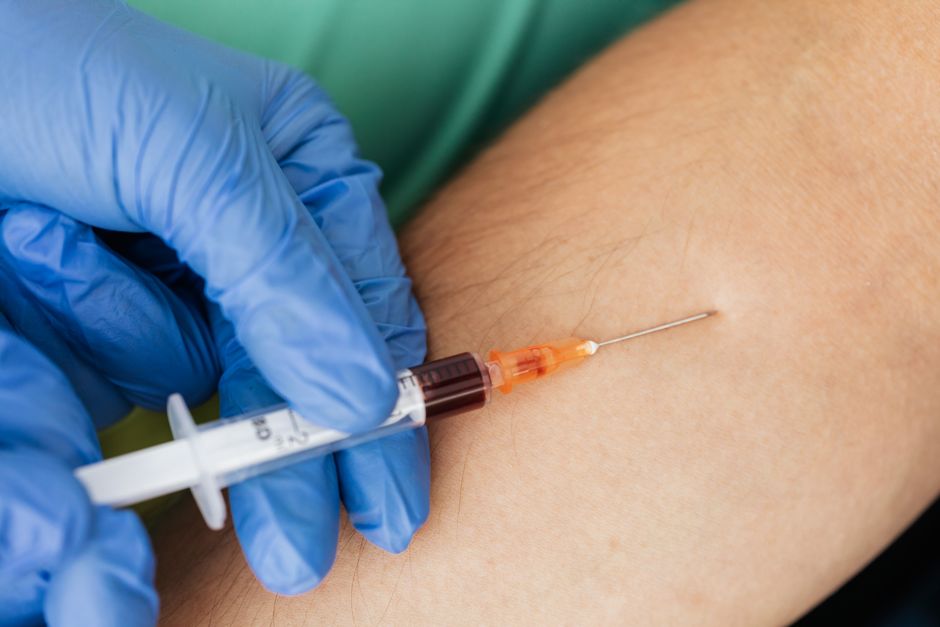
No, human blood is never blue. It is always some shade of red. This is one of the most persistent myths in biology, and it is completely false. The color of your blood depends on whether it is carrying oxygen or not, and that changes it from bright red to a darker, deeper red. It never turns blue inside your body.
Why Do People Think Human Blood Is Blue?
The myth that blood is blue comes from how we see veins. Veins look blue or green under your skin. But that color is an optical illusion caused by how light travels through your skin and fat layers.
Your skin scatters red light. Blue light penetrates deeper and bounces back to your eyes. So the veins underneath your skin appear blue even though the blood inside them is dark red. If you ever see blood outside your body, it is always red. There is no blue blood in humans.
Some people also confuse human blood with the blood of other animals. Horseshoe crabs have blue blood because they use copper-based hemocyanin to carry oxygen instead of iron-based hemoglobin. That is a different species entirely. Human biology is not the same.
What Color Is Human Blood Really?
Human blood ranges from bright red to dark maroon. The color depends on how much oxygen the blood is carrying. Oxygen-rich blood is bright red. Oxygen-poor blood is a darker, duller red.
When your heart pumps blood to your lungs, it picks up oxygen. That oxygenated blood is bright red. It travels through arteries to deliver oxygen to your organs and muscles. After the oxygen is released, the blood returns to your heart through veins. That deoxygenated blood is darker red, sometimes described as burgundy or maroon.
There is no point where blood turns blue. Even the darkest deoxygenated blood is still a shade of red. The dark color is caused by the shape change in hemoglobin when oxygen is released, not by a color shift to blue.
Does Deoxygenated Blood Look Blue Through the Skin?
No. Deoxygenated blood is dark red, not blue. The blue appearance of veins is caused by light physics, not blood color. This is a well-established fact in human physiology.
Research published in the Journal of Biomedical Optics has explained how skin and fat tissue scatter light. Red light is absorbed by the skin. Blue light penetrates deeper and reflects back. So veins, which are close to the surface, appear blue even though the blood inside is dark red.
If you cut a vein open, the blood that comes out is dark red, not blue. This is easy to observe during a blood draw or a minor cut. The myth persists because people trust what they see through their skin more than what they learn in biology class. But the evidence is clear.





What Does Research on Blood Color Show?
Multiple studies have confirmed that human blood is always red. The American Red Cross and medical textbooks state this plainly. There is no scientific debate about blood color in humans.
One study published in Scientific Reports examined how oxygen saturation affects blood color. Researchers found that fully oxygenated blood has a bright red appearance. As oxygen levels drop, the blood becomes darker red. At very low oxygen levels, it can appear almost black. But it is never blue.
The confusion sometimes comes from medical diagrams. Some textbooks show deoxygenated blood in blue on diagrams to make it easier to distinguish from oxygenated blood. That is a color-coding convention, not a real color. It is the same reason maps use blue for water. The water is not actually blue in a river, but the map uses blue to represent it.
Can Blood Ever Look Blue Under Certain Conditions?
No. Human blood cannot look blue under any normal biological condition. The only way blood appears blue is if you are looking at it through an optical filter or a colored lens. That is not a property of the blood itself.
Some people claim that blood in veins is blue because it has no oxygen. That is incorrect. Deoxygenated blood still contains oxygen, just less of it. Hemoglobin without oxygen is dark red, not blue. The iron in hemoglobin gives blood its red color. No amount of oxygen loss changes that fundamental chemistry.
There is a rare condition called methemoglobinemia where blood can appear brown or chocolate-colored. This happens when iron in hemoglobin is in the wrong chemical state. Even then, the blood is not blue. It is brownish. This condition is extremely rare and requires medical treatment. It does not support the blue blood myth.
What About Animals With Blue Blood?
Some animals do have blue blood. Horseshoe crabs, octopuses, and some spiders use hemocyanin instead of hemoglobin to carry oxygen. Hemocyanin contains copper, which turns blue when oxygenated. That is why their blood is blue.
Humans and most vertebrates use hemoglobin, which contains iron. Iron turns red when it binds oxygen. That is why human blood is red. The difference is in the metal atom at the center of the oxygen-carrying molecule. Copper gives blue blood. Iron gives red blood.
This is a genuine biological difference, not a myth. But it applies only to certain invertebrates. It does not apply to humans. If someone tells you human blood is blue because some animals have blue blood, they are confusing two different biological systems.
Common Misconceptions About Blood Color
There are several myths about blood color that keep circulating online. One is that blood in veins is blue because it is deoxygenated. As we covered, that is false. Another is that blood turns blue when it is cold. That is also false. Cold blood is still red. It may be darker, but it is never blue.
Some people believe that the blue color of veins means the blood inside is blue. That is an understandable mistake. But once you understand how light scatters through skin, the illusion makes sense. It is the same reason the sky looks blue. The sky is not blue. Light scattering makes it appear blue.
Another misconception is that medical professionals use blue blood in transfusions. That is not true. All donated human blood is red. There is no such thing as blue blood for transfusion. The term “blue blood” is sometimes used to describe royalty, but that is a historical expression, not a medical fact.
| Condition | Blood Color | Explanation |
|---|---|---|
| Oxygenated blood (arteries) | Bright red | Hemoglobin bound to oxygen |
| Deoxygenated blood (veins) | Dark red/maroon | Hemoglobin without oxygen |
| Blood seen through skin (veins) | Appears blue/green | Light scattering by skin tissue |
| Methemoglobinemia | Brownish | Abnormal iron state in hemoglobin |
| Horseshoe crab blood | Blue | Copper-based hemocyanin |
What to Do If Someone Tells You Blood Is Blue
You can politely explain the science. Start with the fact that all human blood is red. Then explain the vein illusion. Most people accept this once they understand how light scattering works. You can also point to medical sources like the American Red Cross or any physiology textbook.
If someone insists that their veins look blue, acknowledge that. Veins do look blue through the skin. But the color is not from the blood. It is from how light interacts with your skin. You can test this by pressing on a vein. The blue color fades because you push the blood away, and the skin scatters light differently.
There is no harm in believing the myth. But it is worth knowing the truth. Blood color is a simple fact of human biology. It is not complicated or mysterious. Human blood is red, always, and that is the end of it.
Frequently Asked Questions
Is human blood ever blue inside the body?
No, human blood is never blue inside the body. It is always some shade of red, from bright red to dark maroon.
Why do my veins look blue if blood is red?
Veins appear blue because skin and fat tissue scatter red light and let blue light penetrate deeper. The blood inside is dark red, not blue.
Does deoxygenated blood turn blue?
No, deoxygenated blood is dark red or maroon, not blue. The color change is from bright red to darker red, never to blue.
What animals have blue blood?
Horseshoe crabs, octopuses, and some spiders have blue blood because they use copper-based hemocyanin instead of iron-based hemoglobin.
