
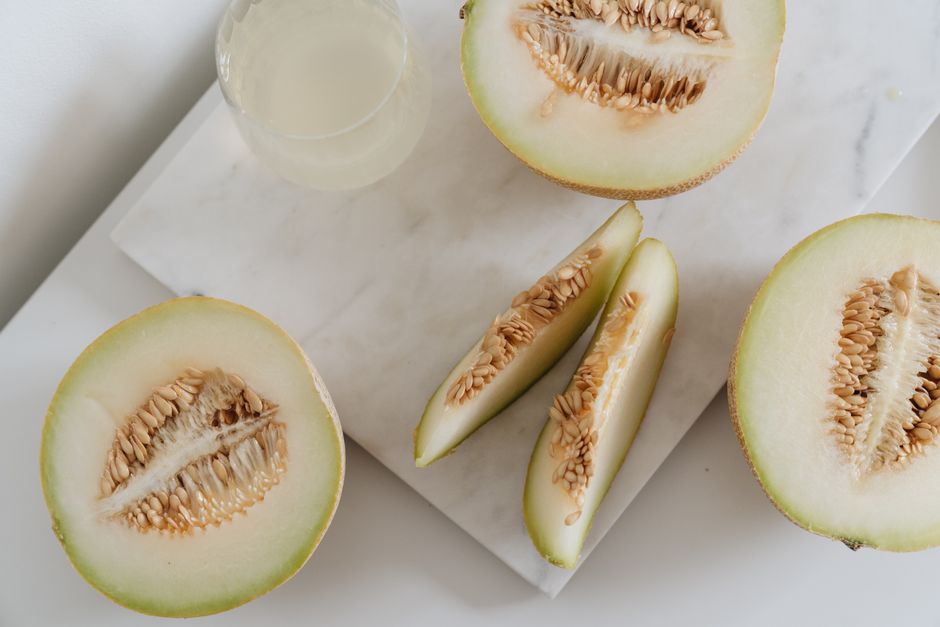
Honeydew melon is not acidic. It is a low-acid fruit, and its pH generally falls in the mildly acidic to near-neutral range, which is why it is often included on lists of foods considered gentle for people with acid reflux. If you are following a low-acid diet for reflux, honeydew is one of the safer fruit choices. That said, “low-acid” is a looser concept than the internet suggests, and pH is not the only thing that affects reflux symptoms.
Below is what the science actually says about honeydew, acid, and reflux — including where the popular advice is solid and where it gets ahead of the evidence.
Is Honeydew Melon Acidic?
No. Honeydew is a low-acid fruit. Most melons, including honeydew, cantaloupe, and watermelon, have a pH that sits well above the highly acidic range of citrus, tomatoes, and vinegar.
For context, the pH scale runs from 0 to 14. Lower numbers are more acidic. Lemon juice is close to 2. Stomach acid is around 1.5 to 3.5. Honeydew generally measures in the range of roughly 6 — mildly acidic, close to neutral. Pure water is 7.
That places honeydew far from the foods most often flagged for reflux. It is not a trigger food for most people in the way that coffee, citrus, or tomato sauce can be.
One clarification worth making: the pH of a food and its effect on reflux are not the same thing. A food can be acidic and cause no symptoms, or be low-acid and still bother some people. The two are related but not identical.
Is Honeydew Melon Good for Acid Reflux?
Honeydew is generally considered a reflux-friendly fruit. It is low in acid, high in water content, and mild in flavor — three qualities that make it less likely to irritate the esophagus or trigger symptoms in most people.
That does not mean it treats reflux. No fruit does. But as part of a low-acid eating pattern, honeydew fits comfortably.
Here is what makes it a reasonable choice:
- Low acid content. Its near-neutral pH means it is unlikely to add to the acid load in the stomach or irritate a sensitive esophagus.
- High water content. Melons are mostly water, which can help with hydration and may feel gentler than dense, dry foods.
- Mild flavor. It lacks the sharpness of citrus or the acidity of tomatoes, both common reflux triggers.
- Low fat. High-fat foods can slow stomach emptying and relax the valve between the stomach and esophagus. Honeydew is naturally low in fat.
The last point matters more than most people realize. The muscle that keeps stomach contents from flowing back up — the lower esophageal sphincter — relaxes in response to certain foods. Fat, chocolate, peppermint, alcohol, and caffeine are among the more commonly cited ones. Honeydew does not appear on that list.
What Is a Low-Acid Diet and Does It Help Reflux?
A low-acid diet is an eating pattern that limits foods thought to be highly acidic or to trigger reflux symptoms. It is widely recommended by clinicians and widely followed by people with GERD. The evidence behind it is real but not as strong as its popularity suggests.
The logic is straightforward: if you reduce acidic and irritating foods, you may reduce symptoms. In practice, response varies a lot from person to person. Some people notice clear improvement. Others notice little difference.
What the research shows is more nuanced. Studies have found that individual trigger foods differ widely between people. There is no single “reflux diet” that works for everyone. Some evidence supports limiting certain foods — like high-fat meals, alcohol, and caffeine — while other commonly avoided foods have weaker support.
This is where a lot of online advice overreaches. Lists of “acidic foods to avoid” are often based on food pH rather than on evidence that those foods cause reflux. The two are not the same. A food’s pH does not reliably predict whether it will trigger symptoms in a given person.
The most reliable approach most clinicians use is an elimination-style one: track what you eat, track your symptoms, and identify your own patterns. A food diary is more useful than a generic list.
How Does Honeydew Fit Into a Low-Acid Diet?
Honeydew fits well. It is one of the fruits most often included on low-acid food lists, alongside bananas, melons, and pears.
Fruits that tend to be limited on a low-acid diet include citrus fruits, pineapple, and tomatoes — though tomatoes are technically a fruit and are usually discussed with vegetables. Honeydew is on the “include” side of that divide.
Here is a rough comparison of how common fruits sit on the pH scale. These are general ranges, not precise lab values, and they can vary with ripeness.
| Fruit | Approximate pH range | Common reflux guidance |
|---|---|---|
| Lemon juice | Around 2 | Often limited |
| Orange | Roughly 3 to 4 | Often limited |
| Pineapple | Roughly 3 to 4 | Often limited |
| Apple | Roughly 3 to 4 | Varies by person |
| Banana | Roughly 4.5 to 5.5 | Generally included |
| Honeydew melon | Around 6 | Generally included |
| Watermelon | Roughly 5 to 6 | Generally included |
These numbers are approximate and should not be treated as a precise guide. The point is the relative position: honeydew sits well above the highly acidic fruits that are more often flagged.
Can Honeydew Make Reflux Worse for Some People?
Yes, it can — for some people. No food is universally safe for everyone with reflux. Even low-acid foods can trigger symptoms in certain individuals.
There are a few reasons honeydew might bother someone:
- Volume and speed of eating. Large meals, regardless of content, increase pressure on the stomach and can push contents upward. Eating a lot of melon quickly can do the same.
- Individual sensitivity. Some people have specific food sensitivities that are not explained by acidity. If honeydew reliably triggers symptoms for you, that pattern matters more than any general list.
- FODMAP content. Honeydew contains fermentable sugars that can cause bloating and gas in people with irritable bowel syndrome. Bloating can increase abdominal pressure, which in some people worsens reflux symptoms.
- Eating close to bedtime. Lying down soon after eating any food — including low-acid fruit — makes reflux more likely, because gravity is no longer helping keep stomach contents down.
The last point is often overlooked. Timing can matter as much as the food itself. A large serving of honeydew right before bed is more likely to cause problems than the same serving at lunch.
What Else Matters More Than Food pH?
Food pH is a small part of the reflux picture. Several other factors have stronger evidence behind them, and they are often more useful to focus on.
Body weight is one of the most consistent factors linked to reflux. Excess weight, particularly around the abdomen, increases pressure on the stomach. Weight loss is one of the most reliably effective lifestyle measures for reducing reflux symptoms in people who are overweight.
Meal timing and size matter. Smaller meals, and not lying down for a few hours after eating, are standard advice supported by physiology. The lower esophageal sphincter works with gravity, not against it.
Sleep position can help. Elevating the head of the bed reduces nighttime reflux by using gravity to keep stomach contents down.
Smoking and alcohol both relax the lower esophageal sphincter and are associated with worse reflux symptoms.
None of this means food choices do not matter. They do. But if you are eating honeydew and still having symptoms, the fruit is probably not the main issue. A clinician can help you sort out what is.
One more honest note: persistent or worsening reflux symptoms deserve medical attention. Frequent reflux can damage the esophagus over time, and symptoms like difficulty swallowing, unintended weight loss, or chest pain should be evaluated rather than managed with diet alone.
Frequently Asked Questions
Is honeydew melon acidic or alkaline?
Honeydew is mildly acidic to near-neutral, with a pH generally around 6, which makes it a low-acid fruit. It is not alkaline in the strict chemical sense, but it is far less acidic than citrus or tomatoes.
Can I eat honeydew melon with acid reflux?
Yes, honeydew is generally considered a reflux-friendly fruit because of its low acid content and high water content. Individual tolerance varies, so pay attention to how your own body responds.
Is melon good for a low-acid diet?
Yes, most melons including honeydew, cantaloupe, and watermelon are commonly included on low-acid diets. They sit well above the highly acidic fruits that are more often limited.
Does the pH of food actually affect reflux symptoms?
The relationship is real but weaker than popular advice suggests, and individual trigger foods vary widely between people. Tracking your own symptoms is more useful than relying on food pH lists alone.
