
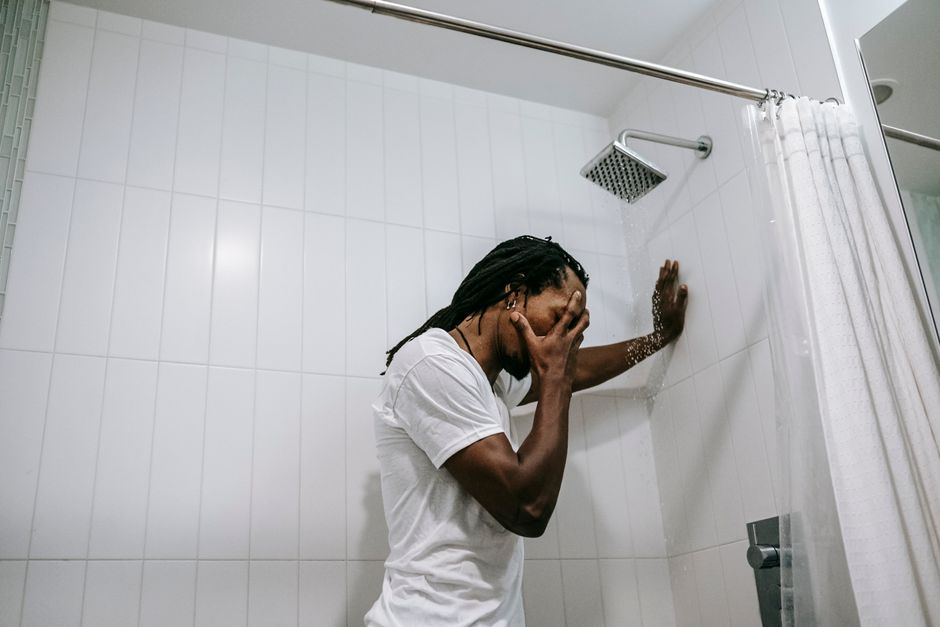
High water pressure does not directly damage the hair you can see. What it can do is physically force more hairs out during washing and make the scalp uncomfortable, and it can worsen breakage in hair that is already fragile. The fixes are simple: a lower-flow showerhead, a pressure-reducing valve, and gentler washing habits. The signs to watch for are increased shedding during showers, scalp tenderness, and more split ends than usual.
What Actually Comes Out of Your Showerhead
Most of what people call “high water pressure” at the shower is really high flow rate — gallons per minute — combined with a narrow spray. A standard US showerhead is limited by federal rule to 2.5 gallons per minute at 80 psi. Older fixtures and some imported models can exceed that.
The force you feel on your scalp is the water hitting your skin, not the pressure inside your pipes. That distinction matters. A showerhead with small, concentrated nozzles can feel intense even at a legal flow rate. A wide, soft spray at the same flow can feel gentle.
Water pressure inside household plumbing typically runs somewhere in the range of 40 to 80 psi, and many homes sit comfortably in the middle of that. Pressure above 80 psi is generally considered high and is worth addressing for reasons that have nothing to do with hair — pipe stress, appliance wear, and water hammer.
Is High Water Pressure Bad For Hair? Signs, Fixes, and What the Evidence Shows
There is no clinical research establishing that shower water pressure causes hair loss. That is the honest position. What exists is a reasonable physiological explanation for why forceful water could contribute to shedding and breakage in some people, plus a lot of anecdotal reports.
Here is the mechanism, stated carefully. Hair that is ready to shed — in the telogen, or resting, phase — sits loosely in the follicle. Normal washing already dislodges these hairs; that is why you see more hair in the drain on wash days. Stronger mechanical force can dislodge more of them at once. This does not cause new hair loss. It accelerates the shedding of hair that was already on its way out.
That distinction is not semantic. If you are not losing hair abnormally, a strong shower cannot make you bald. If you are shedding more than usual for another reason, a forceful shower may make the shedding more visible and more alarming.
The second mechanism is physical damage to the hair shaft. Wet hair is more elastic and more vulnerable to stretching and snapping. Forceful water can push wet hair into tangles, and combing out those tangles causes breakage. Over time, breakage shows up as shorter, thinner-looking hair — especially at the front and sides where the spray hits hardest.
What Signs Should Make You Pay Attention?
Watch for patterns rather than single events. Everyone sheds hair daily, and the range of normal is wide. The American Academy of Dermatology notes that it is normal to lose 50 to 100 hairs a day. Seeing a few dozen in the shower is not automatically a problem.
Signs that water force may be contributing to what you are seeing include:
- A sudden increase in hairs on your hands or in the drain specifically during washing, compared with your usual amount
- Scalp tenderness, stinging, or redness after showering
- More tangles and split ends than usual, particularly in the areas the spray hits directly
- Hair that looks thinner at the front hairline or crown without a clear medical cause
- Broken hairs of varying lengths rather than full-length shed hairs
One useful check: look at the hairs you are losing. A shed hair has a small white bulb at one end. A broken hair has a blunt or frayed end and no bulb. If most of what you see are broken hairs, mechanical damage is more likely than shedding. If most have bulbs, you are seeing normal or excessive shedding, and the shower is revealing it rather than causing it.
Persistent or heavy shedding deserves a medical evaluation. Thyroid problems, iron deficiency, hormonal changes, medications, and several other conditions cause hair loss, and none of them are fixed by changing your showerhead.





Why Wet Hair Breaks More Easily
Dry hair is strong. Wet hair is not, in the same way. Water breaks hydrogen bonds inside the hair shaft, which makes the fiber more pliable. That flexibility is useful — it is why hair can be styled wet — but it also means wet hair stretches further before it snaps, and it snaps with less warning.
This is well-established hair science, not a marketing claim. It is also why dermatologists generally advise against vigorous towel drying and against brushing wet hair from the roots down.
Forceful shower water adds two stresses at once: it pushes wet hair into tangles, and it can stretch individual strands. Neither breaks hair by itself in most people. Combined with rough handling afterward, the risk adds up.
Do Heat and Chlorine Matter More Than Pressure?
Often, yes. Hot water strips oils from the scalp and hair faster than warm water, and it can leave both feeling dry and tight. Very hot showers are a more common cause of scalp irritation than pressure is.
Chlorine is a separate question. Municipal water contains chlorine at levels regulated for safety in drinking water. Whether typical shower exposure meaningfully damages hair is debated, and the evidence is not strong either way. Shower filters that remove chlorine are widely sold, and some people report improvement, but large controlled studies confirming hair benefits are lacking. If you want to try one, treat it as a reasonable experiment rather than a proven fix.
Hard water — water high in calcium and magnesium — is another variable. It can leave mineral deposits that make hair feel rough and look dull. Some research suggests hard water affects how hair feels and how products work, but it is not established as a cause of hair loss.
How to Reduce Water Force Without Giving Up a Good Shower
You do not need to choose between a strong shower and healthy hair. The goal is to reduce the force hitting your scalp, not the comfort of the shower.
Start with the showerhead. A model rated at 2.5 gallons per minute or lower with a wide, even spray pattern will feel full without concentrating force on one spot. Rain-style heads spread water over a larger area, which lowers the impact per square inch.
If your home pressure is genuinely high, a pressure-reducing valve installed where the main line enters the house brings the whole system down. This is a plumbing job, not a showerhead swap, and it protects your pipes and appliances too. A plumber can measure your pressure in minutes.
Adjust your washing routine in ways that are clearly low-risk:
- Lower the temperature to warm rather than hot
- Aim the spray at your scalp and let it run through the length of your hair rather than blasting the ends
- Apply shampoo to the scalp, not the full length of the hair
- Detangle with a wide-tooth comb while conditioner is still in, working from the ends upward
- Pat hair dry with a soft towel instead of rubbing
None of these are dramatic. That is the point. Hair damage from showering, when it happens, is cumulative and small — which means the fixes are also small and cumulative.
When the Showerhead Is Not the Problem
If you have made these changes and shedding continues, the shower was not the cause. That is worth saying plainly, because showerhead shopping is easier than a doctor’s visit and far less likely to solve the problem.
Hair loss has well-documented causes: androgenetic alopecia (pattern hair loss, which is genetic and very common), telogen effluvium (temporary shedding after illness, stress, or a major life event), thyroid disorders, iron deficiency, and several autoimmune conditions. Some medications cause shedding as a side effect.
A dermatologist can usually distinguish these with a history, an examination, and sometimes blood tests. Pattern hair loss, in particular, is treatable, and the treatments that have evidence behind them work far better than any shower adjustment.
One clarification worth knowing: the amount of hair in your drain is a poor measure of how much hair you have. Long hair looks like more hair when it clumps. People with short hair often worry less about the same amount of shedding. Judge by what you see on your scalp, not in the drain.
Frequently Asked Questions
Can high water pressure cause hair loss?
No clinical evidence shows that water pressure causes hair loss. It can dislodge hairs that were already ready to shed and increase breakage in fragile hair, but it does not cause new baldness.
What are the signs that shower pressure is damaging my hair?
Watch for more shedding specifically during washing, scalp tenderness after showers, and increased tangles or split ends. Broken hairs without a white bulb at the end point to mechanical damage rather than shedding.
Does a shower filter help with hair loss?
There is no strong evidence that shower filters prevent or reverse hair loss. Some people report softer hair with filtered water, but large controlled studies confirming hair benefits are lacking.
What water pressure is too high for a shower?
Household pressure above 80 psi is generally considered high and worth reducing with a pressure-reducing valve. Standard showerheads are limited to 2.5 gallons per minute, and staying at or below that with a wide spray lowers the force on your scalp.
