
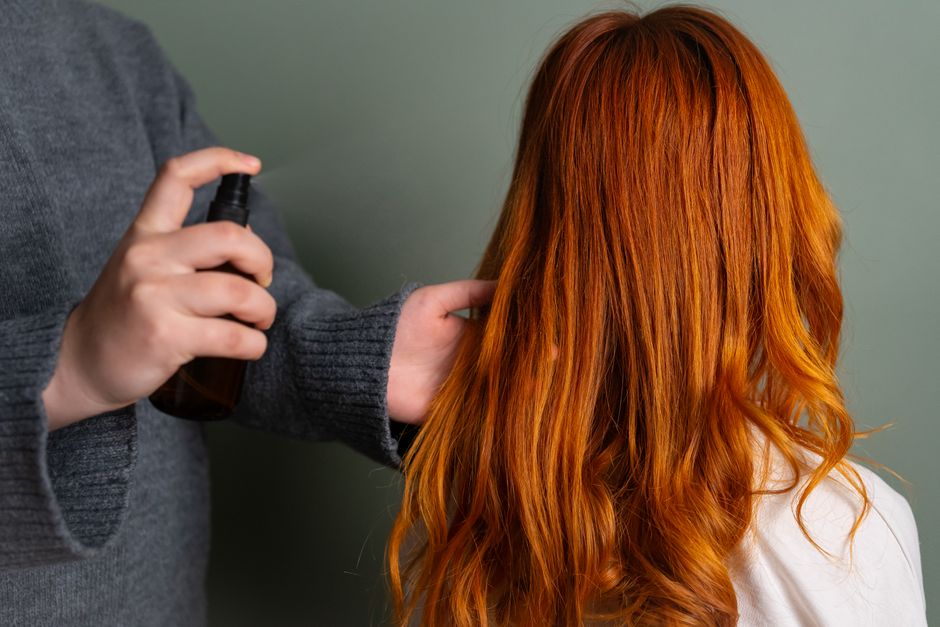
Hair color is one of the most visibly genetic traits in humans, and yes, it is overwhelmingly determined by your DNA. But the popular idea that a single “blonde gene” or “red hair gene” controls it is wrong. Hundreds of genetic variants, each contributing a small effect, work together to produce the color you see in the mirror.
Scientists have identified well over 100 genes that influence hair pigmentation, and the list keeps growing. The two best known are MC1R, which plays a major role in red hair, and a cluster of genes near the HERC2/OCA2 region, which strongly affects whether hair is light or dark. Most of the others each shift the final shade only slightly. That is why two brown-haired parents can have a blonde child, and why siblings from the same parents often have noticeably different hair.
Is Hair Color Genetic How Hundreds Of Genes Work?
Hair color comes from melanin, the same pigment family that colors your skin and eyes. The color you see is not a single pigment but a blend of two types.
Eumelanin is the brown-to-black pigment. Pheomelanin is the red-to-yellow pigment. Every person produces both, but in different amounts and ratios. High eumelanin with little pheomelanin gives black or dark brown hair. Low eumelanin with more pheomelanin gives red or strawberry blonde. Very low amounts of both give blonde. When pigment production in the hair follicle slows down substantially, hair becomes gray or white.
The reason so many genes are involved is that making and distributing melanin is a long assembly line. Dozens of proteins are needed to build pigment, package it into tiny granules called melanosomes, and transfer those granules into the growing hair shaft. A gene variant that makes one step slightly faster or slower changes the final shade a little. Stack up many small changes, and the cumulative effect can move hair from dark brown to light brown, or from auburn to copper red.
This is a pattern geneticists call polygenic inheritance. Instead of one gene switching a trait on or off, many variants each nudge the outcome. Height and skin tone follow the same pattern. Hair color is simply one of the more visible examples.
Which Genes Have The Strongest Effect On Hair Color?
A handful of genes carry far more weight than the rest. The most studied are:
- MC1R — the main gene linked to red hair. Certain variants reduce eumelanin production and shift the balance toward pheomelanin.
- HERC2/OCA2 — a region on chromosome 15 with a strong influence on whether hair is light or dark. Variants here are common in people with blonde or light brown hair.
- KITLG — associated with lighter hair shades in several populations.
- IRF4 — linked to hair color, and also to how easily hair grays.
- SLC24A4 and TYR — additional pigment-pathway genes that fine-tune shade.
Even MC1R, the most famous hair gene, does not act alone. Two people can carry the same MC1R variants and end up with different hair colors, because the other genes in their pigment network differ. Red hair also tends to run in families with fair skin and freckling, since MC1R affects pigment in skin as well as hair.
Why Do Parents And Children Often Have Different Hair Colors?
Because hair color is polygenic, it does not follow the simple dominant-recessive rules taught in basic biology class. The old classroom model — one brown allele beats one blonde allele — is a useful simplification, but it does not match what actually happens in families.
Each parent passes on a random half of their genetic variants to a child. A child inherits a fresh combination that neither parent has. If both parents carry several “light hair” variants but each also carries “dark hair” variants, the child might inherit mostly the light ones and be born blonde, even though both parents have brown hair.
This is why a child’s hair color can be hard to predict, and why it sometimes changes in the first few years of life. Many babies are born with lighter hair than they will have as adults, because melanin production in the hair follicle is still maturing. Hair often darkens during childhood as pigment output increases.





Can Hair Color Change Over A Lifetime?
Yes. Natural hair color is not fixed from birth. Two normal processes change it.
The first is early childhood darkening. As mentioned, many blond infants become light brown by school age as their follicles produce more eumelanin.
The second is graying with age. Over time, the pigment-producing cells at the base of each hair follicle — called melanocytes — gradually decline in number and activity. When a follicle stops producing meaningful pigment, the new hair grows in without color, which appears gray or white. The age at which this starts is strongly influenced by genetics, and IRF4 is one gene that has been linked to it. Smoking has also been associated with earlier graying in some studies, though the evidence is not uniform.
Hair does not usually change from brown to red or from black to blonde in adulthood on its own. When a sudden color change happens, it is typically from dye, medication, or a medical condition, not from a normal genetic shift.
Does A DNA Test Tell You Your Hair Color?
Consumer DNA tests can estimate hair color with reasonable accuracy for broad categories like “likely blonde” or “likely dark brown,” but they are not precise. Because hundreds of variants contribute, and because some of them are still being discovered, no test captures the full picture.
These tests tend to be better at predicting extremes — very light or very dark hair — than at distinguishing subtle shades like light brown versus dark blonde. They also generally cannot predict how a child’s hair will look, since that depends on which variants the child inherits, not just which ones the parents carry.
It is also worth separating natural hair color from hair traits like thickness, curl, and texture. Those are influenced by different genes, so a test that predicts color says little about whether hair will be straight or curly.
What About Red Hair Specifically?
Red hair is the most genetically distinctive common hair color. It is strongly tied to MC1R, and it is recessive in the sense that a person usually needs to inherit red-associated variants from both parents to have clearly red hair.
Even so, carrying two MC1R variants does not guarantee red hair. Other genes modify the outcome, and some people with two variants have auburn, strawberry blonde, or even brown hair. Conversely, red hair can occasionally appear in people with only one strong variant, depending on the rest of their genetic background.
Red hair is most common in people of Northern and Western European ancestry, but it appears in many populations at lower rates. The genetics are shared across groups; only the frequency of the variants differs.
Can Environment Or Lifestyle Change Your Natural Hair Color?
For the most part, no. Your genetic code sets the pigment your follicles can produce. Sun exposure can lighten hair somewhat by breaking down melanin in the hair shaft, which is why hair often looks lighter at the end of summer. That is a change to the existing hair, not to the genes or to future growth.
Nutritional deficiencies, certain medications, and some medical conditions can affect hair growth or cause hair to change in texture or shedding, but they rarely change natural pigment in a lasting way. If you notice a genuine, unexplained change in hair color or a sudden increase in graying along with other symptoms, that is worth discussing with a clinician rather than assuming it is purely genetic.
Frequently Asked Questions
Is hair color determined by one gene or many?
Hair color is determined by many genes, not one. Scientists have identified well over 100 genes that influence it, with MC1R and the HERC2/OCA2 region having the strongest effects.
Can two brown-haired parents have a blonde child?
Yes. Because hair color is polygenic, a child inherits a random mix of variants from each parent and can end up with a lighter shade than either parent.
Does red hair skip a generation?
It can appear to skip generations because red-associated MC1R variants are recessive and can be carried without showing up. A child needs to inherit these variants from both parents to have clearly red hair.
Can hair color change as you get older?
Yes. Many children’s hair darkens in early childhood, and hair commonly grays or whitens with age as pigment-producing cells in the follicle decline.
