
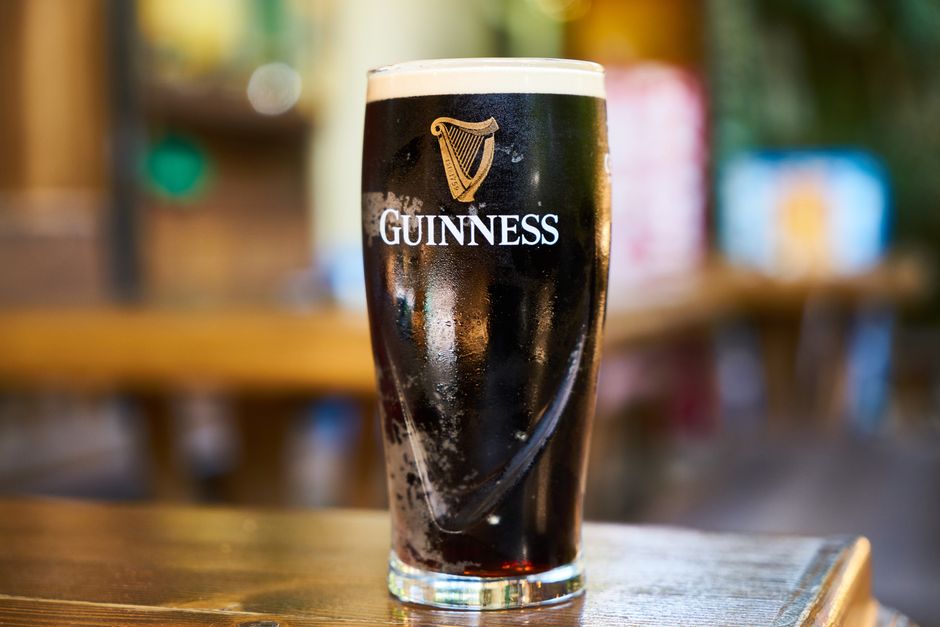
Guinness Stout is a dark Irish beer with a long history and a reputation that has outgrown the drink itself. For decades, people have passed around claims that it is “good for you” — that it builds strength, supports heart health, or delivers meaningful iron. The honest answer is that Guinness is still alcohol, and alcohol is not a health food. It contains small amounts of nutrients and antioxidants, but those amounts are too low to matter much. Any health benefit is outweighed by the risks of drinking alcohol at all.
Is Guinness Stout Good For You?
No. Guinness is not good for your health in any meaningful way. It is an alcoholic beverage, and the World Health Organization and major health bodies are clear that no level of alcohol consumption is risk-free.
That does not mean a pint now and then will harm most healthy adults. It means the “Guinness is good for you” idea is marketing, not medicine. The slogan dates back to a 1920s advertising campaign — one of the most successful in history. It was never a health claim backed by research. It was a sales pitch.
Guinness does contain trace amounts of certain nutrients and plant compounds. The word “trace” is doing a lot of work there. The quantities are so small that you would need to drink an unreasonable amount to get any real nutritional value — and by then the alcohol would be causing far more harm than the nutrients could offset.
What Is Actually In a Pint of Guinness?
Guinness is made from water, barley, hops, brewer’s yeast, and nitrogen. That nitrogen is what gives it the smooth, creamy head and the characteristic “surge” when it settles. It is not a special health ingredient. It is a gas.
A standard pint of Guinness Draught (about 568 ml in Ireland and the UK, or 16 oz in the US) contains roughly 210 calories and about 4.2% alcohol by volume. The alcohol content is lower than many lagers and ales, which is part of why people assume it is “lighter.” Lower alcohol does not mean harmless.
Here is where it gets interesting. Guinness does contain some B vitamins, particularly folate, and small amounts of antioxidants called flavonoids from the barley and hops. But the amounts are tiny compared to what you get from actual food. A single serving of leafy greens, beans, or fortified cereal delivers far more folate than a pint of stout — without the alcohol.
The iron claim is the one people repeat most. Guinness does contain some iron, but the amount is small. You would absorb more iron from a serving of red meat, lentils, or spinach. And alcohol actually interferes with iron absorption in the gut, so the net effect is not what the myth suggests.
Does Guinness Really Contain More Iron Than Other Beers?
Guinness may contain slightly more iron than some lighter beers, but the difference is not meaningful for your health. The iron content in a pint is a fraction of what you need in a day.
The adult daily iron requirement is 8 mg for men and postmenopausal women, and 18 mg for premenopausal women, according to the National Institutes of Health. A pint of Guinness contains a very small fraction of that — not enough to treat or prevent iron deficiency.
If you are genuinely low in iron, the answer is not stout. It is iron-rich foods or, if a doctor recommends it, iron supplements. Drinking alcohol to fix a nutrient deficiency is a bad trade. Alcohol can irritate the stomach lining and worsen the very problems you are trying to solve.
-
 EyeFortin Reviews 2026: Clear Vision Or A marketing Scam?
-
Mounjaboost Reviews & Complaints: Does Drops Work for Weight Loss?
-
Yu Sleep Weight Loss Supplement Reviews. Critical March 2026 Update.
-
Neuro Energizer Review 2026. Legit Brain Tool or Just Hype?
-
Acupuncture for Weight Loss: Does It Really Work?



What About the “Guinness Is Good for Your Heart” Claim?
This claim comes from research on alcohol and heart health that has been widely misread. Some older observational studies suggested that light to moderate drinkers had lower rates of heart disease than non-drinkers. That finding has been challenged in recent years.
Newer research methods — including genetic studies that separate the effects of alcohol from other lifestyle factors — suggest that much of the apparent heart benefit was not caused by alcohol at all. Light drinkers tend to be healthier, wealthier, and more socially connected than heavy drinkers or people who abstain for health reasons. When researchers control for those factors, the protective effect mostly disappears.
The current position from major health organizations is that no amount of alcohol can be recommended for heart health. If you do not drink, do not start for your heart. If you do drink, less is better. That applies to Guinness as much as to wine or spirits.
How Does Guinness Compare to Other Alcoholic Drinks?
Guinness sits in the middle of the pack for calories and on the lower end for alcohol content. Here is a rough comparison for a standard serving.
| Drink (standard serving) | Approx. calories | Approx. alcohol by volume |
|---|---|---|
| Guinness Draught (1 pint / 16 oz) | ~210 | ~4.2% |
| Regular lager (1 pint / 16 oz) | ~180–230 | ~4–5% |
| Red wine (5 oz) | ~125 | ~12–14% |
| Spirits (1.5 oz, 80 proof) | ~97 | ~40% |
Notice that the alcohol content varies a lot, but the calories per standard drink are not wildly different. What matters for health is total alcohol consumed, not the type of drink. A pint of stout and a glass of wine deliver a comparable dose of alcohol.
One practical point: Guinness is a source of empty calories. Those calories come with no fiber, no meaningful protein, and no vitamins in useful amounts. If you are watching your weight, that matters more than any nutrient claim.
Are There Any Real Health Benefits?
The evidence for specific health benefits from Guinness is weak. Most claims trace back to studies on alcohol in general, or to laboratory studies on compounds found in beer — not to Guinness itself, and not to human outcomes.
Some research has looked at polyphenols and other plant compounds in beer and their potential effects on inflammation or blood vessels. These are early-stage findings, often done in cells or animals. They do not establish that drinking Guinness improves anyone’s health.
There is also the well-known “French Paradox” — the observation that French people had relatively low heart disease rates despite diets rich in saturated fat, sometimes attributed to red wine. That idea has been heavily questioned. The evidence does not support drinking alcohol for health.
If you enjoy Guinness, enjoy it as a treat. Do not drink it as a supplement.
What Are the Risks of Drinking Guinness?
Alcohol carries real risks, and Guinness is no exception. The more you drink and the more often, the higher the risk.
- Increased risk of several cancers, including breast, colon, liver, and mouth cancers.
- Liver damage, including fatty liver, hepatitis, and cirrhosis over time.
- Higher blood pressure and increased risk of heart disease and stroke at higher intakes.
- Worsened anxiety, depression, and sleep quality.
- Dependence and alcohol use disorder.
- Increased risk of injuries and accidents.
These risks apply to all alcoholic drinks. The type of alcohol does not change the fundamental biology. Ethanol is ethanol, whether it comes from stout, wine, or whiskey.
Some people should not drink at all: pregnant women, people taking certain medications, people with liver disease, and anyone recovering from alcohol use disorder. If you are unsure about your own situation, that is a conversation for your doctor.
Is Guinness a Good Source of Anything?
Guinness is a source of calories and alcohol. It is not a meaningful source of any nutrient. That is the plain truth.
You may see claims about B vitamins, antioxidants, or iron. All of these exist in Guinness in small amounts. None of them exist in amounts that would make a difference to your health. The dose makes the poison, and it also makes the nutrient. A trace amount is not a benefit.
If you want folate, eat dark leafy greens, legumes, or fortified grains. If you want iron, eat lean red meat, poultry, fish, beans, or fortified cereal. If you want antioxidants, eat fruits and vegetables. These foods deliver the nutrients without the alcohol.
Frequently Asked Questions
Is Guinness Stout healthier than other beers?
No. Guinness has slightly less alcohol than many beers and a bit more iron, but the differences are too small to matter for health. All alcoholic drinks carry the same basic risks.
Does Guinness have health benefits?
No established health benefit has been confirmed for Guinness. Claims about iron, antioxidants, and heart health come from weak or misread research and do not hold up.
Can I drink Guinness if I’m anemic?
Guinness does not contain enough iron to treat or prevent anemia. If you have anemia, see a doctor and get iron from food or supplements as recommended.
How many calories are in a pint of Guinness?
A standard pint of Guinness Draught contains roughly 210 calories. That is similar to many other beers and comes with no useful nutrients.
