
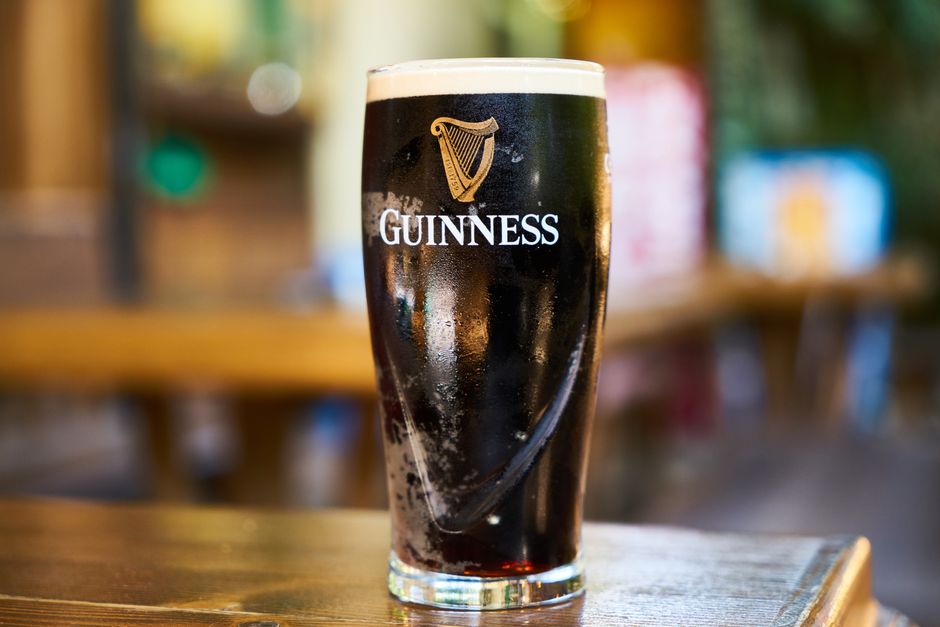
Yes, Guinness is a stout. More specifically, it is a dry Irish stout, famous for its dark ruby color, creamy head, and roasted barley flavor. While many people casually use the terms “stout” and “porter” interchangeably, Guinness has a distinct identity within the stout family that sets it apart from other dark beers.
What Exactly Defines a Stout?
A stout is a dark beer style that originated in England and Ireland. The defining characteristic is the use of roasted barley or roasted malt, which gives the beer its deep color and coffee-like, sometimes slightly bitter flavor.
Stouts are typically top-fermented ales, not lagers. This means they ferment at warmer temperatures with yeast that rises to the top of the tank. The result is a beer with more complex fruity and estery notes compared to the cleaner profile of a lager.
Historically, the term “stout” simply meant “strong” or “proud.” It was originally used to describe a stronger version of porter, another dark beer. Over time, the name stuck to the style itself, regardless of alcohol content. Today, stouts are defined by their roasted character rather than their strength.
What Type of Stout is Guinness?
Guinness is classified as a dry Irish stout. This is a specific subcategory that differs from other stouts like sweet stouts or imperial stouts.
The “dry” label refers to the beer’s finish. Unlike milk stouts, which contain lactose (milk sugar) for sweetness, Guinness uses roasted barley that is not malted. This unmalted grain contributes to the beer’s signature dry, slightly sharp character.
The roasted barley also provides most of the coffee and chocolate notes you taste. However, Guinness is not a heavy or syrupy beer. It is relatively low in alcohol and calories compared to many craft stouts, making it a lighter option in the stout category.
How Does Guinness Compare to Other Stouts?
Understanding where Guinness fits among other stouts helps clarify the style. The table below compares the main stout types you are likely to encounter.
| Stout Type | Key Ingredients | Flavor Profile | Typical Strength |
|---|---|---|---|
| Dry Irish Stout (Guinness) | Roasted barley, pale malt | Dry, coffee-like, low sweetness | 4.2% ABV |
| Sweet or Milk Stout | Lactose (milk sugar) | Sweet, creamy, chocolate notes | 4.5-6% ABV |
| Oatmeal Stout | Oats added to the grain bill | Smooth, fuller body, nutty | 4.5-6% ABV |
| Imperial Stout | High malt content, high alcohol | Rich, intense, dark fruit, heavy | 8-12% ABV |
| Foreign Extra Stout | Higher gravity version of dry stout | Stronger roast, more bitterness | 6-8% ABV |
The most common version sold in the United States is Guinness Draught, which comes in cans with a nitrogen widget or on tap. It sits at 4.2% alcohol by volume. Guinness Foreign Extra Stout, which is more common in Africa and Asia, is a different and stronger version of the same recipe.
Why is Guinness Served with a Nitrogen Head?
Guinness is famous for its thick, creamy head and the cascading effect seen in a freshly poured glass. This is not a marketing trick. It is a matter of chemistry and physics.
Most beers are carbonated with carbon dioxide (CO2). Guinness Draught, however, is carbonated with a blend of CO2 and nitrogen (N2). Nitrogen produces much smaller bubbles than CO2. These tiny bubbles create a denser, smoother foam that lasts longer than the frothy head on a typical lager.
In cans and bottles, a small plastic device called a “widget” releases nitrogen gas when the can is opened. This recreates the smooth, creamy texture you get from a draught pour.
This nitrogenation is a defining feature of modern Guinness Draught. It is not a requirement for the stout style itself, but it has become inseparable from the Guinness brand identity. Many other breweries now produce “nitro stouts” to mimic this texture.
Does Guinness Contain Actual Guinness on Draught?
This question confuses many people. When you order a pint of Guinness, you are drinking a pasteurized, filtered beer. The yeast has been removed after fermentation.
Some bars serve “Guinness on nitro” from a keg. The keg contains the finished beer mixed with nitrogen. It is not a live, continuing fermentation. The creamy texture comes entirely from the gas mix, not from any active yeast in the glass.
There is a separate product called Guinness Foreign Extra Stout that undergoes a different process. It is brewed with a higher alcohol content and is often aged. However, the standard draught Guinness you find in most pubs is a consistent, filtered product designed for immediate consumption.
Is Guinness a Heavy Beer or a Light Beer?
Many people assume Guinness is a heavy beer because of its dark color. This is a common misconception. A standard pint of Guinness Draught contains fewer calories than many light lagers.
A 12-ounce serving of Guinness Draught has roughly 125 calories. For comparison, a typical American light lager has about 90 to 110 calories per 12 ounces. The difference is smaller than most people expect.
Guinness is also relatively low in alcohol. At 4.2% ABV, it is weaker than the average craft beer, which often sits between 5% and 7% ABV. The perception of heaviness comes from the creamy texture and roasted flavor, not from actual density or alcohol content.
This makes Guinness a sessionable beer. You can drink several pints without consuming the high alcohol load of an imperial stout or a double IPA.
What Does Guinness Taste Like?
The flavor of Guinness is often described as having notes of coffee, dark chocolate, and a hint of burnt toast. The roasted barley is the primary driver of these flavors.
There is also a noticeable bitterness. This comes from both the roasted grain and the hops. However, Guinness is not aggressively hoppy like an American IPA. The bitterness is balanced and contributes to the dry finish.
Some drinkers detect a slightly sour or tangy note. This is a byproduct of the specific yeast strain used by Guinness and the brewing process. It is subtle and not unpleasant, but it adds to the beer’s complexity.
The mouthfeel is smooth and silky, especially when served on nitrogen. Despite its creamy texture, it finishes cleanly without leaving a heavy coating on the palate.
Is There a Difference Between Stout and Porter?
This is one of the oldest debates in beer. Historically, stout was simply a stronger porter. Today, the lines have blurred, but there are general distinctions.
Porters are typically brewed with malted barley and have a softer, more chocolatey flavor. Stouts, particularly Irish stouts, use a portion of unmalted roasted barley. This gives them a sharper, more coffee-like roast character.
In modern brewing, the difference is often subtle. Many craft brewers produce porters that are as dark and strong as stouts. The names are sometimes used loosely. However, for Guinness specifically, the use of roasted barley firmly places it in the stout category.
If you drink a porter and a stout side by side, the stout will generally have a drier, more intense roasted flavor. The porter will often taste slightly sweeter and rounder.
How Should You Drink Guinness?
Guinness is best served cold but not ice-cold. The ideal serving temperature is around 42 to 45 degrees Fahrenheit. Serving it too cold masks the roasted flavors.
The traditional two-part pour is standard in pubs. The bartender fills the glass about three-quarters full, lets the foam settle, and then tops it off. This process creates the iconic layered appearance with a dense, creamy head.
Guinness pairs well with hearty foods. Roasted meats, stews, oysters, and sharp cheeses complement the beer’s roasted bitterness. The carbonation also cuts through rich, fatty foods effectively.
You do not need a special glass to enjoy Guinness at home. A standard pint glass works fine. The key is to pour it gently and let the nitrogen settle before drinking.
Frequently Asked Questions
Is Guinness a lager or an ale?
Guinness is an ale, specifically a stout. It uses top-fermenting yeast and is brewed at warmer temperatures than a lager.
Why is Guinness so dark if it is low in alcohol?
The dark color comes from heavily roasted barley, not from high alcohol content. The roasting process darkens the grain and produces coffee-like flavors.
Is Guinness good for you compared to other beers?
Guinness Draught is relatively low in calories and alcohol compared to many craft beers. However, it is still an alcoholic beverage and should be consumed in moderation.
Does Guinness taste like coffee?
Yes, the roasted barley gives Guinness distinct coffee and dark chocolate notes. The flavor is dry and slightly bitter, similar to a black coffee.
