
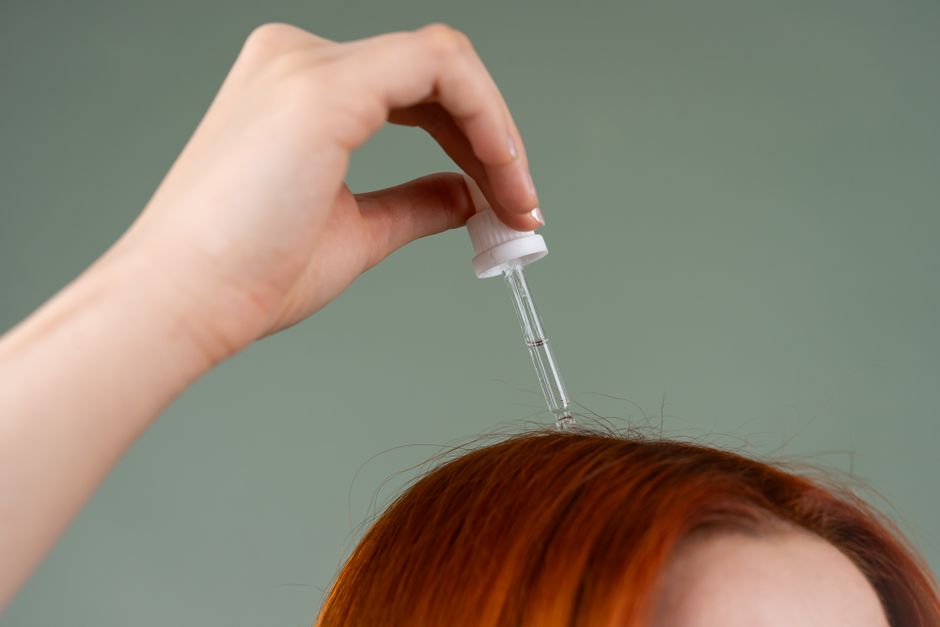
Greasy hair is normal. Your scalp produces oil on purpose, and that oil keeps your hair from drying out and breaking. It only becomes a “problem” when the oil builds up faster than you wash it away, or when greasiness shows up alongside other symptoms like itching, flaking, or patches of hair loss.
So the short answer is: greasy hair is healthy in the sense that it means your sebaceous glands are working. It is a cosmetic issue for most people, not a medical one. But there are a few situations where persistent oiliness is a sign worth checking with a doctor.
What Actually Makes Hair Greasy?
Your scalp has sebaceous glands attached to each hair follicle. These glands make sebum, a mix of fats that coats the hair shaft and the skin around it.
Sebum is not dirt. It is a natural moisturizer and it has mild antimicrobial properties. Without it, hair becomes brittle and the scalp can crack and flake. So the oil itself is doing a job.
The greasy feeling comes from how sebum spreads. It travels down the hair shaft from the root. The first inch or two near the scalp gets coated first, which is why the roots look oily while the ends still look dry. Over a day or two, that coating builds up and starts to reflect light differently, giving hair that flat, shiny look.
Sebum production is controlled mainly by hormones called androgens. This is why oiliness changes so much during puberty, pregnancy, and menopause. It also explains why some people are simply oilier than others no matter what they do.
Is Greasy Hair Healthy Or A Sign Of A Problem?
Greasy hair on its own is not a sign of disease. It means your sebaceous glands are active and your hormones are driving normal oil production.
In fact, some oil is protective. People who strip every trace of it with harsh daily washing often end up with a dry, irritated scalp.
What matters is context. Greasy hair becomes worth investigating when it comes with:
- Persistent itching or burning on the scalp
- Flaking that looks yellow or greasy rather than dry and white
- Redness or crusting along the hairline
- Hair thinning or shedding in specific patches
- Sudden changes in oiliness that do not match any change in routine
Any of those point toward a scalp condition rather than ordinary oil production. On their own, none of them confirms a specific diagnosis. A dermatologist can tell the difference.
Why Does Hair Get Greasy So Fast For Some People?
How quickly hair looks oily varies enormously between people, and most of that comes down to biology, not hygiene.
Genetics play a large role. If your parents had oily scalps, you probably do too. Sebaceous gland size and sensitivity to androgens are inherited traits.
Hormones are the other big factor. Androgens increase sebum output. That is why oiliness often peaks in the teenage years and why it can shift during pregnancy or around menopause.
Then there are the habits that make it worse:
- Overwashing. Washing too often with strong shampoos can dry the scalp, and some people respond by producing more oil. The evidence for this rebound effect in humans is not strong, but scalp irritation from harsh washing is real.
- Touching your hair. Hands transfer oil from your skin to your hair. Frequent touching moves oil down the shaft faster.
- Brushing too much. Brushing distributes sebum from the roots toward the ends. A little is fine. Constant brushing spreads the oil.
- Conditioner on the roots. Conditioner is designed for the ends. Applied at the scalp, it adds to the oil already there.
- Sleeping in unwashed hair. Oil, sweat, and dead skin cells accumulate overnight.
None of these cause a medical problem. They just speed up how soon hair looks greasy.





Can Greasy Hair Be a Symptom of Something Else?
Yes, in some cases. Oiliness that comes with flaking and itching can be a sign of seborrheic dermatitis, a common inflammatory scalp condition.
Seborrheic dermatitis causes greasy, yellowish scales and red, irritated skin, most often along the hairline, behind the ears, and in the eyebrows. It is linked to a yeast that lives on everyone’s skin called Malassezia, though the exact way it triggers inflammation is not fully understood. It is not contagious and it is not caused by poor hygiene.
Other possibilities include:
- Contact dermatitis. A reaction to a shampoo, dye, or styling product can cause oiliness, redness, and itching.
- Hormonal conditions. Conditions that raise androgen levels can increase sebum production. This is uncommon, and oiliness alone would not be enough to suspect one.
- Scalp psoriasis. This causes thick, silvery scales and can sometimes be confused with seborrheic dermatitis. A doctor can distinguish them.
If oiliness is your only symptom and it has been stable for years, it is almost certainly just your normal scalp. If it changed suddenly, or came with itching, redness, or hair loss, get it looked at.
How Often Should You Wash Greasy Hair?
There is no single correct answer. How often you wash depends on how oily your scalp is, how much you sweat, and how your hair responds.
For people with very oily scalps, washing daily is reasonable and not harmful. The idea that daily washing damages hair is not supported by strong evidence. What matters more is what you wash with.
A few general points that most dermatologists would agree on:
- Use a gentle shampoo if you wash daily. Harsh formulas used every day can irritate the scalp.
- Focus shampoo on the scalp, not the ends. The ends get cleaned as the lather rinses through.
- Apply conditioner only from mid-shaft to ends.
- Rinse with lukewarm water. Very hot water can dry and irritate the scalp.
- If you have flaking and itching, a medicated shampoo with ingredients like zinc pyrithione, ketoconazole, or salicylic acid may help. These are available over the counter. If symptoms persist after a few weeks of use, see a doctor.
Dry shampoo can absorb oil between washes. It is a temporary fix, not a substitute for washing. Leaving it on the scalp for many days can cause buildup and irritation.
Does Greasy Hair Mean Hair Loss Is Coming?
No. Greasy hair does not cause hair loss, and having an oily scalp does not mean you will go bald.
The two often appear together for a simple reason: androgen hormones drive both sebum production and common pattern hair loss. So people with androgen-related hair thinning may also have oilier scalps. The oil is not causing the loss. Both are downstream of the same hormonal signal.
That said, if you notice increased shedding along with a sudden change in oiliness, it is worth having it checked. Hair loss has many causes, including thyroid problems, iron deficiency, and medication side effects, and some of them are treatable.
When Should You See a Doctor About Greasy Hair?
Most people never need to. Greasy hair is a normal variation, not a condition.
See a doctor or dermatologist if you have:
- Scalp itching, burning, or pain that does not go away
- Redness, swelling, or crusting
- Flaking that does not improve with medicated shampoo
- Patches of hair loss
- A sudden change in oiliness with no clear cause
- Scalp sores or open areas
These signs suggest something beyond ordinary oil production. A dermatologist can examine the scalp directly and determine whether treatment is needed.
Frequently Asked Questions
Is greasy hair a sign of healthy hair?
Greasy hair means your sebaceous glands are producing sebum, which is normal and protective. It is not a sign of health or disease on its own, just of active oil production.
Why is my hair greasy even after washing it?
Hair can look greasy right after washing if conditioner was applied to the roots, if the shampoo was too mild for your oil level, or if product buildup remains. It can also happen if your scalp simply produces a lot of oil, which is largely genetic.
Can greasy hair cause hair loss?
No, sebum does not cause hair loss. Oiliness and common pattern hair loss can appear together because both are influenced by androgen hormones, but the oil is not the cause.
Does washing your hair more often make it greasier?
The evidence for a rebound effect in humans is not strong. What is clear is that harsh shampoos used daily can irritate the scalp, so a gentle formula is a better choice for frequent washing.
