
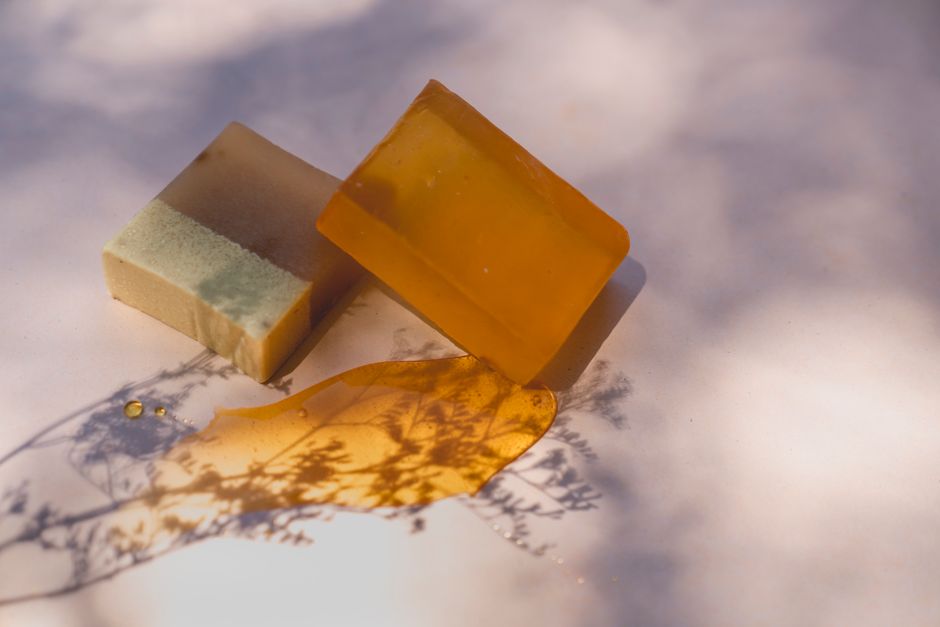
Glycerin soap is a cleansing bar made with glycerin, a humectant that pulls water toward your skin. Whether it helps or hurts depends less on the word “glycerin” on the label and more on what else is in the bar. For many people with dry or sensitive skin, a high-glycerin bar can be a reasonable daily cleanser. For others, especially those with oily or acne-prone skin, it may not be the best match.
What Is Glycerin Soap Actually Made Of?
Glycerin is a clear, thick liquid that occurs naturally in fats and oils. It belongs to a group of ingredients called humectants. Humectants attract water from the air and from deeper layers of your skin and hold it near the surface.
Most commercial soap is made through a process called saponification, where fat reacts with lye to form soap. Glycerin is a natural byproduct of that reaction. Large-scale soap makers often remove the glycerin and sell it separately, because it has value in cosmetics and other products. Soap made without that removal step keeps the glycerin in the bar.
True glycerin soap is usually transparent. It contains glycerin along with a soap base, water, and often additional ingredients like sorbitol or propylene glycol to keep the bar clear and stable. The exact amount of glycerin varies widely between products. A bar labeled “glycerin soap” might contain a small amount or a large amount. The label rarely tells you the percentage.
This matters. A bar with a lot of glycerin behaves differently from one with just a little. Without knowing the concentration, the word on the label tells you less than you might expect.
Is Glycerin Soap Good For Your Skin What To Know About How It Works
Glycerin works by holding water in the outer layer of skin, called the stratum corneum. That layer acts as a barrier. When it holds enough water, it stays flexible and keeps irritants and germs out. When it loses water, the barrier weakens and skin feels tight, rough, or itchy.
Glycerin is one of the most studied humectants in skin care. Research has fairly consistently found that it improves skin hydration and supports barrier function when applied topically. It is generally well tolerated, and allergic reactions to it are uncommon.
But here is where the logic needs care. A soap bar is not the same as a leave-on moisturizer. Soap is designed to be rinsed off within seconds. Much of the glycerin goes down the drain with the lather. Any benefit depends on how much glycerin stays behind on the skin after rinsing, and how much the soap itself strips oils away.
Cleansing is a trade-off. Soap removes dirt, oil, and microbes, but it can also remove some of the lipids that keep your barrier intact. A glycerin bar may leave more of those lipids in place than a harsh detergent bar. Whether that difference is large enough to matter for your skin is not fully settled by research.
Who Tends to Do Well With Glycerin Soap?
People with dry skin often find glycerin bars less drying than standard commercial soaps. The glycerin can help offset some of the moisture loss that cleansing causes.
People with sensitive or reactive skin may also do well, provided the bar does not contain fragrance, dyes, or other ingredients they react to. A plain glycerin bar with few additives is often a gentler option than a heavily scented one.
People who simply want a mild everyday cleanser, without a specific skin condition, can generally use glycerin soap without issue. It cleans effectively and rinses clean.
It is worth separating two things that often get mixed together. Glycerin as an ingredient is well supported for hydration. Glycerin soap as a finished product is less well studied, because bars differ so much. A good experience with one brand does not guarantee the same with another.



Who Might Want to Choose Something Else?
People with oily or acne-prone skin sometimes find glycerin soap too moisturizing or not cleansing enough. It may leave a residue that feels heavy, and it does not contain ingredients that treat acne.
Anyone with a diagnosed skin condition such as eczema, rosacea, or psoriasis should treat soap choice as one small factor among many. These conditions usually need guidance from a clinician, not just a different bar. Some clinicians recommend specific gentle cleansers for these conditions, but the evidence for any single soap being best is limited.
If a glycerin bar contains fragrance, essential oils, or preservatives, it can trigger irritation in people who are sensitive to those ingredients. Reading the full ingredient list matters more than the front label. “Natural” on a package does not mean “non-irritating.”
How Does Glycerin Soap Compare to Other Cleansers?
Different cleansers suit different skin. The table below compares general categories, not specific brands.
| Cleanser type | Typical feel | Best suited for |
|---|---|---|
| Glycerin bar | Mild, some moisture left behind | Dry or sensitive skin |
| Standard bar soap | Can feel stripping | Normal to oily skin |
| Syndet (soap-free) bar | Gentle, low residue | Sensitive or reactive skin |
| Foaming gel cleanser | Light, removes oil well | Oily or acne-prone skin |
| Cream cleanser | Rich, minimal lather | Very dry skin |
This is a rough guide. Individual responses vary, and the ingredients in a specific product often matter more than its category.
Does Glycerin Soap Have Any Downsides?
Glycerin is hygroscopic, meaning it attracts water. In very dry air, it can pull moisture from your skin rather than from the environment. In practice, this effect is usually small for a rinse-off product, but it is one reason glycerin works best when paired with a moisturizer afterward.
Some people report that glycerin soap leaves a film or feels sticky. Others find it dissolves faster than harder bars, so it does not last as long.
There is no strong evidence that glycerin soap is harmful for healthy skin. The main risks are irritation from other ingredients in the bar and inadequate cleansing for oily skin types.
How Should You Use It?
Use lukewarm water, not hot. Hot water strips oils more aggressively and can worsen dryness regardless of which soap you use.
Lather, cleanse, and rinse thoroughly. Leftover soap residue can irritate skin.
Follow with a moisturizer while your skin is still slightly damp. This helps seal in water and makes the most of any humectant effect. For most people, the moisturizer does more for hydration than the cleanser does.
If your skin feels tight, itchy, or irritated after washing, that is a signal the product may not suit you. Try a different bar or a soap-free cleanser. If irritation persists, see a clinician.
Frequently Asked Questions
Is glycerin soap good for dry skin?
It is often a reasonable choice for dry skin because glycerin is a humectant that helps hold water in the skin. However, it is a rinse-off product, so a moisturizer afterward does more for hydration than the soap itself.
Can glycerin soap cause acne?
Glycerin itself is not known to cause acne, and it is generally considered non-comedogenic. Some people with oily skin find glycerin bars too heavy or not cleansing enough, which can contribute to clogged pores if oil and debris are not fully removed.
Is glycerin soap better than regular soap?
It depends on your skin type. Glycerin soap tends to be less drying than many standard commercial bars, which suits dry or sensitive skin. For oily skin, a standard or foaming cleanser may work better.
Does glycerin soap actually moisturize your skin?
Glycerin attracts and holds water, so it can support hydration while you wash. Because soap is rinsed off quickly, the lasting moisturizing effect is limited, and a separate moisturizer is still needed.
