
No, gluten is not yeast. They are two completely different substances that happen to show up in the same foods. Gluten is a protein found in wheat, barley, and rye. Yeast is a living single-celled fungus. The confusion is understandable because bread recipes usually contain both. But they are not the same thing, and one does not contain the other.
If you are avoiding gluten for medical reasons, yeast is not automatically off your list. If you are avoiding yeast for another reason, gluten-free products can still contain it. The two restrictions are separate, and mixing them up leads to unnecessary food eliminations.
What Is Gluten Exactly?
Gluten is a family of proteins stored in the seeds of certain grains. It is not one single molecule. The two main components are glutenin and gliadin, and together they give dough its elastic, stretchy quality.
Gluten is found naturally in wheat, barley, rye, and triticale, a hybrid of wheat and rye. It is also present in derivatives of these grains, including malt, which comes from barley. Oats are a separate case. Oats do not contain gluten naturally, but they are frequently contaminated with wheat during growing, harvesting, and processing.
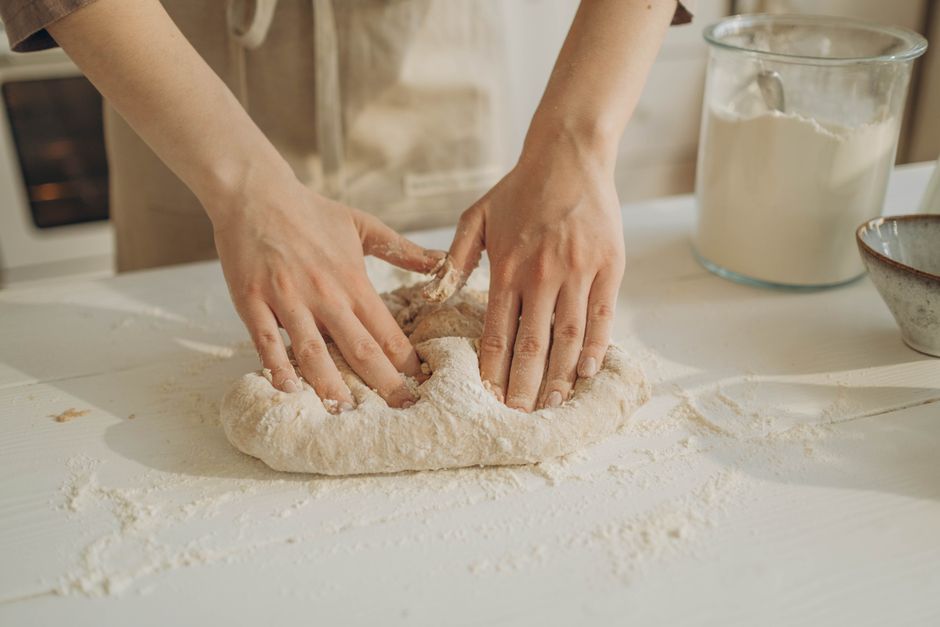
Gluten’s role in baking is structural. When flour meets water, gluten proteins link into a network that traps gas. That network is what allows bread to rise and hold its shape. Without gluten, baked goods tend to be dense and crumbly, which is why gluten-free baking often relies on combinations of rice flour, tapioca starch, and xanthan gum.
The medical reason people avoid gluten is not a preference. In celiac disease, an autoimmune condition, eating gluten triggers an immune response that damages the lining of the small intestine. That damage impairs nutrient absorption and can cause a range of symptoms. Celiac disease is not the same as wheat allergy, and neither is the same as non-celiac gluten sensitivity, a condition that is less well understood.
What Is Yeast and Where Does It Fit?
Yeast is a fungus, not a grain protein. The species most used in baking and brewing is Saccharomyces cerevisiae, sometimes called baker’s yeast or brewer’s yeast.
Yeast is alive. When it has access to sugars and a suitable temperature, it ferments those sugars and produces carbon dioxide and alcohol. In bread dough, the carbon dioxide bubbles get trapped by the gluten network, which is what makes the dough rise. In beer and wine, the alcohol is the point.
Nutritional yeast is the same organism, grown and then dried so it is no longer active. It is sold as yellow flakes or powder and used for flavor, often described as nutty or cheesy. It is not a leavening agent. It will not make bread rise.
Yeast appears in far more places than most people realize. It is in bread, beer, wine, some cheeses, soy sauce, vinegar, and many fermented foods. It is also used in some food manufacturing as a flavor base, including in yeast extract, which is a common ingredient in soups, stocks, and snack foods.
Is Gluten Yeast Free? The Direct Answer
The question usually runs the other direction, and the phrasing matters. Gluten does not contain yeast, and yeast does not contain gluten. They are unrelated substances that coexist in many foods.
So if you are asking whether gluten itself is free of yeast, the answer is yes, trivially. Gluten is a protein. It has no yeast in it.
The more useful question is whether foods that contain yeast also contain gluten. Sometimes yes, sometimes no. It depends entirely on the food.
- Regular bread: contains both gluten and yeast
- Beer: contains both, since it is made from barley and fermented with yeast
- Nutritional yeast: contains yeast, no gluten
- Gluten-free bread: contains no gluten, usually contains yeast
- Sourdough bread: contains gluten, contains wild yeast and bacteria
- Vinegar: may contain trace yeast from fermentation, generally no gluten
The takeaway is that yeast is not a marker for gluten, and gluten is not a marker for yeast. You have to check each food on its own terms.




Why Do People Confuse Gluten and Yeast?
The confusion comes from bread. Bread is the food most associated with both gluten and yeast, so people who react badly to bread sometimes blame the wrong ingredient.
Someone who feels bloated or unwell after eating bread might assume yeast is the problem. But if they have celiac disease, the culprit is gluten. If they have a wheat allergy, the culprit is wheat protein. If they have non-celiac gluten sensitivity, the trigger is not fully understood and may not be gluten alone.
There is also a real phenomenon worth knowing about. Some people who react to bread do not react to sourdough bread made with traditional long fermentation. During a long sourdough ferment, wild yeast and lactic acid bacteria partially break down some of the proteins in the flour. Whether this makes the bread tolerable for people with gluten-related conditions is not established, and it does not make sourdough bread safe for celiac disease. Anyone with celiac disease should treat sourdough as containing gluten.
Another source of confusion is that some people report reactions to yeast itself. That is a separate issue from gluten, and the evidence around it is limited. There is no widely accepted diagnosis of yeast allergy or yeast intolerance in the way there is for celiac disease.
Does Yeast Contain Gluten?
Pure yeast does not contain gluten. Yeast is a fungus, and fungi do not produce the gluten proteins found in wheat, barley, and rye.
The complication is not the yeast itself. It is what the yeast is grown on or mixed with. Some commercial yeast products are grown using a medium that contains gluten-containing grains, though the finished yeast is generally processed and washed in ways that remove it. The amount of gluten, if any, that survives into the final product is generally considered very low.
For most people avoiding gluten, plain yeast is not a concern. For someone with celiac disease who is highly sensitive, the safest approach is to look for yeast products labeled gluten-free, since the labeling standard confirms the product meets a defined threshold. In the United States, a product labeled gluten-free must contain less than 20 parts per million of gluten. That is the established regulatory standard, and it is the same threshold used in many other countries.
What About Yeast Extract and Gluten?
Yeast extract is a flavoring made by breaking down yeast cells. It is rich in naturally occurring glutamate, which is why it tastes savory. It shows up in soups, sauces, chips, and many processed foods.
Yeast extract itself does not contain gluten. But it is often found in products that do, and it is sometimes made from barley, which does contain gluten. When yeast extract is derived from barley, the finished product may contain gluten. This is why some people avoiding gluten are told to watch for yeast extract on labels.
The practical guidance is to read the full ingredient list and look for a gluten-free label. Yeast extract alone is not a reliable signal either way.
How to Tell If a Food Has Gluten or Yeast
The label is your most reliable tool. In the United States, a gluten-free claim on a packaged food is regulated, and it means the product meets the 20 parts per million standard. That is a useful shortcut.
For yeast, there is no equivalent regulated claim, because yeast is not a recognized allergen under current labeling law. If you are avoiding yeast, you have to read ingredients. Look for yeast, yeast extract, nutritional yeast, brewer’s yeast, and autolyzed yeast.
For gluten, look for wheat, barley, rye, malt, and triticale, plus any ingredient that does not clearly state its source. Some ingredients, like modified food starch, can be made from wheat or from other sources, and the label may not say which.
When in doubt, contact the manufacturer. Ingredient sourcing changes, and a product that was safe last year may not be this year.
What This Means If You Are Avoiding One or the Other
If you are avoiding gluten, yeast is generally not something you need to eliminate. You can eat yeast, nutritional yeast, and yeast-containing foods as long as the food itself is gluten-free.
If you are avoiding yeast, gluten is a separate matter. Gluten-free products often contain yeast, so a gluten-free label does not help you here. You need to read for yeast ingredients specifically.
If you suspect you react to bread or another food, the useful next step is not to guess. Celiac disease can be tested for, and testing should happen before you remove gluten from your diet, because eliminating gluten first can make the tests unreliable. Talk to a doctor about what testing makes sense for your situation rather than self-diagnosing based on symptoms.
Cutting out gluten without a diagnosis carries real downsides. It can make a later diagnosis harder, it can lead to unnecessary dietary restriction, and gluten-free products are not automatically healthier. Some are lower in fiber and higher in sugar and fat than the foods they replace.
Frequently Asked Questions
Is gluten the same as yeast?
No. Gluten is a protein found in wheat, barley, and rye, while yeast is a living single-celled fungus. They are unrelated substances that often appear together in bread and beer.
Does yeast contain gluten?
Pure yeast does not contain gluten, because fungi do not make the gluten proteins found in grains. Some yeast products may carry trace gluten from how they are grown or processed, so a gluten-free label is the safest check.
Can you be allergic to yeast but not gluten?
Yeast allergy is not a well-established diagnosis, and the evidence for it is limited compared with conditions like celiac disease. If you react to bread, gluten-related conditions are more commonly the cause, and testing is the way to find out.
Is nutritional yeast gluten-free?
Nutritional yeast is made from yeast and does not contain gluten on its own. Check the label anyway, since some brands add flavors or other ingredients that may contain gluten.
