
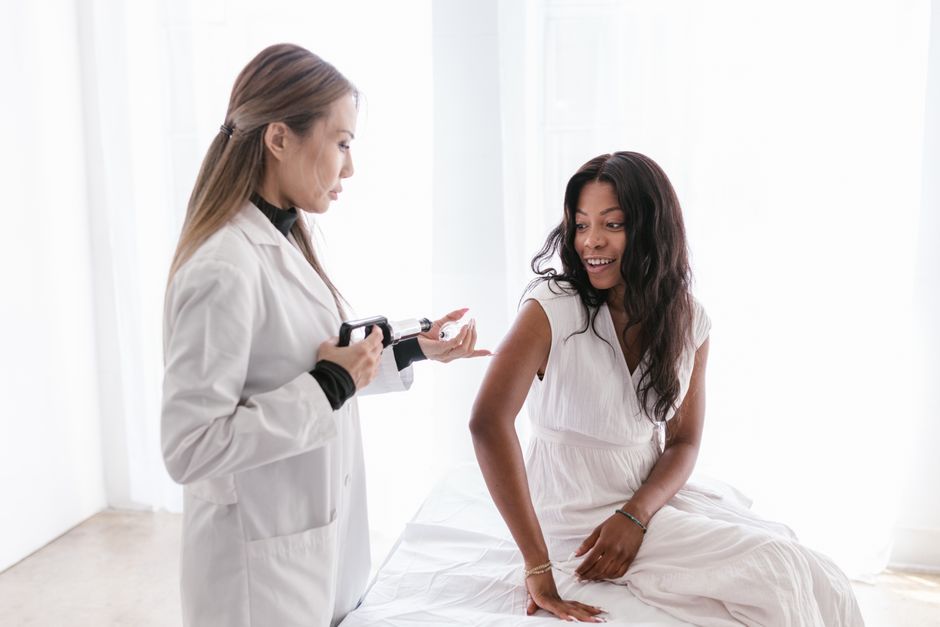
The Freestyle Libre is a continuous glucose monitor worn on the skin, not a needle that stays inside you. It uses a small, flexible filament that sits just under the skin’s surface to measure glucose in the fluid between cells. The tiny sensor wire is about the width of a human hair and is inserted with a separate device, while the applicator needle is removed immediately after placement.
Is Freestyle Libre A Needle What Stays In Your Skin?
No. The Freestyle Libre is not a needle that remains in your skin. The device consists of a small circular patch worn on your upper arm for up to 14 days. Inside that patch is a tiny, flexible filament that rests just beneath the top layer of skin. This filament is not a rigid needle — it is a soft, thin wire that measures glucose in the interstitial fluid, which is the fluid surrounding your cells.
The insertion process uses a spring-loaded applicator that pushes the filament in and then retracts the needle. The needle is only used for the moment of insertion. Once the sensor is in place, you feel no needle and there is no metal or sharp object left inside you.
How Does the Freestyle Libre Sensor Work?
The sensor measures glucose every minute and stores readings every 15 minutes. It works by using an enzyme called glucose oxidase, which reacts with glucose in the interstitial fluid. This reaction creates a small electrical signal that the sensor translates into a glucose reading.
You scan the sensor with a reader or a smartphone app to see your current glucose level and a graph of your readings from the past 8 hours. The system is factory-calibrated, meaning you do not need to do fingerstick blood tests to calibrate it. However, the manufacturer recommends doing a fingerstick test if your symptoms do not match your sensor reading.
Interstitial fluid glucose lags behind blood glucose by about 5 to 10 minutes. This matters most when your glucose is changing quickly, such as after a meal or during exercise. The sensor is highly accurate for trend information and for detecting patterns, but it is not identical to a blood glucose meter reading.
What Does the Insertion Process Feel Like?
Most people describe the insertion as a quick, brief pinch. The applicator is pressed against the skin and a button is pressed to deploy the sensor. The needle enters and retracts almost instantly — the entire process takes less than a second.
After insertion, most people do not feel the filament at all. Some people report a mild sensation for the first few hours, which typically fades. The adhesive patch holds the sensor in place, and you can shower, swim, and exercise normally while wearing it. The sensor is water-resistant but not designed for prolonged submersion.
Insertion sites should be rotated with each new sensor to give your skin time to recover. The upper arm is the only approved site for the Freestyle Libre in most regions. Using other sites, such as the abdomen or thigh, is not approved by the manufacturer and may affect accuracy.



Who Uses the Freestyle Libre?
The Freestyle Libre is designed for people with diabetes. It is most commonly used by people with type 1 diabetes and people with type 2 diabetes who use insulin. Some healthcare providers also recommend it for people with type 2 diabetes who have frequent low blood sugar episodes or who struggle to control their glucose levels with oral medications alone.
Unlike older continuous glucose monitors, the Freestyle Libre does not require routine fingerstick calibration. This makes it easier for many people to use consistently. It provides a glucose reading every time you scan, which is different from real-time continuous glucose monitors that send readings automatically to a receiver or smartphone.
The Freestyle Libre 2 and Libre 3 versions add optional low and high glucose alarms. The Libre 3 is smaller than earlier versions and can send readings continuously to a smartphone app. These newer versions still use the same basic technology — a thin filament under the skin, no needle left in place.
How Does It Compare to Traditional Fingerstick Testing?
Fingerstick testing gives you a single point-in-time blood glucose reading. The Freestyle Libre gives you a continuous picture of glucose trends, including how your glucose changes overnight and between meals. This trend data is something fingerstick testing simply cannot provide.
Fingerstick testing measures glucose in whole blood, while the Freestyle Libre measures glucose in interstitial fluid. The two measurements are closely related but not identical. Glucose moves from blood into interstitial fluid, which creates the small time lag mentioned earlier.
Fingerstick testing is still necessary in certain situations. If you are experiencing symptoms of low blood sugar, a fingerstick test can confirm the reading faster than a sensor. If your sensor reading seems wrong, a fingerstick test is the way to verify it. The manufacturer is clear that the sensor should not be used to make treatment decisions without confirming with a fingerstick when symptoms don’t match the reading.
What Are the Limitations and Risks?
The Freestyle Libre is generally well tolerated, but it has limitations. The sensor must be replaced every 14 days, which means a new insertion and a new adhesive patch. Some people develop skin irritation from the adhesive. Others experience redness or itching at the insertion site.
Sensor accuracy can be affected by dehydration, pressure on the sensor during sleep, and certain medications. Acetaminophen at high doses has been shown to interfere with some glucose sensor readings. The manufacturer’s instructions list medications that may affect sensor performance.
Insertion is not entirely painless for everyone. People with very little body fat may feel the filament more than others. The filament sits about 5 millimeters below the skin surface, which is in the subcutaneous tissue — the layer of fat just beneath the skin. It does not enter a vein or artery.
Infection is rare but possible. Keeping the insertion site clean and dry reduces the risk. If you notice spreading redness, warmth, pain, or discharge at the site, remove the sensor and contact your healthcare provider.
How Do You Remove and Apply a New Sensor?
Removal is simple. You gently peel the adhesive patch off your skin, starting at one edge. The filament comes out with the patch — it is not left behind. Some people find it helpful to use an adhesive remover wipe to make removal more comfortable.
Before applying a new sensor, choose a different spot on your arm. The new site should be at least a few centimeters away from the previous site. Clean the skin with an alcohol wipe and let it dry completely before inserting the new sensor. The applicator is single-use and should be disposed of in a sharps container.
You should not reuse a sensor. Each sensor is designed for a single 14-day wear period. Reusing a sensor that has fallen off early is not recommended because the adhesive and the filament may be compromised.
Is It Approved for Children and Pregnant Women?
The Freestyle Libre is approved for use in children in many regions, but the age cutoff varies by country and by sensor version. In the United States, some versions are approved for children ages 4 and older, while others are approved for ages 2 and older. Check the specific product labeling for the version you are using.
For pregnant women, the evidence is more limited. Some studies suggest that continuous glucose monitoring can be helpful in managing diabetes during pregnancy, but the Freestyle Libre has not been specifically approved for pregnancy in all regions. If you are pregnant and considering a continuous glucose monitor, talk to your obstetrician and your diabetes care team about what the current evidence supports.
No clinical guidelines currently recommend the Freestyle Libre for people without diabetes who want to track glucose for general wellness. The device is a medical tool designed for diabetes management. Using it without a medical need is not supported by evidence.
Frequently Asked Questions
Does the Freestyle Libre hurt when it is inserted?
Most people feel a brief pinch that lasts less than a second. The needle retracts immediately, and most people do not feel the sensor filament afterward.
Can you shower or swim while wearing the Freestyle Libre?
Yes, the sensor is water-resistant and can be worn while showering or swimming. Prolonged submersion, such as soaking in a bath or hot tub for long periods, is not recommended.
How often do you need to replace the Freestyle Libre sensor?
The sensor is designed to be worn for up to 14 days. After that, you remove it and apply a new sensor to a different spot on your arm.
Do you still need to do fingerstick tests with the Freestyle Libre?
You do not need to do routine fingerstick tests for calibration. You should do a fingerstick test if your symptoms do not match your sensor reading or if you suspect the sensor is inaccurate.
