
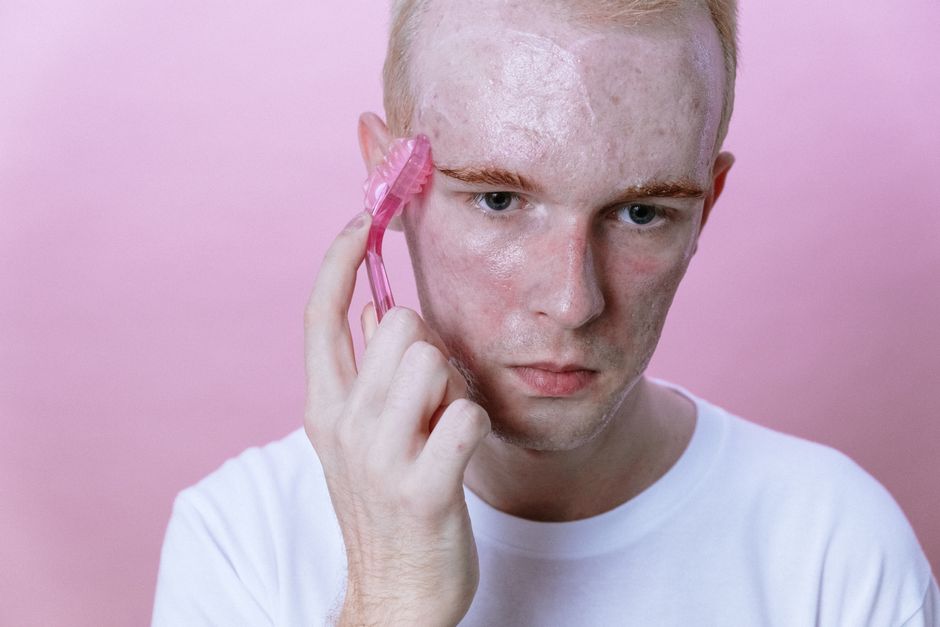
Forehead acne can be hormonal, but hormones are only one of several causes. Breakouts concentrated on the forehead are often driven by hair products, sweat, friction from hats or helmets, and skincare habits. True hormonal acne tends to follow a pattern — it flares around the jawline and chin and shifts with the menstrual cycle. Forehead acne can still be hormonal in some people, but location alone does not prove it.
Is Forehead Acne Hormonal Whats Really Causing It?
Acne is a disorder of the pilosebaceous unit — the hair follicle and its attached oil gland. Four things drive a pimple: excess sebum (oil) production, clogged follicles, the skin bacterium Cutibacterium acnes, and inflammation. Hormones act mainly on the first step. Androgens, including testosterone, signal the oil glands to produce more sebum. More oil means more opportunity for follicles to clog.
Here is a point that gets lost: oil glands on the forehead are not fundamentally different from oil glands on the chin. What differs is what the skin on your forehead comes into contact with. The forehead is exposed — to shampoo, conditioner, sweatbands, hats, and your own hands. That makes it a prime location for what dermatologists call acne mechanica and cosmetic acne, not necessarily hormonal acne.
So the honest answer to “is forehead acne hormonal” is: sometimes, but less often than people assume. When someone has breakouts only on the forehead, the first suspects should be external, not internal.
What Does Hormonal Acne Actually Look Like?
Hormonal acne has a recognizable pattern. It tends to appear along the lower face — the jawline, chin, and lower cheeks — and it often flares in the week before a menstrual period. It also tends to produce deeper, tender bumps rather than small surface whiteheads.
That pattern reflects how hormones influence sebum. Androgen levels and the skin’s sensitivity to them drive oil production, and oil production rises in the days before menstruation. This is well established in dermatology. What is less established is the idea that forehead location signals hormones. In practice, forehead acne is more often tied to what touches the skin there.
Some conditions do cause forehead-pattern breakouts through non-hormonal mechanisms. Acne cosmetica from comedogenic products, and a form of acne sometimes called pomade acne from oil-based hair products, both cluster where products contact the skin. If your forehead breaks out and your jawline is clear, look at your hair products and your hat before you look at your hormones.
Is Forehead Acne a Sign of a Hormonal Imbalance?
Usually not. Acne is common, and most people with acne — including forehead acne — have normal hormone levels. The oil glands are simply responding to normal androgen levels.
That said, there are situations where a clinician should evaluate hormones. Signs that warrant a medical conversation include acne that appears suddenly in adulthood, acne that is severe or resistant to standard treatment, irregular or absent periods, excess facial or body hair, or rapid changes in acne alongside other symptoms. These can point to conditions such as polycystic ovary syndrome (PCOS), which is diagnosed by a clinician using a combination of criteria — not by looking at where pimples appear.
There is no blood test or hormone panel that diagnoses “hormonal acne” from forehead location. If you suspect a hormonal cause, the right step is a conversation with a clinician, not a self-diagnosis based on a breakout map.
What Else Causes Forehead Breakouts?
Most forehead breakouts trace back to the skin’s environment. The forehead is the most exposed part of the face and the part most often touched, covered, and coated.
- Hair products: Oils, pomades, leave-in conditioners, and heavy gels can migrate onto the forehead and clog follicles. This is a well-recognized pattern in dermatology.
- Sweat and heat: Exercise, hot weather, and occlusive clothing trap sweat and oil against the skin.
- Friction and pressure: Hats, helmets, headbands, and resting your face on your hands create friction and trap debris. This is acne mechanica.
- Comedogenic skincare and makeup: Heavy creams, some sunscreens, and products that are not labeled non-comedogenic can contribute.
- Hair touching the forehead: Bangs and fringe keep oil and product against the skin.
- Picking and touching: Hands transfer oil and bacteria and worsen inflammation.
The pattern matters. If your forehead breaks out where a hat band sits, where your bangs fall, or where a product runs down from your hairline, the cause is likely contact rather than hormones.
How Do You Tell Hormonal and Non-Hormonal Forehead Acne Apart?
You cannot diagnose the cause from location alone, but a few observations help you and your clinician narrow it down. The most useful clue is the pattern over time and what the skin is exposed to.
| Clue | Points more toward hormonal | Points more toward external |
|---|---|---|
| Location | Jawline, chin, lower cheeks | Forehead, hairline, where products or hats contact skin |
| Timing | Flares before menstrual period | Flares after using a new product or wearing hats/helmets |
| Lesion type | Deeper, tender bumps | Small surface whiteheads and blackheads |
| Other signs | Irregular periods, excess hair growth | None — skin only |
This is a guide, not a diagnosis. Many people have a mix of both. The most reliable way to sort it out is to change one thing at a time — swap a product, stop wearing a hat for a few weeks — and watch what happens. That is essentially what a clinician does.
What Helps Forehead Acne?
Treatment depends on the cause, and the most effective approach is to remove the trigger and use evidence-based topical care. For mild acne, over-the-counter options with a track record include benzoyl peroxide and salicylic acid. These reduce bacteria and help unclog follicles. They are widely used and supported by clinical experience, though individual response varies.
For persistent or deeper acne, a clinician may recommend prescription treatments such as topical retinoids, which are among the best-studied acne treatments. The evidence for topical retinoids in acne is strong. The evidence for any single “hormonal” supplement or detox product marketed for forehead acne is essentially absent — no large human trials support these claims.
Practical steps that reduce external triggers:
- Wash your face after sweating and at the end of the day.
- Choose non-comedogenic skincare and makeup.
- Keep oil-based hair products off the forehead and wash pillowcases regularly.
- Avoid picking. It prolongs healing and can leave marks.
- Give any change several weeks before judging results — skin turnover takes time.
Be cautious with aggressive scrubbing and harsh products. Irritation can worsen inflammation and does not clear acne faster. There is no evidence that “drying out” the skin resolves breakouts.
When Should You See a Doctor About Forehead Acne?
See a clinician if acne is severe, painful, leaving scars, or not improving after a reasonable trial of over-the-counter care. Also see one if acne appears suddenly in adulthood, or if it comes with signs that could suggest a hormonal condition — irregular periods, excess hair growth, or other unexplained changes.
Acne is treatable, and effective options exist. The value of a medical visit is that it separates the cause from the appearance, which is exactly what a breakout map cannot do. A clinician can look at the pattern, ask about timing and products, and decide whether hormones are worth testing.
The bigger point: forehead acne is not a reliable hormonal signal. It is a location on the skin, and the skin there is shaped by what touches it. Start with the external triggers. If those do not explain it, a clinician can help you look deeper.
Frequently Asked Questions
Does forehead acne mean my hormones are imbalanced?
No. Most people with forehead acne have normal hormone levels, and location alone does not indicate an imbalance. A clinician can evaluate for hormonal causes if you have other symptoms like irregular periods or sudden adult-onset acne.
Why do I only get acne on my forehead?
Forehead-only acne most often points to external triggers such as hair products, sweat, hats, helmets, or friction rather than hormones. The forehead is the part of the face most exposed to products and contact.
What is the fastest way to clear forehead acne?
There is no single fastest fix, because the cause varies. Removing contact triggers and using evidence-based topical treatments such as benzoyl peroxide or salicylic acid helps many people, and prescription options exist for stubborn cases.
Can hair products cause forehead acne?
Yes. Oils, pomades, and heavy leave-in products can migrate onto the forehead and clog follicles, a pattern dermatologists recognize. Keeping these products off the forehead often helps.
