
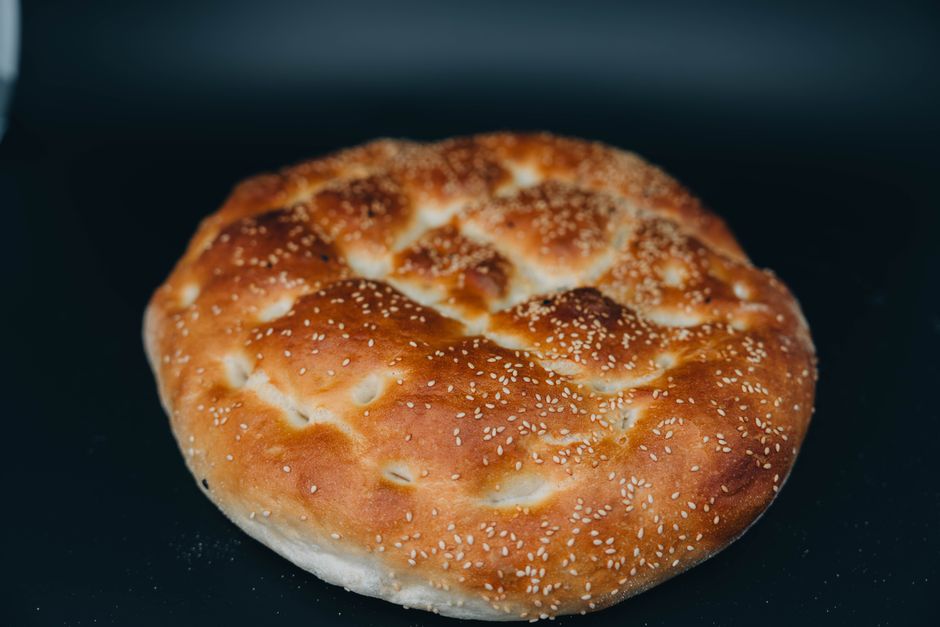
Focaccia is a flatbread made from flour, water, yeast, salt, and a generous amount of olive oil. Whether it counts as healthy depends less on the bread itself and more on how it is made and what it replaces in your diet. A traditional olive oil focaccia can fit into a balanced eating pattern, but it is still a refined-flour bread that is calorie-dense and relatively high in fat and sodium.
That is the honest summary. Focaccia is not a “health food,” and it is not a junk food either. It sits where most bread sits: fine in moderation, less ideal as a dietary staple, and highly variable depending on the recipe and the baker.
Is Focaccia Bread Healthy?
Focaccia is not a health food, but it can be part of a healthy diet when eaten in reasonable portions. Its main ingredients are ordinary and its nutrition is broadly similar to other white breads, with one key difference: fat.
Traditional focaccia gets a lot of its character from olive oil. Oil is poured into the pan before baking and often drizzled on top. That raises the calorie and fat content well above a plain white loaf. Olive oil is mostly monounsaturated fat, which is generally considered a favorable fat source, but it still carries about 120 calories per tablespoon.
The flour matters too. Most focaccia is made with white flour, which means the bran and germ have been removed. That strips out most of the fiber, along with a good share of the vitamins and minerals found in whole grains.
None of this makes focaccia harmful. It means focaccia is a food to enjoy as part of a meal, not a food to build a diet around.
What Are the Nutrition Facts of Focaccia Bread?
Focaccia nutrition varies widely by recipe, so exact numbers are hard to pin down. A bread loaded with oil and topped with cheese or cured meat is a different food, nutritionally, from a simple olive oil flatbread.
As a rough guide, a typical slice of plain olive oil focaccia (around 50 grams) tends to fall in the range below. These are approximate figures, not guarantees, because commercial and homemade versions differ so much.
| Nutrient | Approximate amount per 50g slice |
|---|---|
| Calories | 140–180 |
| Total fat | 4–7 g |
| Carbohydrate | 20–25 g |
| Fiber | 1 g or less |
| Protein | 3–4 g |
| Sodium | 150–300 mg |
The most useful thing to notice in that table is the fiber. Plain white-flour focaccia provides very little. Fiber is one of the main reasons whole grains are associated with better health outcomes, and it is the nutrient most people fall short on.
Sodium is the second thing to watch. Bread is a major source of sodium in many diets, and focaccia is no exception. Toppings like olives, cheese, and cured meats push sodium higher still.
Is Focaccia Healthier Than Regular Bread?
Focaccia is not meaningfully healthier than regular bread, and in some ways it is heavier. Compared with a plain white sandwich loaf, focaccia usually has more fat and more calories per gram. Compared with a whole-grain bread, it usually has less fiber.
The comparison depends entirely on what you are comparing it to.
- Versus white sandwich bread: Similar flour base, but focaccia typically has more added oil and therefore more calories and fat.
- Versus whole-grain bread: Whole-grain bread generally wins on fiber and micronutrients. Focaccia made with white flour loses out here.
- Versus a pastry or croissant: Focaccia is often the better choice. It usually has less butter and sugar than a laminated pastry.
The fat in focaccia comes largely from olive oil, which is a more favorable fat than the butter used in many baked goods. That is a real point in its favor, though it does not turn focaccia into a low-calorie food.
Does the Olive Oil in Focaccia Make It Healthier?
Olive oil is one of the better fats to cook with, and that does count for something. It is rich in monounsaturated fat and contains polyphenols, plant compounds that have been studied for their effects on heart health.
But there is a limit to how far that reasoning stretches. The amount of oil in a slice of focaccia is modest, and the health benefits associated with olive oil in large studies come from overall dietary patterns, not from a single food. The Mediterranean-style eating pattern, which uses olive oil as a main fat, is consistently linked with better cardiovascular outcomes. Focaccia eaten occasionally does not replicate that pattern on its own.
It is also worth separating the oil from the bread. You can get olive oil’s benefits from using it in cooking and dressings without needing it baked into a flatbread.
How Does Focaccia Fit Into a Balanced Diet?
Focaccia fits best as a side or an occasional treat, not as the foundation of a meal. Portion size is the simplest lever you control.
A few practical points, grounded in general nutrition principles rather than focaccia-specific research:
- Pair it with protein, vegetables, or legumes so the meal is balanced rather than bread-heavy.
- Watch the toppings. Cheese, cured meats, and salty olives add fat and sodium quickly.
- Treat it as a carbohydrate serving, not a free food. It counts toward your grain intake for the day.
- If you eat bread often, favor whole-grain versions most of the time and enjoy focaccia when you want it.
The biggest risk with focaccia is not any single ingredient. It is that it is easy to eat a lot of it. It is soft, salty, oily, and designed to be moreish. Calories from bread can add up quickly without leaving you especially full, because refined flour and fat are not particularly satiating on their own.
Is Sourdough or Whole Wheat Focaccia Better?
Whole wheat focaccia is generally the better choice if you are eating it regularly. Using whole-grain flour restores some of the fiber and nutrients that white flour loses. The texture will be denser, but the nutritional profile improves.
Sourdough focaccia is a different question. Sourdough fermentation changes the bread’s texture and flavor, and some people find it easier to digest. There is also evidence that sourdough fermentation can lower the glycemic response of bread compared with conventional yeast bread, though results vary and the effect is not dramatic.
That does not make sourdough focaccia a health food. It is still a refined-flour bread with added oil. The fermentation is a modest plus, not a transformation.
One clarification worth making: “sourdough” on a label does not guarantee a long fermentation or a whole-grain flour. Some commercial products use sourdough flavoring rather than a true fermented starter. If fermentation matters to you, the ingredient list and the bakery’s process are more reliable than the word on the package.
Who Should Be Careful With Focaccia?
Most people can eat focaccia without concern. A few groups have reason to pay closer attention.
People managing celiac disease or non-celiac gluten sensitivity should avoid standard focaccia, since it is made with wheat flour. Gluten-free versions exist but are not automatically healthier.
People watching sodium should note that focaccia is a salty bread, and toppings can push it higher. Those with high blood pressure or heart failure are often advised to limit sodium, and bread is a common hidden source.
People managing blood sugar should treat focaccia like other refined carbohydrates. It can raise blood glucose, and eating it with protein, fat, and fiber blunts that rise somewhat. Anyone with diabetes should factor it into their overall carbohydrate intake rather than eating it freely.
People following a weight-loss plan should be aware that focaccia is calorie-dense for its size. A small piece goes a long way.
For everyone else, the guidance is unremarkable: enjoy it, watch the portion, and do not mistake it for a health food.
Frequently Asked Questions
Is focaccia bread healthy?
Focaccia is not a health food, but it can fit into a balanced diet in moderation. It is a refined-flour bread that is relatively high in calories, fat, and sodium compared with plain bread.
Is focaccia healthier than white bread?
Not really. Both are made from refined flour, but focaccia usually has more added oil, which raises its calorie and fat content. Whole-grain bread is generally the more nutrient-dense choice.
Is focaccia high in carbs?
Yes. Focaccia is a carbohydrate-based bread, with roughly 20 to 25 grams of carbohydrate per 50-gram slice. It should count toward your daily carbohydrate and grain intake.
Can I eat focaccia on a diet?
You can include focaccia in a weight-loss diet if you keep portions small and account for the calories. It is calorie-dense, so it is easy to overeat without noticing.
