
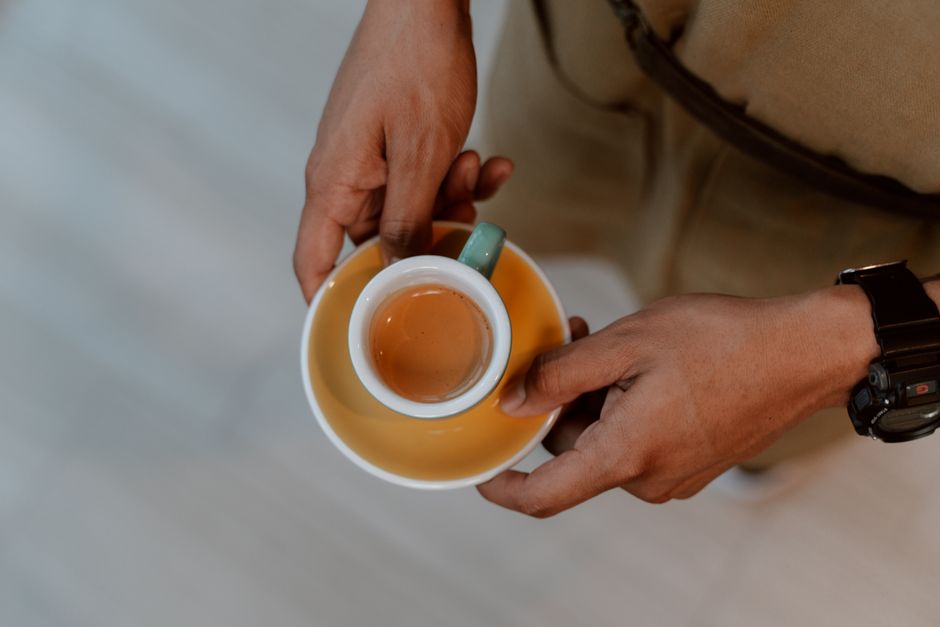
Espresso is not automatically gentler on your stomach than regular coffee. Both are brewed from the same beans, and both contain the compounds that most often cause stomach trouble: caffeine and coffee acids. The real differences come from serving size, roast level, and how you drink it, not from the brewing method alone.
That matters because a lot of people switch to espresso hoping to fix heartburn or an upset stomach. Sometimes that works. Sometimes it makes things worse. The reasons are worth understanding before you change your morning routine.
What Actually Makes Coffee Hard on the Stomach?
Coffee stimulates stomach acid production. That is well established. Both regular and decaf coffee raise gastric acid secretion, and the effect is not caused by caffeine alone.
Several compounds in coffee appear to drive this. Caffeine itself stimulates acid release through pathways involving histamine and gastrin. But decaffeinated coffee does the same thing, which tells you other compounds are involved. Research has pointed to chlorogenic acids and the roasted bitter compounds called N-alkanoyl-5-hydroxytryptamides, often shortened to C5HTs. These substances are formed during roasting and appear to irritate the stomach lining directly.
Coffee also relaxes the lower esophageal sphincter, the ring of muscle that keeps stomach contents from moving back up into the esophagus. When that valve relaxes, acid can reflux. This is one reason coffee is a common trigger for heartburn, though people vary a lot in sensitivity.
None of this means coffee damages a healthy stomach. For most people without reflux or ulcer disease, coffee does not cause lasting harm. The discomfort is real, but it is usually about symptoms, not injury.
Is Espresso Better For Your Stomach Than Coffee?
For most people, espresso and drip coffee are not meaningfully different in how they affect the stomach when you match the amount of coffee consumed. A single shot of espresso is a small, concentrated dose. A 12-ounce cup of drip coffee is a much larger one.
The key comparison is total coffee solids and total caffeine, not the brewing method. One shot of espresso (about 1 ounce) contains roughly 60 to 65 mg of caffeine. An 8-ounce cup of brewed coffee contains roughly 95 mg. So a single espresso delivers less caffeine and less liquid volume than a standard cup of drip coffee.
That smaller dose can matter. If your stomach reacts to coffee, a smaller amount of coffee compounds may cause less irritation. Some people find a single espresso sits better than a full mug of drip. That is a reasonable observation, but it reflects dose, not some special property of espresso.
Drink three or four shots and the advantage disappears. At that point you may be taking in more coffee compounds than a single cup of drip would provide. Portion size is the variable, not the machine.
Does the Roast Level Change How Coffee Affects Your Stomach?
Roast level changes the chemistry of the bean, and it can change how the coffee feels in your stomach. This is one of the more useful things to know when choosing a coffee.
Dark roasting reduces some of the compounds linked to stomach irritation. The C5HTs that appear to irritate the stomach lining break down during longer roasting. Darker roasts also tend to be slightly less acidic in the cup, though the total acidity story is more complicated than marketing suggests. The perception of acidity depends on the balance of acids, not just total acid content.
Espresso is often made with a darker roast than drip coffee. That is partly tradition and partly practical: dark roasts extract more predictably under pressure. So if you are comparing a dark-roast espresso to a light-roast drip coffee, the roast difference may matter more than the brewing method.
The takeaway is simple. If coffee bothers your stomach, a darker roast is a reasonable thing to try, whether you brew it as espresso or drip. Switching to espresso made from a light roast may not help at all.
How Does How You Drink It Change the Effect?
How you drink your coffee often matters more than what you brew it in. This is where a lot of stomach complaints actually come from.
- Drinking on an empty stomach tends to produce more noticeable acid symptoms than drinking with food. Food buffers stomach acid and slows the rate at which coffee compounds hit the stomach lining.
- Adding milk or cream can soften the experience for some people, though it does not neutralize acid in any meaningful way. For people with lactose intolerance, milk may add its own digestive symptoms that get blamed on the coffee.
- Drinking it fast delivers a concentrated dose all at once. Sipping over time tends to be gentler.
- Total daily amount is a bigger factor than most people realize. Several cups spread through the day can add up to more irritation than one strong shot.
One clarification worth making: espresso is not more acidic than drip coffee in a way that reliably matters. Some people assume the concentrated shot must be harsher. In practice, the acidity you feel depends on the beans, the roast, and the brew, and espresso is often made from darker beans that reduce some of the compounds linked to irritation.
Who Should Be Careful With Coffee and Espresso?
People with certain digestive conditions should be more careful, and the cautions apply to espresso and drip coffee alike.
If you have gastroesophageal reflux disease, or GERD, coffee is a common trigger. The relaxation of the lower esophageal sphincter is the main reason. Espresso is not exempt. If anything, the concentrated dose can provoke symptoms in sensitive people.
If you have a peptic ulcer or gastritis, coffee can worsen symptoms by increasing acid production. This does not mean coffee caused the ulcer. The main cause of ulcers is infection with Helicobacter pylori bacteria or use of nonsteroidal anti-inflammatory drugs. Coffee may aggravate an existing ulcer, but it is not the underlying cause.
If you have irritable bowel syndrome, coffee can speed up the gut and trigger urgency, especially in the morning. Caffeine is a stimulant for the colon. Espresso, being concentrated, can produce a stronger effect in some people.
If you have any of these conditions, the decision about coffee is best made with your clinician. There is no single rule that fits everyone.
Does Espresso Cause More Heartburn Than Drip Coffee?
There is no strong evidence that espresso causes more heartburn than drip coffee when the amount of coffee is similar. Heartburn triggers vary widely between people, and the brewing method is not the main driver.
What matters more is how much you drink, whether you drink it on an empty stomach, and your individual sensitivity. Some people find a single espresso after a meal is fine while a large drip coffee in the morning causes symptoms. Others find the opposite. The pattern is personal, and the best way to learn yours is to pay attention to what actually happens.
If heartburn is frequent, meaning more than a couple of times a week, that is worth discussing with a clinician regardless of your coffee habits. Frequent reflux can have causes that have nothing to do with coffee.
What Is the Bottom Line on Espresso and Stomach Comfort?
Espresso is not inherently gentler on the stomach than regular coffee. What often helps is drinking less coffee at a time, choosing a darker roast, and not drinking it on an empty stomach.
A single espresso delivers less caffeine and less total coffee than a standard cup of drip, and that smaller dose may be easier on a sensitive stomach. That is a real effect, but it is about quantity, not the brewing method. If you drink espresso in large amounts, you lose that advantage.
If coffee causes you regular discomfort, the useful experiment is to change one thing at a time: try a darker roast, try drinking it with food, try a smaller serving. If symptoms persist, talk with a clinician. Persistent stomach symptoms deserve a proper look rather than a switch in brewing method.
Frequently Asked Questions
Is espresso easier on the stomach than regular coffee?
Not inherently. A single espresso contains less caffeine and less total coffee than a standard cup of drip, so the smaller dose may cause fewer symptoms in some people. That advantage comes from portion size, not the brewing method.
Does espresso have less acid than drip coffee?
Not reliably. Acidity depends more on the beans and roast level than on the brewing method, and espresso is often made from darker roasts that reduce some stomach-irritating compounds. The acidity you feel varies by coffee, not by machine.
Why does coffee hurt my stomach even when I drink decaf?
Because caffeine is not the only culprit. Decaf coffee still contains chlorogenic acids and roasted compounds that stimulate stomach acid and can irritate the stomach lining. Switching to decaf does not remove those compounds.
Should I avoid espresso if I have GERD?
Coffee is a common reflux trigger because it relaxes the lower esophageal sphincter, and espresso is not exempt. Whether it bothers you specifically is best discussed with your clinician, since sensitivity varies widely between people.
