
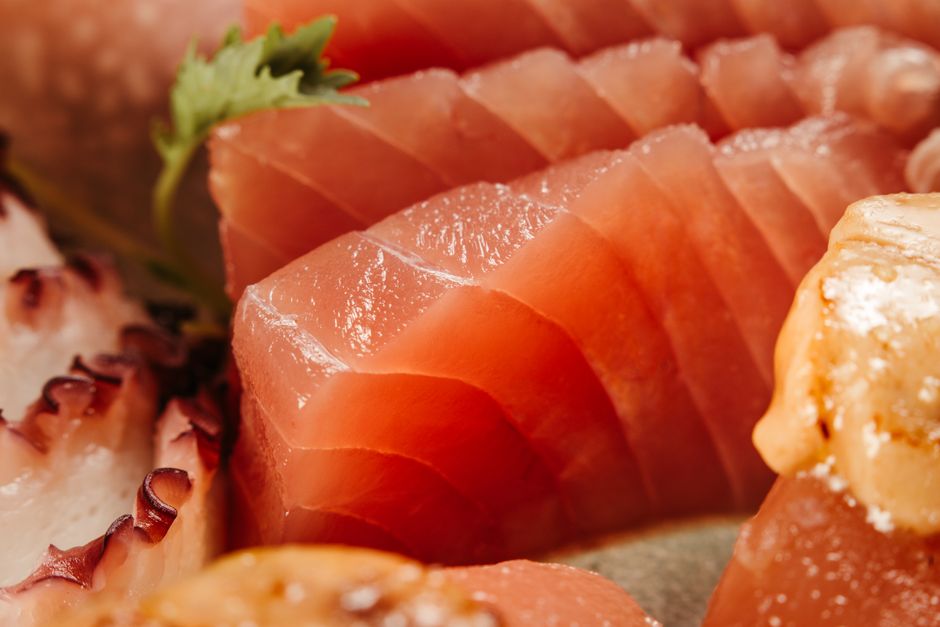
Escolar is a fish that restaurants sometimes sell as “white tuna,” and it can cause a real, well-documented digestive problem. Its flesh contains wax esters that many people cannot digest. Eating a normal-looking portion can trigger oily diarrhea that may last for days. Several countries, including Japan and Italy, restrict or ban its sale for this reason. The United States does not ban it, but the Food and Drug Administration advises against selling it under names like “white tuna.”
The tricky part is telling it apart. Escolar looks like several other white fish, and once it is cooked and on a plate, you cannot identify it by sight. Knowing the warning signs on a menu and how your body reacts is the practical way to protect yourself.
What Is Escolar and Why Does It Cause Problems?
Escolar is a large, deep-water fish found in tropical and temperate oceans. It is also called snake mackerel or butterfish in some markets. Its meat is rich, pale, and buttery, which is exactly why it gets passed off as premium white fish.
The problem is its fat. Escolar stores a large share of its energy as wax esters rather than ordinary fats. Human digestive enzymes cannot break wax esters down. They pass through the gut largely intact.
When enough of this material reaches the lower bowel, it draws water into the intestine and acts as a laxative. Many people develop a distinctive reaction: orange, oily, or greasy stool that is hard to control. This is sometimes called keriorrhea. It is not an infection and it is not food poisoning in the usual sense. It is the wax ester doing what wax does — sliding through undigested.
How much fish it takes to trigger this varies widely between people. Some report symptoms after a modest serving. Others eat a similar amount with no trouble. There is no reliable way to predict your threshold, which is part of what makes the fish risky.
Is Escolar White Tuna Actually Tuna?
No. Escolar is not a tuna at all. It belongs to a different family of fish entirely. Real white-fleshed tuna, such as albacore, is a genuine tuna and does not carry the same wax ester problem.
This matters because “white tuna” on a menu or in a sushi case is a vague label. Sometimes it means albacore. Sometimes it means escolar. Sometimes it means something else. The name describes color, not species.
Regulators have noticed. In the United States, the FDA’s guidance lists escolar as a species that should not be marketed under the name “white tuna.” That is a labeling standard, not an outright ban. The fish can still be sold — it just should not be sold as something it is not.
Where Is Escolar Banned or Restricted?
Several countries have taken formal action, and the rules differ from place to place. This is one of the clearest signs that the concern is not fringe.
- Japan has restricted the sale of escolar for many years, treating it as a fish with known digestive risk rather than a routine food.
- Italy has banned its sale outright.
- South Korea has also restricted it.
- Some other countries have issued advisories or labeling requirements rather than bans.
The United States sits in a middle position. Escolar is legal to sell, but the FDA advises against calling it white tuna. A few other governments have issued public warnings about the laxative effect after people got sick.
It is worth being precise about what a ban means. A ban on sale is not the same as proof of danger for every person. It reflects a judgment that the risk of unpleasant, sometimes dramatic digestive symptoms outweighs the food’s value. That is a reasonable call for a fish that offers no special nutritional advantage over safer options.





How Do You Tell If “White Tuna” Is Escolar?
You usually cannot tell by looking, especially once it is cooked or dressed with sauce. That is the honest answer, and it is the most useful thing to understand. There are, however, some clues worth knowing.
Raw escolar has very pale, almost translucent flesh. It looks unusually smooth and rich. It can look a lot like albacore or other white fish, which is the whole problem. Cooked, it is white and flaky like many fish.
Some practical signals raise suspicion:
- A menu or sushi case lists “white tuna” without naming the actual species.
- The fish is extremely buttery or rich, almost oily in texture.
- It appears on an inexpensive menu where premium tuna would be costly.
- Staff cannot tell you the species when asked.
The single most reliable move is to ask. “What species is the white tuna?” is a fair question. A restaurant that knows its sourcing can answer. A vague reply — “it’s just white tuna” — tells you something.
One clarification worth keeping in mind: the fish sold as “butterfish” in some places is often escolar too, so that name is not a safe signal either. Different regions use different common names for the same species, and some of those names sound premium.
What Happens If You Eat Escolar?
Most people who react develop digestive symptoms within roughly a day, though timing varies. The hallmark is oily, orange-tinged, greasy stool that can be urgent and hard to control. Some people also report nausea, cramping, or abdominal discomfort.
The reaction is usually self-limiting. Symptoms generally ease over a few days as the wax esters clear the system. It is uncomfortable and sometimes embarrassing, but it is not typically dangerous for a healthy person.
That said, the diarrhea can cause dehydration, and it can be miserable for anyone who is already unwell, elderly, or caring for young children. If symptoms are severe, prolonged, or come with signs of dehydration — such as dizziness, very dark urine, or unusual weakness — seek medical care. This is general guidance, not a substitute for a clinician’s judgment about your situation.
There is no antidote and no specific treatment. Management is supportive: fluids, rest, and time. It is worth telling a doctor you ate “white tuna” if you end up seeking care, because that detail helps explain what is happening.
Is Escolar Ever Safe to Eat?
Some people eat escolar with no obvious reaction, and some chefs defend it in small amounts. But “some people are fine” is not the same as “it is safe.” The evidence does not support a reliable safe portion size, because individual tolerance varies so much.
No clinical guidelines set a threshold amount that is considered safe for the general public. Any claim of a guaranteed safe serving is not backed by solid evidence. That is the honest position.
For most people, the risk-reward math is simple. Escolar offers no nutritional benefit you cannot get from safer fish. Albacore tuna, halibut, cod, and other white fish deliver similar protein and texture without the wax ester problem. If you want the rich, buttery experience, there are safer choices.
How Can You Avoid Escolar Without Giving Up White Fish?
Choose fish by species name, not by color. That single habit solves most of the problem. “Albacore,” “halibut,” “cod,” and “Pacific cod” are specific. “White tuna” and “butterfish” are not.
At a sushi counter, ask what the white fish is. At a grocery fish counter, look for a species label. When a menu is vague, treat that as information. Reputable sellers can usually tell you exactly what they are selling.
If you have eaten escolar before and had a reaction, avoid it going forward. Your past response is the best predictor you have. If you have never tried it and are curious, understand what you are signing up for before you order.
Frequently Asked Questions
Is escolar the same as white tuna?
No. Escolar is a different fish that is sometimes mislabeled or sold as “white tuna.” Real white-fleshed tuna such as albacore is a genuine tuna and does not carry the same wax ester risk.
Why does escolar cause oily diarrhea?
Escolar flesh contains wax esters that human digestive enzymes cannot break down. These pass through the gut largely intact and act as a laxative, producing oily or greasy stool.
Is escolar banned in the United States?
No. Escolar is legal to sell in the U.S., but the FDA advises against marketing it as “white tuna.” Some other countries, including Japan and Italy, restrict or ban its sale.
How can I tell if I am eating escolar?
You usually cannot tell by sight, especially once it is cooked or sauced. Ask the restaurant for the species name; a vague answer like “white tuna” is a warning sign.
