
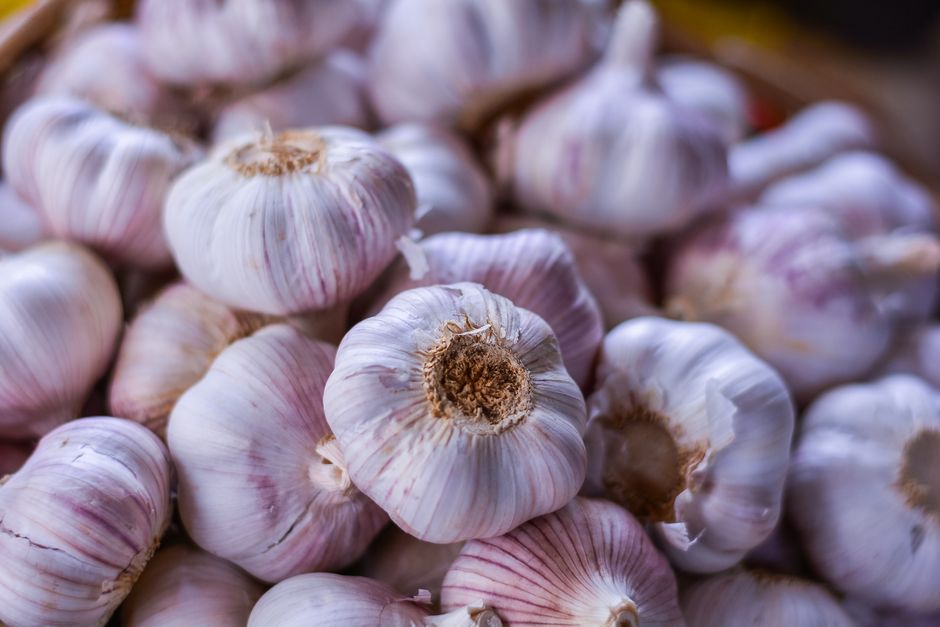
Garlic has been used as both food and medicine for thousands of years, and modern research has taken a genuine interest in what its sulfur compounds actually do in the human body. The short answer: eating garlic daily is generally safe for most adults and may offer modest cardiovascular benefits, but the evidence is stronger for some claims than others. It is not a cure for anything, and it does not replace medical treatment.
What Happens in Your Body When You Eat Garlic
When you crush, chop, or chew a garlic clove, you break open cells and release an enzyme called alliinase. That enzyme converts a compound called alliin into allicin — the unstable, pungent molecule most garlic research focuses on. Allicin is not present in an intact clove. It only forms after the clove is damaged.
Allicin is short-lived. It breaks down quickly into other sulfur-containing compounds, including diallyl disulfide and S-allyl cysteine. These compounds are what researchers believe may influence blood vessel behavior, cholesterol production, and platelet function. Many of them are absorbed in the gut and appear in the bloodstream within hours of eating garlic.
One practical detail worth knowing: if you chop garlic and immediately throw it in a hot pan, you destroy much of the alliinase before it can do its work. Letting chopped garlic sit for about 10 minutes before cooking allows more allicin to form. This is a well-established biochemical step, not a marketing trick.
Does Garlic Lower Blood Pressure or Cholesterol?
The strongest human evidence for garlic relates to blood pressure, and even that evidence is moderate at best. Some clinical trials have found that garlic preparations can produce small reductions in systolic and diastolic blood pressure in people with hypertension. The size of the effect varies widely across studies, and many trials are short and use different garlic preparations — raw garlic, aged garlic extract, garlic powder — which makes direct comparison difficult.
For cholesterol, the picture is less clear. Older studies suggested garlic could lower total cholesterol and LDL cholesterol modestly. More recent and more rigorous analyses have found smaller effects than earlier research indicated, and some well-designed trials found no meaningful change at all. The honest position is that garlic is not a substitute for statins or other lipid-lowering medications, and it should not be treated as one.
What the evidence does support is a general pattern: garlic may have a small favorable effect on cardiovascular risk markers in some people, but the effect is modest and inconsistent. It is not a treatment for high blood pressure or high cholesterol.
Is Eating Garlic Every Day Actually Good For You?
For most healthy adults, eating garlic daily as part of normal cooking is safe and may contribute small cardiovascular benefits. That is the honest summary of the evidence.
What garlic is not: it is not a proven cancer treatment, it does not cure infections in the way antibiotics do, and it does not replace any prescribed medication. Some laboratory studies have shown that garlic compounds can kill bacteria and cancer cells in a petri dish. That is not the same as working in a human body, where compounds are metabolized, diluted, and distributed in ways that laboratory experiments do not capture.
Observational studies have looked at garlic consumption and cancer risk, particularly for stomach and colorectal cancers. Some of these studies suggest an association between higher garlic intake and lower cancer risk. Observational studies cannot prove cause and effect, and the results have not been consistent enough to support garlic as a cancer prevention strategy.





How Much Garlic Is Reasonable to Eat Daily?
There is no official recommended daily intake for garlic. It is a food, not a regulated nutrient with an established requirement. Most research on garlic and cardiovascular health has used amounts ranging from roughly one clove per day up to several cloves, or standardized garlic supplements in doses that vary by product.
A reasonable approach for most people is to use garlic freely in cooking — one to two cloves daily is a common amount in Mediterranean and Asian diets and has been for centuries. That level of intake is not associated with harm in healthy adults.
Garlic supplements are a different matter. Supplement doses are not standardized, and the active compound content varies significantly between products. Some supplements contain aged garlic extract, others garlic powder, others garlic oil. These are not interchangeable, and the evidence for each is separate. No clinical guidelines currently recommend garlic supplements for any specific condition.
Are There Real Risks or Side Effects?
Yes, though for most people they are mild. The most common effects of eating a lot of garlic are bad breath, body odor, and digestive discomfort — heartburn, gas, or upset stomach. These are well documented and generally resolve when intake is reduced.
More serious concerns apply to specific groups:
- People on blood-thinning medications — garlic can inhibit platelet aggregation, which means it may increase bleeding risk when combined with anticoagulants like warfarin or antiplatelet drugs like aspirin. This is a real interaction, not a theoretical one. Anyone on these medications should talk to their doctor before increasing garlic intake significantly.
- People scheduled for surgery — because of its effect on platelets, some clinicians recommend stopping high-dose garlic supplements before surgery. This is common clinical practice, though the evidence base for the exact timing is limited.
- People with gastroesophageal reflux disease (GERD) — garlic can relax the lower esophageal sphincter and worsen reflux symptoms in some people.
- People taking certain medications — garlic may interact with some HIV medications and immunosuppressants. The evidence here is limited but the potential for interaction is real enough that caution is warranted.
Raw garlic eaten in large amounts on an empty stomach can cause significant stomach irritation. This is not dangerous for most people but it is uncomfortable.
Raw Garlic vs. Cooked Garlic vs. Supplements
How you eat garlic affects what compounds you actually get. This is one of the few areas where the biochemistry is well understood.
| Form | Key Compounds | Notes |
|---|---|---|
| Raw, crushed | Allicin (high) | Highest allicin content; strongest taste; most stomach irritation |
| Cooked | Allicin (reduced) | Heat destroys alliinase; other sulfur compounds remain |
| Aged garlic extract | S-allyl cysteine (high) | Different compound profile; used in many clinical trials |
| Garlic powder | Variable | Allicin content depends on processing; not standardized |
| Garlic oil | Diallyl sulfides | Different compounds; not equivalent to raw garlic |
The takeaway is that “garlic” is not one thing. A study using aged garlic extract is not studying the same compounds as a study using raw garlic. This is a major reason garlic research produces inconsistent results.
What Garlic Does Not Do
Garlic has been promoted for a long list of conditions — treating infections, preventing colds, lowering blood sugar, detoxifying the body, and more. Most of these claims are not supported by strong human evidence.
For the common cold, some studies have suggested garlic might reduce the number of colds or shorten their duration. The evidence is limited and the studies are small. It is not a reliable cold remedy.
For blood sugar control in diabetes, some small studies have shown modest effects. The evidence is not strong enough to recommend garlic as a glucose-lowering strategy.
The word “detox” has no medical meaning in this context. The body detoxifies itself through the liver and kidneys. Garlic does not accelerate or enhance this process in any way that has been demonstrated in humans.
Frequently Asked Questions
Is it safe to eat garlic every day?
Yes, for most healthy adults, eating one to two cloves of garlic daily as part of normal cooking is safe. People on blood-thinning medications or with GERD should be cautious and talk to their doctor.
Can garlic lower blood pressure?
Some clinical trials have found small reductions in blood pressure from garlic, but the effect is modest and inconsistent across studies. Garlic is not a substitute for blood pressure medication.
Does cooking garlic destroy its benefits?
Heat destroys alliinase, the enzyme that produces allicin, so cooked garlic contains less allicin than raw garlic. Letting chopped garlic sit for about 10 minutes before cooking allows more allicin to form.
Can garlic interact with medications?
Yes. Garlic can increase bleeding risk when combined with anticoagulants or antiplatelet drugs, and it may interact with some HIV medications and immunosuppressants. Talk to your doctor if you take any of these.
