
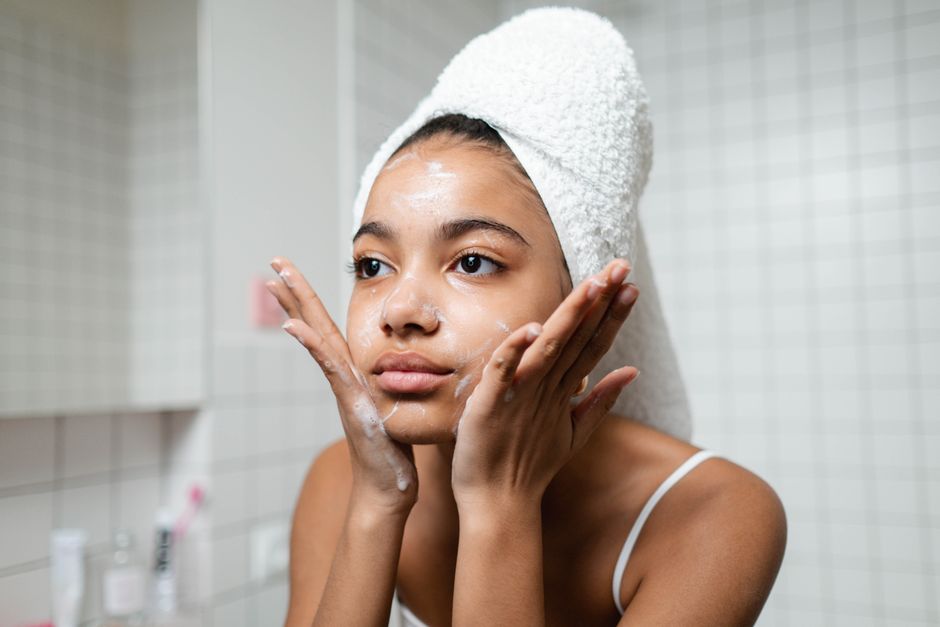
Dove soap is a mild cleanser that many people can use on their face without irritation, but it is not formulated as a facial product. Its cleansing ingredients are gentler than traditional bar soaps, yet it still lacks the pH balance and ingredients found in cleansers designed specifically for facial skin. Whether it works for you depends on your skin type and how your skin responds.
The short answer is that Dove is not harmful for most faces, but it is not the best choice either. It sits in a middle ground — better than harsh bar soaps, less suited to facial skin than a dedicated face wash. Understanding why requires looking at what is actually in the bar and what your face needs.
What Is Dove Soap Actually Made Of?
Dove bar soap is not true soap in the chemical sense. Most traditional bar soaps are made through saponification, a reaction that produces soap salts with a naturally high pH, typically around 9 to 10. That alkalinity is part of why regular bar soap can leave skin feeling tight and dry.
Dove is built on synthetic surfactants — cleansing agents such as sodium lauroyl isethionate — combined with fatty acids and moisturizing ingredients. These surfactants are designed to clean with less disruption to the skin barrier than classic soap. The brand has long positioned its bars around mildness, and the formulation reflects that intent.
That distinction matters. Calling Dove “soap” is a bit of a misnomer, and it is one reason the bar behaves differently from a standard bar of soap on your face. It is milder than the name suggests.
Is Dove Soap Good For Your Face?
For many people with normal or oily skin, Dove can clean the face effectively without obvious irritation. It removes oil, sweat, and everyday grime. The moisturizing ingredients help offset some of the drying that cleansing can cause.
The catch is that Dove was not designed for facial skin. Facial skin is thinner and more sensitive than the skin on your body, and the face is exposed to more environmental stress. A product made for the body is not automatically suited to the face, even a gentle one.
Two issues come up most often. First, the pH. Healthy skin sits at a slightly acidic pH, generally in the range of about 4.5 to 5.5. Dove’s pH is higher than that, closer to neutral. A cleanser that shifts skin pH upward can, in the short term, affect the skin barrier and the balance of bacteria on the skin. For most people this is temporary and the skin recovers, but it is a real consideration for sensitive or reactive skin.
Second, Dove bars contain fragrance. Fragrance is a common cause of contact irritation and allergic reactions on the face. If your skin is sensitive, that is a meaningful drawback.
How Does Dove Compare to a Dedicated Face Cleanser?
Dedicated facial cleansers are formulated around the needs of facial skin. They tend to be pH-balanced closer to skin’s natural acidity, and many are fragrance-free or designed for specific skin types. That does not make them automatically better for everyone, but the formulation is aimed at the face rather than the whole body.
The comparison is not about Dove being bad. It is about fit. Here is how the two generally line up:
- pH: Dove sits higher than skin’s natural acidic range; many facial cleansers are formulated closer to it.
- Fragrance: Dove bars contain fragrance; fragrance-free facial cleansers are widely available for sensitive skin.
- Formulation intent: Dove is made for body skin; facial cleansers are made for thinner, more reactive facial skin.
- Cost and availability: Dove is inexpensive and everywhere; facial cleansers vary widely in price.
None of these points makes Dove dangerous. They explain why a face-specific product usually fits facial skin better.
Who Should Avoid Using Dove on Their Face?
People with sensitive, reactive, or dry skin have the most reason to be cautious. If your skin stings, tightens, or turns red after washing, that is a signal the cleanser is too much for your face.
Anyone with a diagnosed skin condition should be especially careful. Eczema, rosacea, and acne-prone skin can be aggravated by fragranced products and by cleansers that disrupt the skin barrier. If you are using prescription treatments for your skin, a gentle, fragrance-free, pH-appropriate cleanser is generally the safer pairing. A dermatologist can advise on what suits your specific situation.
There is also the matter of allergic reaction. Fragrance can trigger contact dermatitis in people who are sensitized to it. If you notice itching, redness, or a rash after using Dove on your face, stop and consider whether fragrance is the cause.
Does Dove Cause Acne or Clog Pores?
There is no strong evidence that Dove soap itself causes acne. The idea that a specific cleanser “clogs pores” is often oversimplified. Acne is driven mainly by hormones, oil production, skin cell turnover, and bacteria — not by a single cleansing product.
That said, a cleanser that irritates the skin or disrupts the barrier can worsen the appearance of acne-prone skin. Irritation and breakouts are not the same thing, but they can look similar and feed into each other. If your skin is acne-prone, a gentle cleanser matched to your skin is the more reliable choice.
One clarification worth making: the “comedogenic” ratings you see on products are mostly based on animal testing and are not a reliable predictor of what will clog a human face. Treat those ratings with skepticism.
How Should You Wash Your Face If You Use Dove?
If Dove works for your skin, a few habits reduce the chance of problems. Use lukewarm water rather than hot, since hot water strips oil and can leave skin tight. Keep the contact brief and rinse thoroughly.
Follow with a moisturizer. Cleansing, whatever the product, removes some of the skin’s natural oils, and replacing moisture supports the skin barrier. If your skin feels tight or dry afterward, that is a sign the cleanser is too harsh for your face — even a mild one like Dove.
Pay attention to how your skin behaves over a week or two rather than a single wash. Skin responses build up over time. Persistent redness, dryness, or irritation means it is time to switch to something formulated for the face.
The Bottom Line
Dove soap is a reasonable, mild cleanser that many people can use on their face without trouble. It is gentler than traditional bar soap and widely available. But it was made for the body, it carries fragrance, and its pH is not matched to facial skin.
If your skin tolerates it, using Dove on your face is unlikely to cause harm for most people. If your skin is sensitive, dry, or prone to conditions like eczema or rosacea, a fragrance-free facial cleanser formulated closer to skin’s natural pH is the more sensible choice. The best cleanser is the one your skin tolerates — and that is something only your own skin can tell you.
Frequently Asked Questions
Is Dove soap safe to use on your face every day?
For many people with normal or oily skin, daily use is unlikely to cause harm. If your skin feels tight, dry, or irritated afterward, it is too harsh for your face and a facial cleanser is a better fit.
Does Dove soap cause breakouts?
There is no strong evidence that Dove soap itself causes acne. Irritation from fragrance or a disrupted skin barrier can worsen the look of acne-prone skin, so watch how your skin responds.
What is the pH of Dove soap?
Dove’s pH is higher than skin’s natural acidic range, which is generally about 4.5 to 5.5. It sits closer to neutral, which is one reason it is not ideal for sensitive facial skin.
Is Dove better than regular bar soap for your face?
Dove is generally milder than traditional bar soap because it is made with gentler cleansing ingredients. It is still a body product, so a dedicated facial cleanser usually fits facial skin better.
