
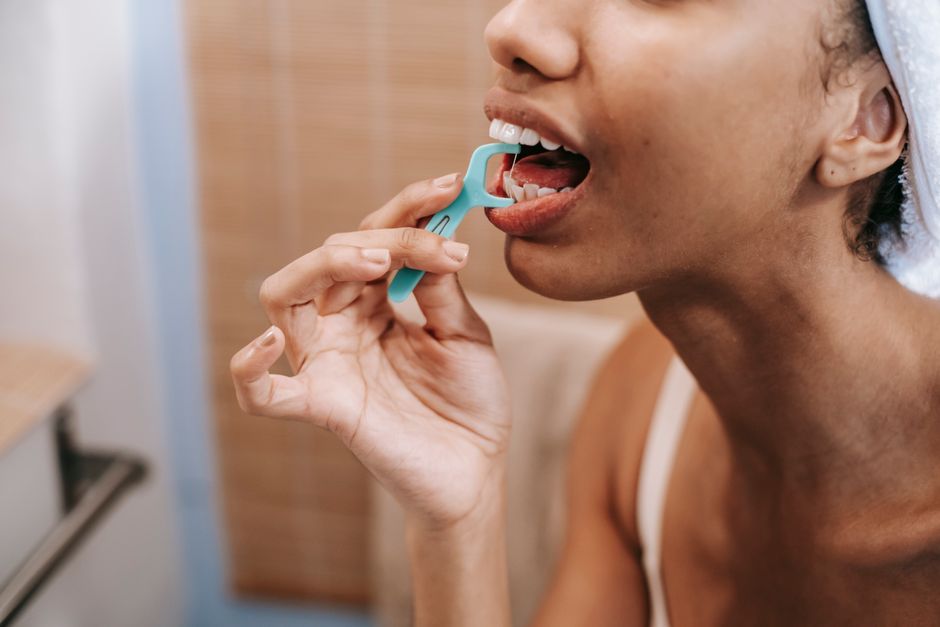
Yes, some dental floss contains PFAS, a group of chemicals linked to health risks. But not all floss is the same, and safer options exist. The concern is real, but the evidence does not suggest you need to panic.
What Are PFAS and Why Are They in Dental Floss?
PFAS stands for per- and polyfluoroalkyl substances. These are man-made chemicals used since the 1940s. They resist heat, water, and oil. That is why manufacturers put them in non-stick pans, waterproof clothing, food packaging, and some dental floss.
In floss, PFAS helps the thread glide between teeth without shredding. It makes flossing smoother. The trade-off is that these chemicals do not break down in the environment or the human body. They accumulate over time. Scientists call them “forever chemicals” for this reason.
The CDC reports that PFAS are detectable in the blood of nearly all Americans. The main sources are drinking water and food. But personal care products, including floss, can add to the total load.
Is Dental Floss Toxic? What the Research Actually Shows
A 2019 study published in the Journal of Exposure Science and Environmental Epidemiology tested blood samples from women. The researchers found that women who flossed with a specific brand had higher levels of a PFAS chemical called PFHxS in their blood. PFHxS is one of the longer-chain PFAS that the body holds onto for years.
This study did not prove that floss causes disease. It found an association between one type of floss and higher PFAS levels. The sample size was small — 178 women. The researchers noted that the findings were preliminary.
Since then, no large-scale study has confirmed these results. The FDA has not issued a warning about PFAS in dental floss. The American Dental Association still recommends flossing daily. But the evidence is enough to raise a reasonable question: why put unnecessary chemicals in your mouth if you do not have to?
What Types of Floss Contain PFAS?
Not all floss has PFAS. The key is whether the floss is made with PTFE, which is a brand name for Teflon. PTFE-based floss is the most common type that contains PFAS. These flosses are often labeled as “single strand,” “glide,” or “shred-resistant.”
Here is a simple breakdown of floss types:
- PTFE floss (polytetrafluoroethylene) — Usually contains PFAS. Glides easily. Common brands include Glide and some store-brand versions.
- Nylon floss (multifilament) — Generally PFAS-free. Can shred more easily. Often coated with wax.
- Natural floss — Made from silk or plant-based materials. No PFAS. May be coated with beeswax or candelilla wax.
- Charcoal or coated floss — Check the ingredients. Some still use PFAS for the coating.
A 2024 investigation by Consumer Reports tested several floss brands. They found detectable PFAS in some PTFE-based flosses but not in nylon or natural options. The levels varied widely by brand.




How Much PFAS Actually Gets Into Your Body From Flossing?
This is where the evidence gets murky. The 2019 study suggested that PFAS from floss can enter the bloodstream through the gums. The mouth has a rich blood supply. When you floss, you may create small cuts or irritation that allow chemicals to pass through.
But the amount of PFAS from floss alone is likely small compared to other sources. Drinking water is the biggest contributor for most people. Food packaging, non-stick cookware, and stain-resistant carpets also add to the total.
The question is cumulative. PFAS do not leave the body quickly. Some types have a half-life of several years. Small exposures from floss, water, and food add up over a lifetime. Reducing any single source can lower your total body burden.
The Environmental Protection Agency sets health advisory levels for PFAS in drinking water at 70 parts per trillion for two specific types. That is an extremely low threshold. It shows how concerned regulators are about even tiny amounts.
What Are Safer Alternatives to PFAS-Containing Floss?
If you want to avoid PFAS in floss, you have several good options. The safest choices are flosses that clearly state they are PFAS-free. Look for labels that say “nylon,” “silk,” or “plant-based.” Avoid “PTFE” and “Teflon.”
Here is a comparison table of common floss types:
| Floss Type | PFAS Likely? | Key Features |
|---|---|---|
| PTFE (Glide, store brands) | Yes | Glides easily, shred-resistant |
| Nylon waxed | No | May shred, effective cleaning |
| Silk floss | No | Biodegradable, PFAS-free |
| Plant-based (bamboo charcoal) | No | Eco-friendly, check coating |
| Expanding floss | Usually no | Thicker, catches plaque well |
Some brands now market themselves as PFAS-free. Read the ingredients list. If the floss is made from nylon or silk and coated with natural wax, it is almost certainly PFAS-free.
Water flossers are another option. They use a stream of water to clean between teeth. No chemicals are involved. The American Dental Association says water flossers are a reasonable alternative for people who struggle with string floss.
Common Misconceptions About PFAS in Dental Floss
Several myths have spread online. It helps to separate what is known from what is exaggerated.
Myth: All dental floss contains PFAS. This is false. Many brands use nylon or silk with no PFAS. You just have to check the label.
Myth: PFAS in floss causes cancer. The evidence is not that clear. Some PFAS are classified as “possibly carcinogenic” by the International Agency for Research on Cancer. But the link is based on occupational exposure and high-level contamination, not flossing.
Myth: You should stop flossing entirely. This is dangerous. Gum disease is linked to heart disease, diabetes, and other serious conditions. The benefits of flossing far outweigh the small PFAS risk. The solution is to switch floss, not stop flossing.
Myth: Natural floss is always PFAS-free. Most natural floss is safe, but some brands coat their products with synthetic waxes that may contain PFAS. Always check the ingredient list.
What to Avoid When Choosing Dental Floss
Avoid floss that lists PTFE, Teflon, or “polytetrafluoroethylene” as an ingredient. These are clear signs the product contains PFAS. Also be cautious with floss that claims to be “shred-resistant” or “extra glide.” These features often come from PFAS coatings.
Some floss packaging uses vague terms like “polymer coating” or “synthetic wax.” These can hide PFAS. If the label does not clearly state PFAS-free, assume it may not be.
Avoid buying floss from unknown brands with no ingredient transparency. Stick with brands that openly disclose their materials. Many major companies now publish PFAS-free statements on their websites.
Frequently Asked Questions
Is all dental floss toxic?
No. Only floss made with PTFE or PFAS coatings is a concern. Nylon and silk floss without these chemicals are safe.
How do I know if my floss has PFAS?
Check the ingredient list for PTFE, Teflon, or polytetrafluoroethylene. If those words appear, the floss likely contains PFAS.
Should I stop flossing because of PFAS?
No. The health benefits of flossing outweigh the small PFAS risk. Switch to a PFAS-free floss instead of stopping.
Are water flossers safer than string floss?
Water flossers contain no PFAS and are a safe alternative. They are effective for cleaning between teeth and reducing gum inflammation.
