
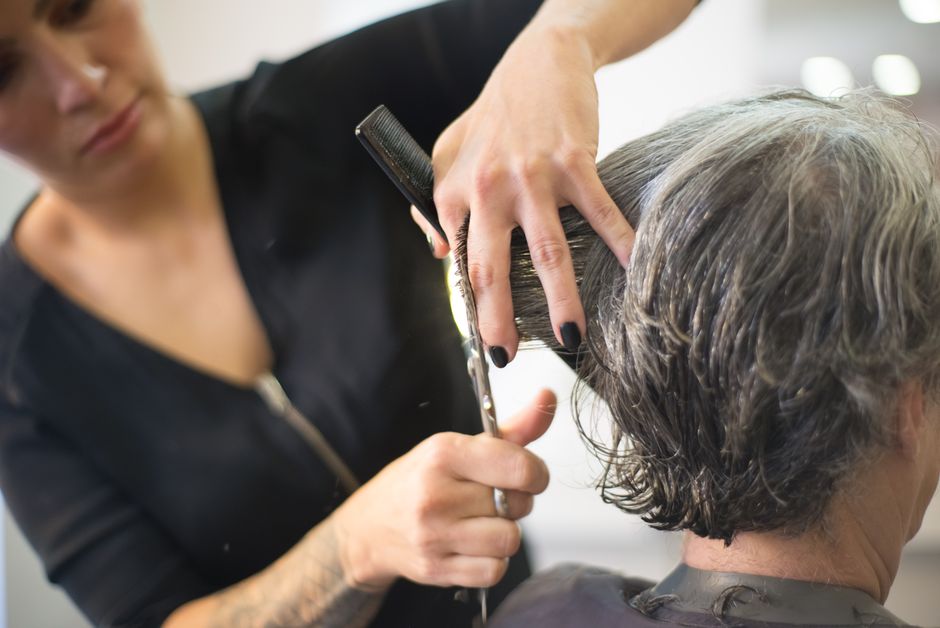
Cutting your own hair is not, by itself, a sign of mental illness. Millions of people trim their own bangs, touch up their roots, or give themselves a full haircut for practical and financial reasons. However, there are specific patterns of hair cutting—like compulsive pulling, shaving in response to distress, or repeatedly cutting hair in ways that cause visible harm—that can be linked to mental health conditions. The difference lies in the reason behind the cut and the emotional state driving it.
What Does Cutting Your Own Hair Usually Mean?
For most people, cutting your own hair is a normal act of self-care or necessity. Salon visits cost money, take time, and require planning. Learning to trim your own hair at home is a practical skill that many adults develop.
Research consistently shows that grooming behaviors, including hair care, are tied to self-esteem and identity. When you cut your hair, you are often making a statement about how you want to present yourself to the world. This is true whether you do it in a salon chair or in front of your bathroom mirror.
The act itself is neutral. It becomes medically or psychologically relevant only when it is driven by distress, compulsion, or harm. A person who calmly trims split ends every six weeks is not showing signs of mental illness. A person who shaves their head in a panic because they feel “contaminated” is showing something different.
When Self-Hair-Cutting Is Linked to Mental Health Conditions
There are specific mental health conditions where hair manipulation or cutting appears as a symptom. These are not common, and they do not apply to routine home haircuts.
Trichotillomania is a condition where a person repeatedly pulls out their own hair. It is classified as a body-focused repetitive behavior. People with this condition may pull hair from their scalp, eyebrows, or other areas. They often feel tension before pulling and relief afterward. Some people who pull their hair also cut it as a way to control the damage or to remove uneven strands.
Body dysmorphic disorder (BDD) involves an intense preoccupation with perceived flaws in appearance. In some cases, people with BDD cut their own hair repeatedly in an attempt to “fix” a perceived imperfection. This cutting is driven by distress, not by a desire for style. The person often feels the cut made things worse and may continue cutting in a cycle of frustration.
Self-harm is a separate category. Some people deliberately injure themselves as a way to cope with overwhelming emotions. Cutting the skin is the most common form, but cutting or shaving hair can occasionally be part of this pattern. When hair cutting is used to punish oneself or to express emotional pain, it deserves clinical attention.
Psychotic disorders are rarely the cause of self-hair-cutting. When they are involved, the behavior is usually tied to a delusion or hallucination—for example, a person who believes they must cut their hair to remove a “device” planted under their skin. This is extremely rare compared to the other conditions listed above.
How to Tell the Difference Between a Bad Haircut and a Warning Sign
The key is not the haircut itself. It is the context. Ask yourself these questions if you are concerned about your own behavior or someone else’s:
- Is the cutting done in response to intense emotions like anger, panic, or despair?
- Does the person feel compelled to cut their hair even when they do not want to?
- Does the cutting cause visible damage that interferes with daily life or social functioning?
- Is the person distressed by the urge to cut or pull their hair?
- Does the behavior happen repeatedly despite attempts to stop?
If the answer to most of these questions is yes, it is worth discussing with a healthcare provider. A routine home haircut that turns out poorly does not meet this threshold. A bad fringe is not a mental health emergency.
One non-obvious point worth clarifying: shaving your head is often a deliberate, healthy choice. People shave their heads for style, convenience, or to support a loved one with cancer. It can also be a symbolic act of renewal after a difficult life event. These are normal decisions. Shaving your head only becomes a concern when it is driven by a delusion or by severe emotional distress that does not resolve.




What About Hair Pulling and Cutting Together?
Some people who pull their hair also cut it. This combination can be confusing to outside observers. The person may cut off the pulled strands to even out their hair, which can look like self-inflicted damage.
Trichotillomania is estimated to affect roughly 1 to 2 percent of the population. It often begins in adolescence and can persist into adulthood. It is not a sign of weakness or a character flaw. It is a recognized medical condition that responds to specific treatments.
Cognitive behavioral therapy (CBT) is the treatment with the strongest evidence for body-focused repetitive behaviors. A specific technique called habit reversal training teaches people to recognize the urge to pull or cut and to substitute a different, harmless action. Some medications, including certain antidepressants, are also used, though the evidence for medications is more limited than for therapy.
If you or someone you know is pulling or cutting hair to the point of visible bald patches, this is not something to handle alone. A primary care doctor or a mental health professional can provide a proper assessment.
Can Cutting Your Own Hair Be a Positive Act?
Yes. For many people, cutting their own hair is an act of agency and self-determination. This is especially true during major life transitions. A new haircut can mark a new job, a breakup, or a fresh start. Doing it yourself can feel empowering because you are taking direct control of your appearance.
There is no medical evidence that cutting your own hair is harmful to mental health. The act of grooming can actually support a positive self-image. Feeling that you look good typically contributes to feeling good.
The only physical risks are practical ones. You might cut unevenly, trim too much, or accidentally nick your scalp. These are minor and resolve with time. They are not signs of psychological problems.
When to Seek Professional Help
Seek professional support if hair cutting or pulling is causing you distress, consuming significant time, or leading to visible damage you cannot stop. These are the moments where the behavior has crossed from grooming into a symptom.
You do not need to have a diagnosis to ask for help. You can start with your primary care doctor. They can rule out physical causes and refer you to a mental health specialist if needed.
If you are cutting your hair because you are experiencing intense emotional pain or using it as a way to punish yourself, that is a reason to reach out. Self-harm of any kind, including hair cutting, deserves compassionate professional attention. You do not have to figure this out on your own.
If you are in immediate crisis or having thoughts of harming yourself, contact emergency services or a crisis hotline right away. These resources exist for exactly this reason.
Frequently Asked Questions
Is cutting your own hair a sign of depression?
No, cutting your own hair is not a recognized sign of depression on its own. Depression involves persistent low mood, loss of interest, and changes in sleep or appetite, not specific grooming behaviors.
Why do I feel the urge to cut my hair when I am stressed?
Some people use grooming behaviors as a way to regain a sense of control during stressful times. This is a common coping mechanism and is not automatically a mental health concern.
When should I worry about someone cutting their own hair?
Worry when the person cuts their hair repeatedly in response to intense distress, cannot stop despite wanting to, or causes visible damage that interferes with daily life. These patterns warrant a conversation with a healthcare provider.
Can cutting your own hair be a form of self-harm?
Yes, in some cases. When hair cutting is used to punish oneself or to express emotional pain, it can be a form of self-harm and deserves professional attention.
