
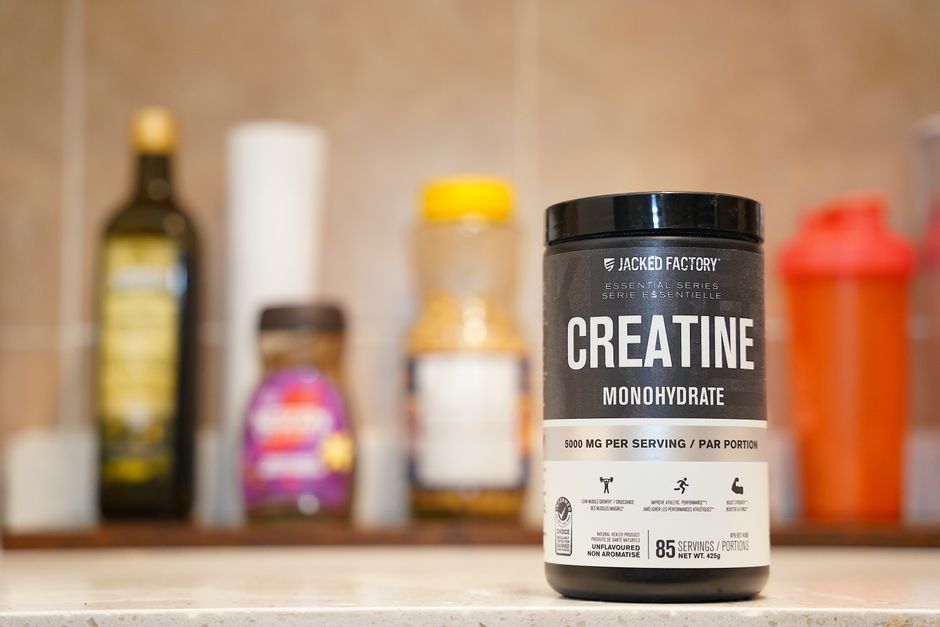
Creatine powder and creatine pills contain the same active ingredient. The main difference is what you swallow alongside it. Powder is usually mixed with water or juice and taken by the spoonful. Pills are pre-measured capsules. For most people, powder is the more practical and economical choice because it is easier to take in the standard daily amount and easier to adjust the dose. Pills win on convenience and portability. Neither form is more effective at building muscle or supporting performance if you take the same dose.
Is Creatine Powder Or Pills Better For You?
Powder is the better default for most people. It is cheaper per gram, easier to hit a full daily dose, and simpler to adjust up or down. Pills are better if you travel a lot, dislike the taste or texture of powder, or know you will skip doses without a capsule you can toss in a bag.
The key point is that the form does not change the molecule. Creatine monohydrate is creatine monohydrate whether it comes as a scoop of white powder or inside a gelatin capsule. What changes is how much you have to swallow to get the same amount, and how much you pay for it.
There is one exception worth naming. Not all “creatine” products are the same compound. Some pills and powders use forms like creatine hydrochloride or buffered creatine. The evidence base for creatine monohydrate is far stronger than for these alternatives. Whatever form you choose, check that the label says creatine monohydrate.
How Much Creatine Do You Actually Need to Take?
The amount that matters is the total grams per day, not the number of pills or scoops. That is why the delivery method is secondary.
Creatine works by saturating the muscles. Your muscles store a limited amount, and once they are full, extra creatine is largely excreted. This is why a daily maintenance dose is the standard approach. The widely used maintenance amount is about 3 to 5 grams of creatine monohydrate per day. This figure comes from the research literature on creatine monohydrate and is the most commonly cited range.
Some people start with a “loading phase” of about 20 grams per day split into four doses for about a week, then drop to maintenance. Loading fills muscles faster. It is not required. Taking 3 to 5 grams daily will also saturate muscles over a few weeks. The loading approach is common in research settings and among athletes, but skipping it simply means it takes longer to reach the same muscle levels.
This is where pills become awkward. A typical capsule holds around 1 gram of creatine, though sizes vary. To reach 5 grams, you might need five capsules. To load at 20 grams, you would need twenty. That is a lot of swallowing for the same result a single scoop of powder delivers.
How Do Powder and Pills Compare Side by Side?
The differences come down to cost, dose flexibility, and how easy each is to take consistently. Here is how the two forms generally stack up.
| Factor | Powder | Pills/Capsules |
|---|---|---|
| Active ingredient | Creatine monohydrate | Creatine monohydrate |
| Cost per gram | Usually lower | Usually higher |
| Dose flexibility | Easy to adjust | Fixed per capsule |
| Capsules needed for 5 g | None | Often around 5, varies by product |
| Portability | Needs water and a scoop | Carry and swallow dry |
| Taste or texture | Some notice a mild taste | None if swallowed |
| Mixing needed | Yes | No |
Cost is the clearest divide. Powder is sold by the tub and you measure it yourself. Pills add the cost of encapsulation, the bottle, and the labor of filling capsules. Per gram of creatine, powder usually comes out ahead. The gap widens as your daily dose goes up.
Dose flexibility matters more than people expect. With powder you can take 3 grams one day and 5 the next without thinking about it. With pills you are locked into multiples of whatever each capsule contains.





Does the Form Affect How Well Your Body Absorbs Creatine?
Absorption is not meaningfully different between powder and pills. Once creatine reaches your stomach and intestine, it is absorbed the same way regardless of whether it arrived as loose powder or inside a capsule. The capsule shell dissolves and releases the contents.
What can affect absorption is what you take it with. Taking creatine with a meal that contains carbohydrates, or with a beverage that provides some carbohydrate and fluid, is often recommended because insulin appears to help drive creatine into muscle. This is a modest effect, not a requirement. Taking it with water works fine for most people.
One practical detail: creatine powder dissolves better in warm liquid than cold, and it does not fully dissolve in water no matter what. Some settles at the bottom of the glass. If you drink the whole glass, you get the dose. Pills sidestep this entirely because there is nothing to mix.
Are Creatine Pills Easier to Take Consistently?
Consistency is the single biggest factor in whether creatine works for you. A form you actually take every day beats a cheaper or “better” form you skip.
This is where pills have a genuine advantage for some people. A capsule you can swallow with your morning coffee, or carry in a bag without a shaker bottle, removes friction. If your routine involves travel, a shared kitchen, or simply no patience for mixing, pills may keep you on schedule.
Powder’s advantage is that it is easy to take in one go. A single scoop mixed into a glass covers your daily amount. With pills, the same dose means several capsules, and some people find that tedious enough to skip days.
Neither form is “better” in the abstract. The one you will take daily is the better one for you.
What Should You Check Before Buying Creatine?
The label matters more than the delivery format. Several details are worth confirming before you spend money.
- Form of creatine. Look for creatine monohydrate. It has the most research behind it. Other forms are not established as superior.
- Third-party testing. Products tested by an independent lab give you more confidence in what is actually in the container. This applies to powders and pills alike.
- Grams per serving. For powder, check how many grams one scoop provides. For pills, check grams per capsule and how many capsules make a serving.
- Additives. Some powders include flavorings, sweeteners, or extra ingredients. Plain creatine monohydrate is the simplest option if you want to control what you take.
- Cost per gram. Divide the total price by the total grams in the container. This makes powders and pills comparable on a level playing field.
One clarification that surprises people: creatine is not a stimulant and does not work like caffeine. You will not feel a jolt after taking it. Its effects come from gradually filling muscle stores over days to weeks, which is another reason daily consistency matters more than timing or form.
Is Creatine Safe, and Does the Form Change That?
Creatine monohydrate has a long record of study in healthy adults, and the form you choose does not change its safety profile at the same dose. The safety questions are about dose and about you, not about powder versus pills.
Common side effects reported at higher doses include stomach discomfort and, for some people, looser stools. Splitting the dose across the day and taking it with food can reduce this. Creatine also draws water into muscle, so a small increase in body weight is expected and is not a sign of harm.
People with kidney disease should talk to a clinician before using creatine, because the kidneys handle creatine and its breakdown product, creatinine. This is a genuine caution, not a formality. Creatine can also raise blood creatinine readings, which are used to estimate kidney function, so anyone being monitored for kidney health should tell their doctor they take it.
There are no clinical guidelines establishing a safe dose for pregnant or breastfeeding women, and creatine use in these groups should be discussed with a clinician rather than assumed safe. The same applies to children and adolescents, where the research base is thinner than in adults.
Buying from a reputable brand matters for both forms. Supplements are not held to the same pre-market approval standards as drugs in the US, so independent testing is your best signal of quality.
The Bottom Line on Powder Versus Pills
For most people, creatine powder is the more practical choice. It delivers the same active ingredient at a lower cost per gram, makes it easy to hit a full daily dose, and lets you adjust the amount without counting capsules. Pills are the better pick when convenience and consistency are the deciding factors for you.
Either way, the things that actually determine results are the same: use creatine monohydrate, take a consistent daily amount, and give it time to build up in your muscles. The container is not what does the work. The daily habit is.
Frequently Asked Questions
Are creatine pills as effective as powder?
Yes, if they contain the same amount of creatine monohydrate. The form does not change how creatine works once it reaches your muscles.
How many creatine capsules equal one scoop of powder?
It depends on the capsule size, since many hold around 1 gram each. Check the grams per capsule on the label and compare it to the grams per scoop of your powder.
Is it better to take creatine with water or food?
Either works for most people. Taking it with a meal or a drink that contains some carbohydrate may slightly help uptake into muscle, but water alone is fine.
Can you take creatine pills without water?
Swallow capsules with water as directed on the label. Taking pills dry can irritate your throat or esophagus.
