
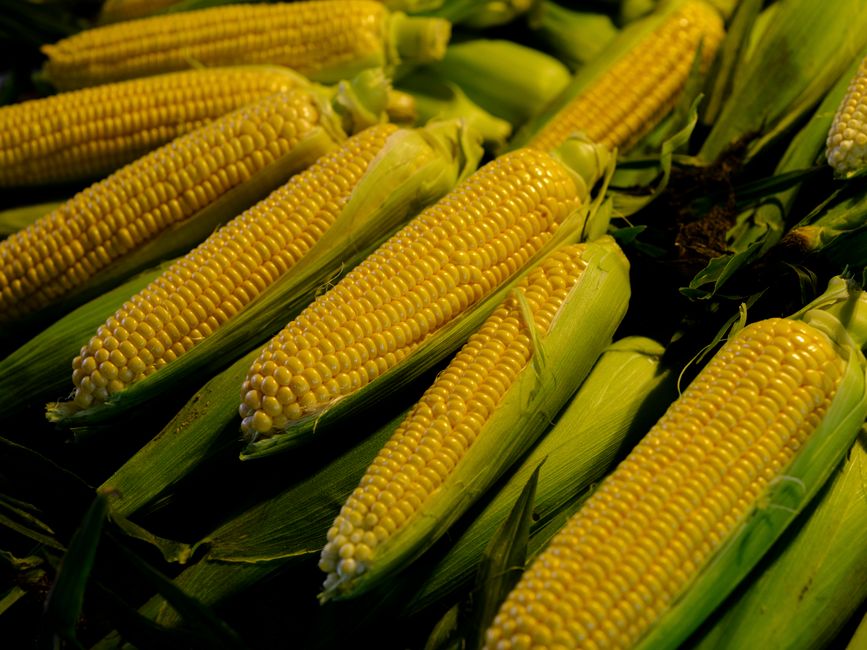
Yes, humans can digest corn. The idea that corn passes through the body completely undigested is a myth. What actually happens is that the outer shell of the kernel — the hull — resists digestion, while the inside of the kernel is broken down and absorbed like any other starch.
So why does corn show up in stool looking largely unchanged? Because the hull is made of cellulose, a fiber humans cannot break down, and it keeps its shape as it travels through the digestive tract. That is normal digestion at work, not a sign that your body failed to process the food.
Why Does Corn Come Out Looking Undigested?
The kernel has two very different parts. The inner core is soft starch and protein, and your small intestine digests and absorbs that without trouble. The outer hull is tough and fibrous, and it survives the trip mostly intact.
Human digestive enzymes cannot break down cellulose. We lack the enzyme — cellulase — that would be needed to do it. So the hull passes through the large intestine and appears in stool, often still recognizable as a kernel shape.
This is the same reason you might see bits of tomato skin, grape skins, or other fibrous plant material in your stool. The visible fragments are the structural parts of plants, not undigested nutrients.
Here is a point worth clarifying: seeing corn in your stool does not mean you absorbed nothing from it. The starch inside the kernel was digested. It is the empty shell that remains.
What Makes Corn Digestible or Hard to Digest?
How well you digest corn depends on the form you eat it in. The hull is the main obstacle, and processing changes how much of that obstacle remains.
- Whole kernels (corn on the cob, canned kernels) keep the hull intact, so more visible fragments pass through.
- Creamed or ground corn breaks the hull apart, making the starch easier to reach and digest.
- Popcorn is whole corn that has been heated until the kernel bursts. The hull is still present but fragmented.
- Cornmeal, corn flour, and masa are ground, so the starch is more accessible to digestive enzymes.
- Cooked corn is softer than raw, which helps chewing break it down more thoroughly.
Chewing matters more than most people realize. The more completely you break the kernels apart in your mouth, the more starch your small intestine can reach and absorb. Swallowing kernels whole means more of the kernel arrives in your gut intact.
Is Corn Hard on Your Digestive System?
For most people, corn is not hard on digestion. It is a source of starch and fiber, and the fiber in corn can support regular bowel function. The visible hull fragments are simply fiber passing through.
That said, corn is a food some people tolerate less comfortably than others. Corn contains fiber and some naturally occurring sugars, and large portions can contribute to gas or bloating in people who are sensitive to either. This varies from person to person.
Whole corn is also fairly bulky. Eating a large amount at once, especially quickly, gives your gut more fibrous material to move through, which can feel uncomfortable for some people. Smaller portions eaten slowly tend to be easier.
If you have a known digestive condition, how corn affects you is individual. If a food consistently causes you discomfort, that is worth discussing with a clinician rather than guessing at the cause.
Can You Be Allergic to Corn?
Corn allergy is real but uncommon. It is not one of the major food allergens, and reactions to corn are far less frequent than reactions to foods like milk, eggs, peanuts, or shellfish.
Corn also contains proteins that can trigger reactions in some people. If someone has a confirmed corn allergy, they need to avoid corn and corn-derived ingredients, which appear in many processed foods under a range of names.
It is worth separating allergy from other reactions. A corn allergy involves the immune system and can cause symptoms such as hives, swelling, or breathing difficulty. Digestive discomfort after eating corn is not the same thing and does not necessarily indicate an allergy.
If you suspect a food allergy, that is a matter for a clinician. Self-diagnosing an allergy based on digestive symptoms can lead to unnecessary dietary restriction.
Does Cooking Make Corn Easier to Digest?
Cooking softens corn and makes the starch easier for your body to break down. Heat breaks down some of the kernel’s structure, and cooked kernels are easier to chew into smaller pieces.
The hull itself does not fully break down with ordinary cooking. Even well-cooked whole kernels will still leave some fibrous fragments that pass through. Cooking helps, but it does not eliminate the hull entirely.
Grinding goes further than cooking. When corn is milled into cornmeal or flour, the hull is broken into tiny pieces and the starch is exposed. This is one reason ground corn products tend to produce fewer visible fragments in stool than whole kernels.
So if visible corn in your stool bothers you, the practical answer is not to avoid corn. It is to chew more thoroughly and consider whether you prefer ground or creamed forms.
Is Corn Nutritious?
Corn provides energy from starch and contributes fiber, along with some vitamins and minerals. It is a staple food in many parts of the world and is a meaningful source of calories and nutrients in those diets.
Sweet corn and field corn differ in how they are used and in their nutrient profile. Sweet corn is eaten as a vegetable, while field corn is processed into cornmeal, flour, and many other products. How corn is prepared — and what is added to it — affects its nutritional value considerably.
The fiber in corn is part of its value. Fiber supports digestive health and can help with bowel regularity. The same hull that resists digestion is doing useful work as it passes through.
One honest caveat: corn is not a complete protein source on its own, and it should be part of a varied diet rather than relied on as a sole staple. This is true of most single foods.
When Should You Be Concerned About Corn in Your Stool?
Seeing corn in your stool after eating corn is normal and not a cause for concern. It does not mean your digestion is broken or that you have a medical problem.
What matters is the broader picture. If you notice undigested food in your stool along with other symptoms — such as persistent diarrhea, unexplained weight loss, ongoing abdominal pain, or blood in your stool — that is worth raising with a clinician. Those symptoms deserve attention regardless of what food you ate.
Visible food fragments alone, without other symptoms, are generally not a sign of anything wrong. The digestive system does not need to break every food down to an invisible state to be working properly.
If you have a diagnosed digestive condition and are unsure how corn fits into your diet, that is a conversation for your care team. General information cannot replace individual medical advice.
Frequently Asked Questions
Is corn digestible by humans?
Yes. The starch inside the kernel is digested and absorbed, while the fibrous outer hull passes through largely intact. Seeing hull fragments in stool is normal.
Why does corn come out undigested?
The outer hull is made of cellulose, which human digestive enzymes cannot break down. The hull keeps its shape as it moves through the digestive tract and appears in stool.
Does cooking corn make it easier to digest?
Cooking softens the kernel and makes the starch easier to break down, and grinding corn exposes more of the starch. The hull still resists digestion even after cooking.
Can you be allergic to corn?
Corn allergy is real but uncommon and is not among the major food allergens. Suspected allergy should be evaluated by a clinician rather than self-diagnosed.
