
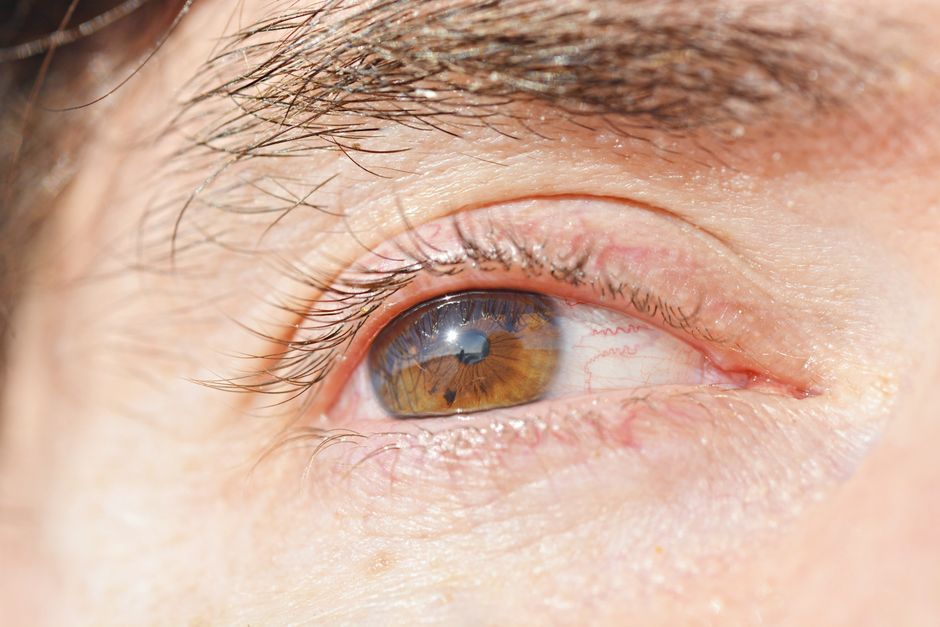
Viral conjunctivitis is the most common form of pink eye, and it usually comes with watery discharge and a recent cold. Bacterial conjunctivitis more often produces thick, yellow-green discharge that makes the eyelids stick together. Both cause a red, irritated eye, and both are usually mild. The tricky part is that the two can look alike, and no symptom checklist is fully reliable on its own.
Is Conjunctivitis Viral Or Bacterial How To Tell?
The most useful clues are the type of discharge and the company it keeps. Viral pink eye tends to produce a thin, watery or slightly mucousy discharge, and it often arrives alongside a cold, sore throat, or a recent upper respiratory infection. Bacterial pink eye tends to produce a thicker, pus-like discharge that is more likely to glue the eyelids shut overnight.
There is a well-known clinical rule of thumb: viral discharge is watery, bacterial discharge is purulent (pus-like). It is a helpful starting point, not a diagnosis. Studies comparing symptoms against lab-confirmed cases have found that no single symptom or combination of symptoms reliably separates viral from bacterial conjunctivitis. Clinicians often use the pattern of discharge plus the presence or absence of a concurrent cold to make an educated guess.
The table below sums up the most common differences. Treat it as a general guide, not a checklist that guarantees the answer.
| Feature | Viral conjunctivitis | Bacterial conjunctivitis |
|---|---|---|
| Discharge | Watery, thin, mucus-like | Thick, yellow or green, pus-like |
| Eyelids stuck together | Less common | Common, especially after sleep |
| Which eye | Often starts in one eye, spreads to the other | Often one eye, can affect both |
| Recent cold or sore throat | Common | Less typical |
| Itching | Common | Less common |
| Swollen lymph node near the ear | Sometimes | Sometimes |
Notice that the last row appears on both sides. That is deliberate. Swollen lymph nodes can happen with either type, so they are not a reliable tiebreaker.
What Causes Each Type of Conjunctivitis?
Viral conjunctivitis is usually caused by the same viruses responsible for the common cold — most often adenoviruses. These viruses spread easily through direct contact with eye secretions, contaminated hands, or shared towels. Adenoviral conjunctivitis is highly contagious and can sweep through households, schools, and clinics.
Bacterial conjunctivitis is most often caused by bacteria that normally live on the skin and in the respiratory tract, including Staphylococcus aureus and Streptococcus pneumoniae. In children, Haemophilus influenzae is also a common culprit. These bacteria can cause infection when they get into the eye, often after someone rubs their eye with contaminated hands.
There is a third category worth knowing about: allergic conjunctivitis. It is not infectious at all. It produces itching, redness, and watery discharge, and it typically flares with pollen or other allergens. Because allergic pink eye can look a lot like viral pink eye, the history matters. If both eyes itch intensely every spring, allergy is a strong candidate.
When Should You See a Doctor for Pink Eye?
Most cases of infectious conjunctivitis are mild and resolve without treatment. Some situations call for a medical evaluation, and they are worth knowing clearly.
- Eye pain that is moderate to severe, rather than mild irritation
- Blurred vision or sensitivity to light that does not clear
- Intense redness in one eye, especially if it worsens quickly
- Symptoms that do not improve after several days or that get worse
- A weakened immune system or a history of eye surgery
- Contact lens wear — remove the lenses and seek care promptly
- Any eye symptoms in a newborn, which always need urgent medical attention
Contact lens wearers deserve a specific note. A red, painful eye in someone who wears contacts can signal a corneal infection, which is a different and more serious problem than conjunctivitis. This is not a situation for watchful waiting.
How Are Viral and Bacterial Conjunctivitis Treated?
Viral conjunctivitis has no specific antiviral treatment for the common forms. Care is supportive: cool compresses, artificial tears, and good hand hygiene. The infection typically runs its course over one to two weeks. Because it is contagious, keeping hands clean and avoiding shared towels and pillowcases matters during that time.
Bacterial conjunctivitis is often treated with antibiotic eye drops or ointment, though this is a point worth being honest about. Many cases of bacterial conjunctivitis clear on their own without antibiotics. Research has found that antibiotics may shorten the illness somewhat and reduce the chance of spreading it, but the benefit is modest for mild cases. Some clinicians recommend antibiotics routinely; others take a watchful-waiting approach for mild cases. Both approaches exist in practice, and the right choice depends on the individual situation.
This is where the viral-versus-bacterial distinction earns its keep. Antibiotics do nothing for a viral infection. Using them when they are not needed exposes the eye to unnecessary medication and adds to the broader problem of antibiotic resistance.
Can You Tell the Difference Without a Test?
Not with certainty. A clinician can sometimes make a confident guess from the history and exam, but a definitive answer requires a lab test — usually a swab of the eye discharge that is cultured or tested for specific organisms. In routine practice, these tests are not done for every case because most cases are mild and resolve regardless of the cause.
This is the part that often surprises people: the distinction is not always necessary for treatment. If symptoms are mild, the practical approach is often the same — supportive care and watching for signs that warrant a closer look. The distinction matters most when symptoms are severe, when there is a reason to be cautious (such as contact lens use or a weakened immune system), or when symptoms are not following the expected course.
How Do You Prevent Spreading Pink Eye?
Infectious conjunctivitis spreads through contact with eye secretions, so hand hygiene is the main defense. Wash hands often with soap and water, especially after touching the face or eyes. Avoid rubbing the eyes, and do not share towels, washcloths, or pillowcases with someone who has symptoms.
If you wear contact lenses, stop wearing them while symptoms are present and until they have fully resolved, and discard any lenses or solution that may have been contaminated. Clean and replace lens cases as directed. For children, keeping them home from school while symptoms are active is often advised, though guidance varies by setting.
There is a common myth that pink eye is always highly contagious and always requires exclusion from work or school. In reality, the contagiousness depends on the cause. Viral and bacterial conjunctivitis are contagious; allergic conjunctivitis is not contagious at all.
Frequently Asked Questions
How can you tell if pink eye is viral or bacterial?
Viral pink eye usually has watery discharge and often comes with a cold, while bacterial pink eye usually has thick, yellow-green discharge that sticks the eyelids together. No symptom pattern is fully reliable, so a lab test is the only way to be certain.
Does bacterial conjunctivitis always need antibiotics?
No. Many mild cases clear on their own, and antibiotics offer a modest benefit at best for mild cases. Whether to use them is a decision made with a clinician based on the individual situation.
How long does viral conjunctivitis last?
Viral conjunctivitis typically runs its course over one to two weeks with supportive care like cool compresses and artificial tears. Symptoms that worsen or do not improve should be checked by a doctor.
Can you go to work or school with pink eye?
Guidance varies, but infectious conjunctivitis is contagious through eye secretions, so good hand hygiene and avoiding shared items are important. Allergic conjunctivitis is not contagious.
