
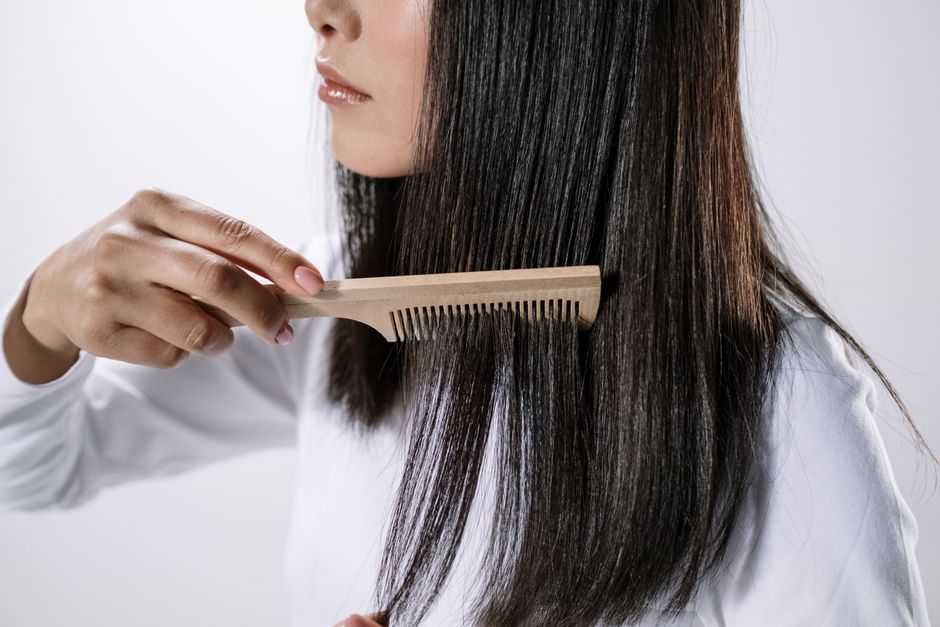
No, combing your hair is not inherently bad. For most people, it is a normal part of hair care that removes tangles, spreads natural oils along the hair shaft, and helps manage styling. The damage people worry about comes from how you comb, when you comb, and what you use — not from the act of combing itself.
The idea that combing causes hair loss is one of the most persistent myths in hair care. Understanding what combing actually does to hair and scalp helps separate real risk from unfounded fear.
What Happens to Your Hair When You Comb It
Hair is made of keratin, a protein also found in skin and nails. Each strand has three layers. The outer layer, called the cuticle, is made of overlapping scales that lie flat when hair is healthy. Those scales protect the softer inner fibers.
Combing does two useful things. It separates strands that have wrapped around each other, and it moves sebum — the oil your scalp produces — from the roots toward the ends. Sebum is a natural conditioner. Hair near the scalp gets plenty of it. Hair at the ends, especially if it is long, gets very little without help. Combing redistributes it.
The risk comes from friction. When a comb drags across a strand, the cuticle scales can lift, chip, or break off. Over time, this makes hair look dull and feel rough. It also makes strands more likely to snap. This is mechanical damage, and it is cumulative. A single stroke does almost nothing. Thousands of rough strokes over months add up.
Wet hair is more vulnerable than dry hair. Water causes the hair shaft to swell and the cuticle to lift slightly. In that state, hair stretches more easily and breaks more easily. This is why the method you use on wet hair matters more than almost anything else.
Does Combing Cause Hair Loss?
Combing does not cause the kind of hair loss that comes from genetics, hormones, or medical conditions. It cannot make follicles stop producing hair. What it can do is break strands that were already there, which looks like thinning but is not the same thing.
The average person sheds roughly 50 to 100 hairs a day as part of the normal growth cycle. Each follicle cycles through growth, transition, and resting phases. Hairs in the resting phase fall out on their own schedule. When you comb, you are collecting hairs that had already detached or were about to. Seeing a clump of hair in your comb after not combing for a few days is not evidence that combing caused loss. It is evidence that shedding happened and the hairs stayed in place until you removed them.
There is one exception worth knowing. A condition called trichotillomania involves compulsive hair pulling. It is a recognized psychiatric condition, not a grooming habit, and it does cause real hair loss. It requires clinical care. Ordinary combing is not related to it.
Traction is a separate issue. Styles that pull hair tight — braids, ponytails, extensions — can damage follicles over time, especially along the hairline. Combing itself does not create that kind of sustained tension. But combing hair that is already styled tightly can add stress at the roots.
Which Comb You Use Matters More Than You Think
The tool does a lot of the work. A comb with rough seams, sharp edges, or teeth that are too close together creates more friction and more breakage. A smooth, wide-toothed comb glides through with less resistance.
Material matters too. Wood and polished resin tend to have smoother surfaces than cheap molded plastic, which often has a visible seam running down each tooth. That seam acts like a tiny saw. Running your thumb along the teeth before buying a comb tells you a lot.
For detangling, a wide-tooth comb is generally the better choice. For styling or smoothing, a finer comb can work, but it should only meet hair that is already free of knots. Never use a fine comb to force through a tangle.
Brushes work differently. A brush with ball-tipped bristles can be gentler for some hair types, though the balls themselves can snag and tear hair if they are rough or if hair wraps around them. There is no single best tool for everyone. Hair texture, density, and curl pattern all change what works.





How to Comb Without Damaging Your Hair
Technique reduces most of the risk. The general approach that hair scientists and dermatologists describe follows a few consistent principles.
- Start at the ends and work upward. Combing from the roots down pushes tangles into tighter knots and forces strands to break.
- Work in small sections rather than the whole head at once. Smaller sections mean less resistance per stroke.
- Use a leave-in conditioner or detangling spray on wet hair. Lubrication reduces friction, which is the main source of mechanical damage.
- Never rip through a knot. Hold the hair above the tangle and work it loose with your fingers first.
- Comb less often if your hair is fine, fragile, or chemically treated. Every stroke is a small stress event.
- Clean your comb regularly. Buildup of oil, product, and shed hair makes the teeth rougher and less effective.
For people with tightly coiled or textured hair, dry combing can cause significant breakage. Many dermatologists and hair care specialists recommend detangling only when hair is wet and coated with conditioner. This is common clinical and professional guidance, though large controlled trials comparing combing methods are limited.
When Combing Hurts or Causes Problems
Combing should not be painful. If it is, something is wrong — either with your technique, your tool, or your scalp.
Scalp pain during combing can come from inflammation, a skin condition, or simply from hair that has been pulled in one direction for a long time. If your scalp is tender, red, or itchy, that is worth having evaluated. It is not a normal response to gentle combing.
Excessive breakage — short broken hairs scattered through your comb — usually points to damaged hair rather than a scalp problem. Heat styling, chemical treatments, and repeated wet combing without lubrication are common causes. Hair that breaks easily may also reflect nutritional issues, thyroid problems, or other medical conditions. Persistent unexplained breakage or shedding warrants a medical evaluation.
If you notice patches of missing hair, scaling, or sores on the scalp, see a doctor. These are not things combing caused, and they are not things a different comb will fix.
Is Combing Your Hair Bad? What the Science Says
The science does not support the idea that combing is bad for your hair. What it supports is that mechanical damage from friction is real, cumulative, and largely preventable.
Hair research consistently shows that cuticle damage comes from friction, heat, and chemical exposure. Combing contributes to friction, but so does sleeping on a rough pillowcase, rubbing against clothing, and towel drying. Combing is one input among many. It is also one of the easiest to control.
The people most at risk from combing are those with fine, fragile, or already-damaged hair. For them, fewer strokes, gentler tools, and wet detangling with conditioner make a measurable difference. For people with thick, resilient hair, combing is unlikely to cause noticeable damage no matter how they do it — though good habits never hurt.
One non-obvious point: the number of strokes matters more than most people realize. The old advice of “100 strokes a night” is not supported by any evidence and likely causes more harm than good for fragile hair. There is no benefit to combing beyond removing tangles and distributing oil.
Frequently Asked Questions
Does combing your hair make it fall out?
No. Combing removes hairs that had already shed naturally, but it does not cause follicles to stop producing hair. Seeing more hair in your comb after skipping a few days is normal shedding, not new loss.
Is it better to comb wet or dry hair?
Wet hair is more fragile because water swells the shaft and lifts the cuticle, so dry combing is generally safer for hair that is not tangled. If you must detangle wet hair, use a wide-tooth comb and apply conditioner first to reduce friction.
How many times a day should you comb your hair?
There is no required number. Comb only as needed to remove tangles and distribute natural oils. More strokes mean more friction, and there is no evidence that a specific number of strokes benefits hair.
Can combing cause baldness?
No. Combing does not cause the genetic or hormonal hair loss that leads to baldness. It can break fragile strands, which may look like thinning, but it does not affect the follicles themselves.
