
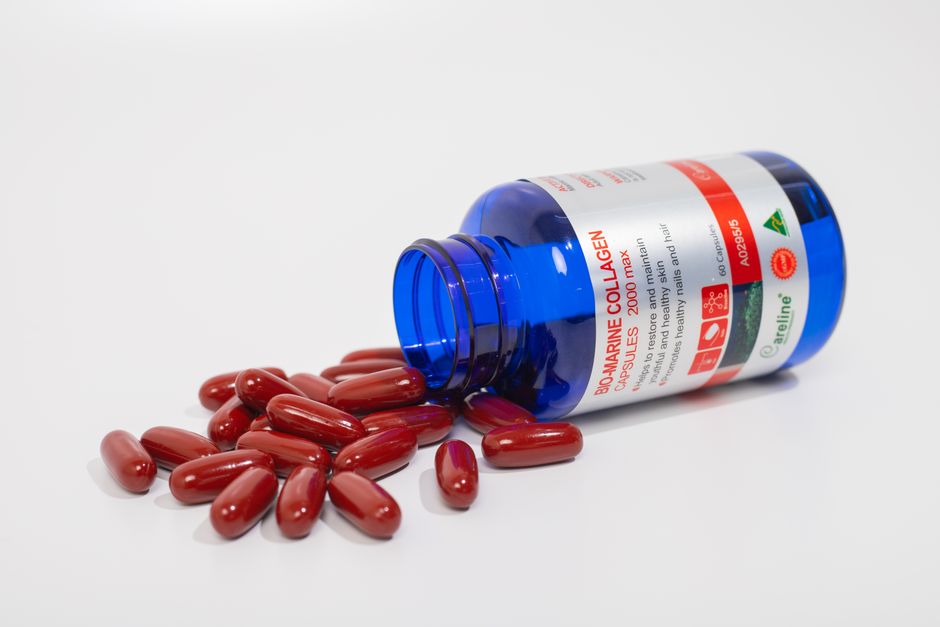
Collagen is not bad for men. It is a protein your body makes on its own, and the collagen you eat or drink is digested like any other protein. For most healthy adult men, collagen supplements appear to be safe, with mild digestive upset as the most commonly reported side effect. The bigger question is not safety but benefit: the evidence for collagen supplements is modest and mixed, and it is strongest for skin and joints, not for muscle, testosterone, or hair.
Collagen has become one of the most heavily marketed supplements on the market, and much of that marketing is aimed at women. Men are increasingly sold collagen too, often with claims about joints, recovery, and performance. Some of those claims have real evidence behind them. Others do not.
What Is Collagen and How Does the Body Use It?
Collagen is the most abundant protein in the human body. It is the main structural protein in skin, bone, tendons, ligaments, cartilage, and blood vessels. It gives tissue its strength and its ability to stretch and recoil.
Your body builds collagen from amino acids, which are the building blocks of all protein. It combines those amino acids with vitamin C in a series of steps. This is why vitamin C deficiency causes scurvy, a condition where collagen cannot be made properly and tissues break down.
When you eat collagen or drink a collagen supplement, your digestive system breaks it into individual amino acids and small peptides. Your body does not send those pieces directly to your skin or your knee. It pools them with amino acids from all the other protein you ate and uses them where it needs them.
That distinction matters. A common assumption is that eating collagen puts collagen back into your joints or skin. The reality is less direct. The body recycles protein constantly, and it will use the amino acids from collagen for whatever it needs at the time.
Collagen is an incomplete protein. It is low in one essential amino acid, tryptophan, which means it cannot support muscle building on its own the way a complete protein like whey, eggs, or meat can.
Is Collagen Safe for Men?
Collagen supplements are generally recognized as safe for healthy adult men. The most common side effects reported are mild: bloating, fullness, or loose stools, usually when a person takes a large dose or starts suddenly.
Collagen is a protein, so it counts toward your daily protein intake. For most men this is not a concern. For men with kidney disease, higher protein intake can matter, and any protein supplement should be discussed with a doctor rather than added on your own.
Some collagen products are made from fish, shellfish, or egg, so men with those allergies should check the source. Collagen is also sometimes derived from bovine or porcine sources, which matters for men with dietary or religious restrictions.
One practical point often missed: supplements are not tightly regulated the way prescription drugs are. A product’s label may not perfectly match its contents. Choosing a product from a manufacturer that does third-party testing reduces, but does not eliminate, that uncertainty.
Does Collagen Affect Testosterone or Male Hormones?
There is no established evidence that collagen supplements lower testosterone or disrupt male hormones. Collagen is a protein, and it does not contain hormones or act like a hormone.
Claims that collagen boosts testosterone are not supported by clinical research. No well-controlled human trials have confirmed that taking collagen raises testosterone levels in men.
This is a place where marketing outruns science. Collagen may support connective tissue and skin, but it is not a hormone therapy and should not be treated as one.
What Are the Real Benefits of Collagen for Men?
The strongest evidence for collagen supplements is in skin and joints. The evidence for muscle, hair, and performance is weaker or absent.
For skin, some studies suggest that oral collagen peptides may modestly improve skin elasticity and hydration over several weeks of use. The effects tend to be small. Results vary between studies, and many trials are short and funded by industry.
For joints, some research indicates that collagen supplementation may reduce joint pain in people with activity-related knee pain or osteoarthritis. The evidence is promising but not uniform. Not every trial shows a benefit, and the size of the effect is generally modest.
For muscle and strength, the picture is different. Collagen is a poor protein for building muscle because it lacks tryptophan and is low in leucine, the amino acid that most strongly triggers muscle protein synthesis. Men looking to support muscle with protein are better served by complete proteins. Some research suggests collagen may help with connective tissue recovery in athletes, but this is an emerging area, not a settled one.
For hair and nails, claims are common and evidence is thin. Some small studies suggest possible benefits for nail strength, but large, well-controlled trials in men are lacking.
Collagen vs. Other Proteins: How Do They Compare?
Collagen is not a substitute for complete protein. If your goal is muscle, recovery, or general protein intake, other sources do the job better. The table below compares collagen with common protein sources on the factors that matter most.
| Source | Complete protein? | Strong evidence for muscle | Evidence for skin/joints |
|---|---|---|---|
| Collagen peptides | No (low in tryptophan) | Weak | Modest, mixed |
| Whey protein | Yes | Strong | Not studied for this |
| Eggs | Yes | Strong | Not studied for this |
| Meat and fish | Yes | Strong | Not studied for this |
| Soy protein | Yes | Strong | Not studied for this |
The takeaway is straightforward. Collagen is a reasonable choice if your goal is skin or joint support. It is a poor choice as your main protein source, especially if you are trying to build or maintain muscle.
Are There Risks or Downsides Men Should Know?
The main downsides are modest: cost, uncertain product quality, and the possibility of mild digestive discomfort. Collagen supplements are not cheap, and the benefits, where they exist, are generally small.
Men with kidney disease, those taking medications that affect protein handling, and men with food allergies to collagen sources should talk to a doctor before starting. This is standard caution for any supplement, not a sign that collagen is uniquely risky.
There is also the opportunity cost. Money and effort spent on collagen could go toward complete protein, resistance training, sleep, and other basics that have far stronger evidence for health and performance in men.
One clarification worth making: collagen is not a “cure” for aging skin or worn joints. It is a supplement with modest, specific evidence. Treating it as a foundation of health overstates what the research shows.
Should Men Take Collagen?
Whether to take collagen is a personal decision, not a medical necessity. There is no clinical guideline that recommends collagen supplements for healthy men.
If you are considering it, the honest position is this: collagen appears safe for most healthy men, the evidence for skin and joint benefits is modest but real, and the evidence for muscle, testosterone, and hair is weak or absent. If you have kidney disease, food allergies, or take regular medications, check with a doctor first.
If your goal is muscle or general health, complete protein and resistance training have far stronger evidence. If your goal is skin or joints, collagen is a reasonable option to try, with realistic expectations.
Frequently Asked Questions
Is collagen bad for men?
No, collagen is not bad for men. It is a protein that is generally safe for healthy adult men, with mild digestive upset as the most common side effect.
Does collagen lower testosterone in men?
There is no established evidence that collagen lowers testosterone. Claims that it raises testosterone are also not supported by clinical research.
What are the benefits of collagen for men?
The strongest evidence is for modest skin and joint benefits. Evidence for muscle, hair, and performance is weak or absent.
Can men take collagen every day?
Daily use appears safe for most healthy men, though no clinical guideline recommends it. Men with kidney disease or food allergies should check with a doctor first.
