
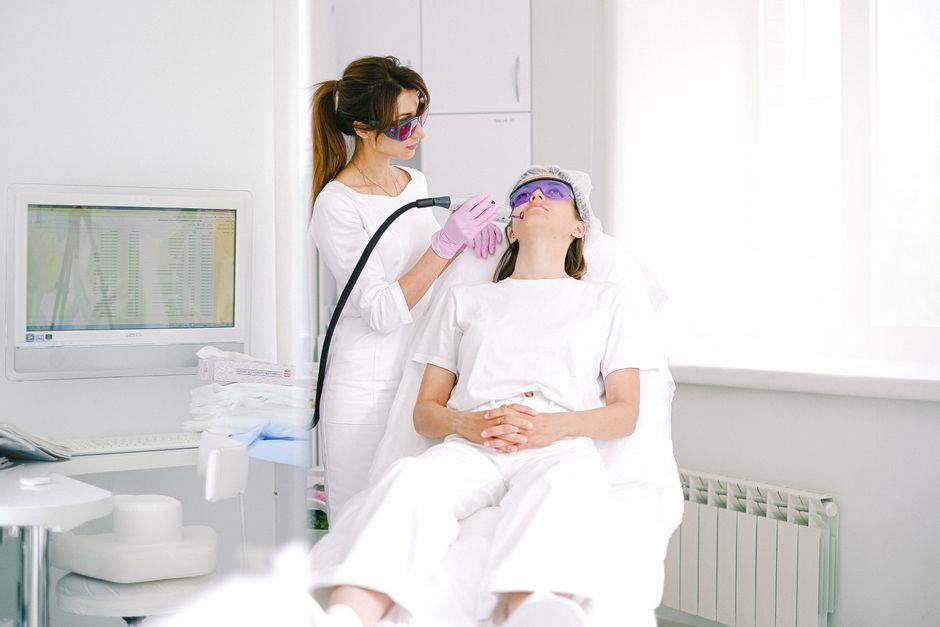
Cold laser therapy is a real treatment with real evidence behind it — but only for some conditions. The strongest research supports it for certain types of pain and inflammation, while many of the broader health claims made for it remain unproven. If you are considering it, the key question is not whether cold laser therapy works, but whether it works for your specific problem.
Cold laser therapy — also called low-level laser therapy (LLLT) or photobiomodulation — uses low-intensity light to affect cells without generating heat. Unlike surgical lasers that cut or burn tissue, these devices deliver light energy at levels that do not damage cells. That distinction matters because it explains both what the therapy can plausibly do and what it cannot.
What Is Cold Laser Therapy and How Does It Work?
Cold laser therapy delivers specific wavelengths of red and near-infrared light into tissue. The light is absorbed by structures inside cells — primarily mitochondria, the energy-producing parts of the cell — and this absorption appears to influence cellular activity.
The proposed mechanism involves a few steps. When light photons are absorbed, they can affect an enzyme involved in cellular energy production. This may increase ATP, the molecule cells use for energy. It may also influence reactive oxygen species and trigger signaling pathways related to inflammation and tissue repair.
That mechanism is well-described in laboratory research. What is harder to establish is how much this cellular activity translates into meaningful clinical benefit in a living person. A cell responding to light in a petri dish is not the same as a patient’s pain improving. This gap between mechanism and outcome is where much of the marketing around cold laser therapy overreaches.
An important clarification: “cold laser” is a marketing-friendly term, not a formal medical category. The scientific term is photobiomodulation, and it covers a wide range of devices, wavelengths, and doses. This variability is a major reason studies sometimes disagree — they are often not studying the same thing.
Is Cold Laser Therapy Effective The Scientific Evidence?
The evidence is genuinely mixed, and it depends heavily on the condition being treated. For some applications, multiple studies and reviews support a real effect. For others, the evidence is weak or absent.
Where the evidence is relatively supportive:
- Certain musculoskeletal pain conditions, including some cases of neck pain and knee osteoarthritis, where several studies suggest modest pain reduction
- Some inflammatory and wound-related applications, though results vary
- Certain oral and dental applications, where some clinical use is established
Where the evidence is weak or unclear:
- General “wellness” or anti-aging claims — no clinical evidence confirms these
- Weight loss, detoxification, or immune “boosting” — no credible human trials support these
- Many conditions where small studies exist but have not been consistently replicated
A recurring problem in this field is study quality. Many trials are small, use different devices and doses, and measure different outcomes. When researchers pool these studies, the results are hard to interpret. Some reviews find benefit; others find the evidence too inconsistent to draw firm conclusions. This is not a sign that the therapy is fake — it is a sign that the research is not yet strong enough to make broad claims.
What Conditions Have the Best Evidence?
The conditions with the most consistent research support are specific and limited. Knee osteoarthritis and some forms of chronic neck pain appear in multiple studies showing modest benefit. Some evidence supports its use for certain tendon and soft tissue injuries, and for specific dental and oral applications.
Even in these cases, “modest benefit” is the honest description. Cold laser therapy is generally studied as a complement to other treatments, not as a replacement for them. It is not typically positioned as a standalone cure for any condition.
For conditions like fibromyalgia, chronic fatigue, and generalized chronic pain, the picture is murkier. Some studies report improvement, but results are inconsistent across trials. That inconsistency is itself meaningful — it suggests the effect, if real, is not reliable across patients and settings.





What Does the Evidence Not Support?
Cold laser therapy is marketed for a wide range of conditions that have little or no supporting evidence. These include weight loss, “cellular detox,” immune system enhancement, anti-aging, and treatment of serious diseases.
No large human trials have confirmed these uses. When you see these claims, they are usually based on laboratory findings or biological reasoning rather than demonstrated clinical outcomes. Biological plausibility is not the same as proven benefit. A therapy can affect cells in a lab and still produce no meaningful change in a patient’s health.
This is the clearest place to separate science from marketing. The mechanism is real and studied. The clinical claims often go far beyond what the research supports.
Is Cold Laser Therapy Safe?
For most people, cold laser therapy appears to carry low risk when used appropriately. Because it does not generate significant heat, it does not cause the burns or tissue damage associated with surgical lasers. Reported side effects in studies are typically minor and uncommon.
That said, “low risk” is not the same as “no risk,” and safety depends on how and where it is used. Light therapy should not be applied directly to the eyes, and certain conditions — such as active cancer in the treatment area, pregnancy over the treated region, and use over areas with active infection — are generally treated as precautions. Some clinicians avoid it in these situations, though the evidence for these precautions is based more on caution than on documented harm.
Because devices vary widely and regulation differs, the safety profile of a specific device depends on its design and how it is operated. A poorly calibrated or unregulated device is not the same as a clinically studied one.
How Does It Compare With Other Treatments?
Cold laser therapy is rarely studied head-to-head against standard treatments as a first-line option. In most research, it is added to a treatment plan that already includes physical therapy, medication, or exercise.
For musculoskeletal pain, standard approaches — physical therapy, appropriate medication, and activity modification — have more consistent evidence behind them. Cold laser therapy may be reasonable as an additional option, particularly when other approaches have not fully helped. It is not typically recommended as the primary treatment for these conditions.
This positioning matters for expectations. If you are considering cold laser therapy, the realistic question is whether it adds benefit alongside what you are already doing — not whether it can replace proven care.
What Should You Expect in a Session?
A typical session involves a device placed against or near the skin, delivering light for several minutes. Most people feel nothing or a mild warmth. Sessions are usually repeated over weeks, and effects — when they occur — are generally gradual rather than immediate.
The number of sessions, the wavelength used, and the dose vary by device and condition. There is no single standard protocol, which is part of why results differ between clinics. If a provider promises dramatic or rapid results, that is a signal to be cautious about the claims being made.
Frequently Asked Questions
Does cold laser therapy actually work?
It works for some conditions and not others. The strongest evidence supports modest benefit for certain pain and inflammatory conditions, while many broader claims remain unproven.
What is cold laser therapy best for?
The most consistent evidence is for specific musculoskeletal problems, including some cases of knee osteoarthritis and chronic neck pain. It is generally used alongside other treatments, not instead of them.
Is cold laser therapy a scam?
The therapy itself is not a scam — the mechanism is real and studied. However, many marketing claims made for it, especially for weight loss or general wellness, are not supported by clinical evidence.
Are there side effects of cold laser therapy?
Reported side effects are typically minor and uncommon because the light does not generate significant heat. Certain precautions apply, such as avoiding direct eye exposure and use over active cancer or pregnancy in the treated area.
