
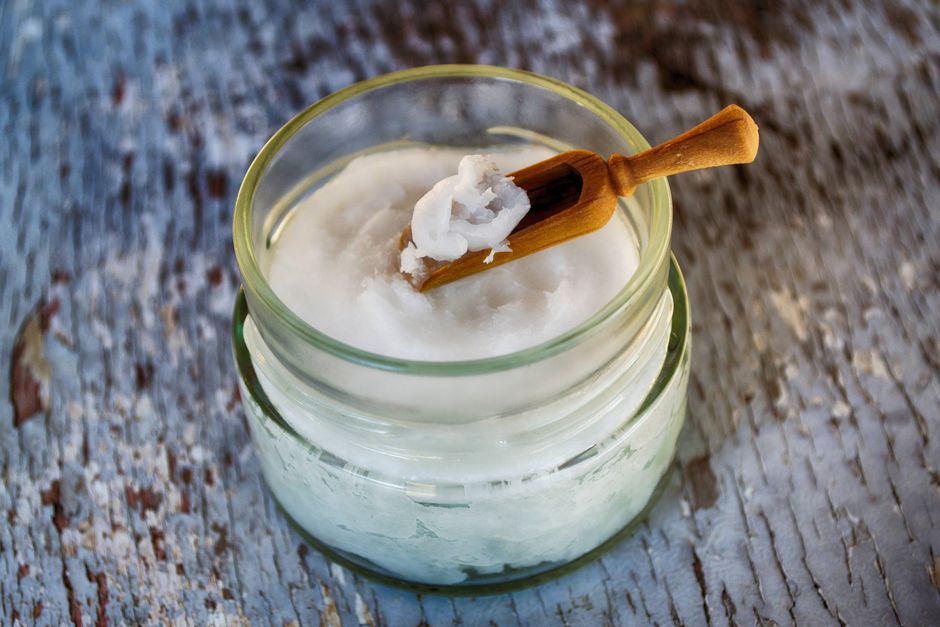
Coconut oil can be bad for curly hair in some situations and genuinely helpful in others. The difference comes down to your hair’s porosity, how much protein your strands need, and how you apply it. For many people with curly hair, the real problem is not coconut oil itself but using too much, leaving it on too long, or applying it to hair that is already protein-sensitive.
Coconut oil is one of the most talked-about ingredients in curly hair care. It is praised as a deep conditioner and blamed for brittle, straw-like strands. Both experiences are real. Understanding why requires looking at what coconut oil actually does to a strand of hair.
What Does Coconut Oil Actually Do to Hair?
Coconut oil is high in lauric acid, a fatty acid with a small enough molecular structure to penetrate the hair shaft. This is unusual among plant oils. Many oils, including olive and jojoba, mostly sit on the surface of the hair. Coconut oil can move into the cortex, the inner layer of the strand.
Once inside, it can reduce how much water the hair absorbs and loses. Research on hair protein loss has found that coconut oil applied before washing can reduce damage to the protein structure of hair compared with mineral oil or no oil at all. That is a real, measurable effect, not a marketing claim.
This penetrating action is exactly why coconut oil helps some people and hurts others. A damaged, porous strand with gaps in its outer layer can absorb the oil and benefit from the added flexibility. A healthy, low-porosity strand may not absorb much at all. The oil then sits on top, which can leave curls feeling greasy or weighed down.
Why Does Coconut Oil Cause Problems for Some Curly Hair?
The most common complaint is that coconut oil makes curly hair feel dry, crunchy, or stiff. This usually happens for one of three reasons.
- Protein sensitivity. Coconut oil does not contain protein, but it can help hair hold onto protein. If your hair is already protein-sensitive, this can tip it toward stiffness and breakage.
- Build-up. Coconut oil is solid at room temperature and can coat the hair over time. Repeated heavy application without proper cleansing can leave a waxy layer that blocks moisture.
- Wrong porosity match. Low-porosity hair resists absorbing coconut oil. The oil stays on the surface, attracting lint and making curls look stringy.
There is a common belief in curly hair communities that coconut oil “blocks moisture” from entering the hair. The evidence does not fully support this as a blanket rule. Coconut oil is actually used in some hair products specifically to help hair retain moisture. The problem is more about quantity and hair type than the oil’s fundamental behavior.
How Do You Know If Coconut Oil Is Right for Your Curls?
Hair porosity is the best guide. Porosity describes how easily your hair absorbs and holds moisture, and it is largely shaped by how the outer cuticle layer sits.
High-porosity hair tends to feel dry quickly, absorbs products fast, and may look frizzy. This type often does well with coconut oil because the oil can fill gaps in a raised cuticle and slow moisture loss. Low-porosity hair feels smooth, repels water, and takes a long time to get wet. This type usually does better with lighter oils that do not sit heavily on the surface.
A simple test many people use is to drop a clean strand of shed hair into a glass of water. If it sinks quickly, that suggests higher porosity. If it floats for a long time, that suggests lower porosity. This test is not scientifically validated and results can be affected by product residue, so treat it as a rough clue rather than a diagnosis.
Pay attention to how your hair responds over a few weeks. If curls feel softer and more elastic after using coconut oil, it is likely a good match. If they feel stiff, dry, or coated, your hair is telling you something.




Is Coconut Oil Bad for Curly Hair It Depends on How You Use It
Application method changes the outcome as much as hair type does. A small amount of coconut oil used as a pre-wash treatment behaves very differently from a thick layer left in as a styling product.
As a pre-wash treatment, coconut oil has the strongest evidence behind it. Applying it to dry hair before shampooing gives the oil time to penetrate the strand, and the wash removes the excess. This is the use most supported by hair science.
As a leave-in, coconut oil is riskier for most curl types. It is heavy, it can weigh down fine curls, and it does not provide the hold that most curly styling routines depend on. Some people with very dry, coarse, high-porosity hair use a small amount on the ends successfully. Others find it makes their curls limp or greasy.
As a scalp treatment, coconut oil is popular but not without risk. It can be comedogenic for some people, meaning it may clog pores and contribute to scalp irritation or acne along the hairline. If you have a sensitive or oily scalp, keep coconut oil on the lengths and ends rather than the roots.
How Does Coconut Oil Compare to Other Oils for Curly Hair?
Different oils do different jobs. Coconut oil is unusual because of its ability to penetrate the hair shaft. That makes it a strong choice for pre-wash conditioning and a weaker choice for lightweight styling.
| Oil | Penetrates Hair Shaft | Common Use for Curly Hair |
|---|---|---|
| Coconut oil | Yes | Pre-wash treatment, sealing ends on high-porosity hair |
| Olive oil | Limited | Surface conditioning, pre-wash on dry hair |
| Jojoba oil | Minimal | Lightweight sealing, scalp use |
| Argan oil | Minimal | Finishing oil, frizz control, lightweight shine |
The comparison matters because many people switch to coconut oil expecting it to work like a lightweight finishing oil. It does not. If your goal is shine and frizz control without weight, a lighter oil is usually a better fit. If your goal is deep conditioning before washing, coconut oil has a stronger case.
What Should You Do If Coconut Oil Has Not Worked for You?
If coconut oil left your curls dry, stiff, or coated, that does not mean your hair is damaged beyond repair. It usually means the oil was not the right match or was used in the wrong way.
Start by clarifying. A buildup of coconut oil can mimic dryness because it blocks other products from working. A clarifying shampoo used occasionally can remove residue and reset your routine. After that, focus on moisture and protein balance with products formulated for your hair type rather than single-ingredient oils.
If you want to try coconut oil again, test it as a pre-wash treatment on a small section first. Apply a modest amount to dry hair, leave it on briefly, and shampoo it out thoroughly. Watch how your hair feels over the next few days before committing to a full routine.
For anyone with an oily or acne-prone scalp, or a history of scalp irritation, it is worth being cautious with coconut oil near the roots. The evidence on coconut oil and scalp health is limited, and individual responses vary widely.
Frequently Asked Questions
Does coconut oil make curly hair dry?
It can, especially on low-porosity or protein-sensitive hair where the oil sits on the surface instead of absorbing. For high-porosity hair, it more often helps retain moisture.
Can I leave coconut oil in my curly hair overnight?
Some people do this as a pre-wash treatment and shampoo it out the next morning. Leaving it in as a styling product is more likely to cause buildup and weighed-down curls.
Is coconut oil better than olive oil for curly hair?
Coconut oil penetrates the hair shaft more than olive oil, which makes it a stronger choice for pre-wash conditioning. Olive oil mostly conditions the surface and is lighter for some hair types.
How often should I use coconut oil on curly hair?
There is no established guideline for frequency, and it depends on your hair’s porosity and how much buildup you notice. Many people use it as an occasional pre-wash treatment rather than a daily product.
