
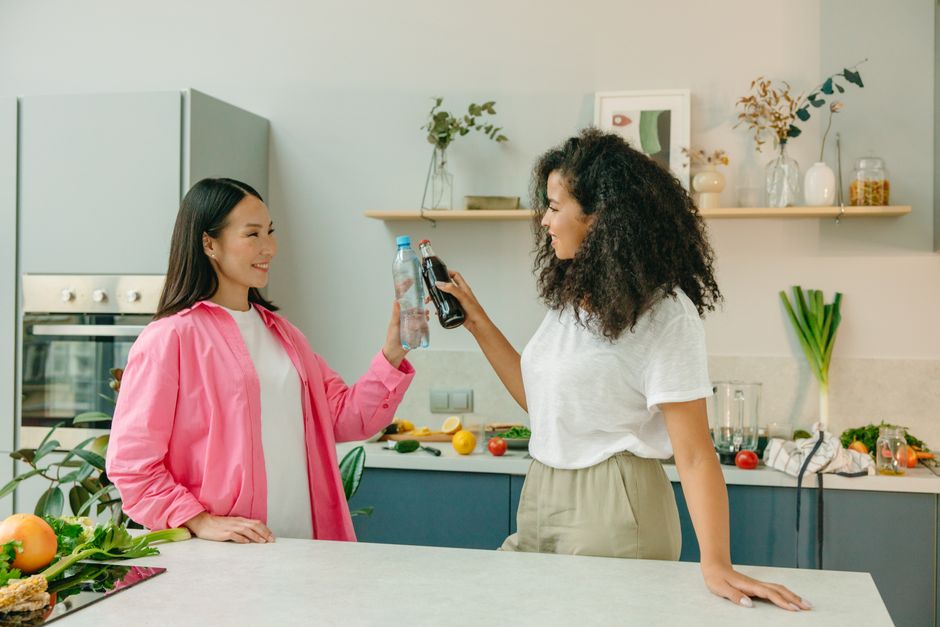
Club soda is not a good choice for an upset stomach. The carbonation that gives it its fizz can make bloating and pressure worse, and the added sodium and minerals offer no proven benefit for nausea, indigestion, or an irritated stomach lining. Plain water is almost always the better option.
That answer surprises people. Club soda has a reputation as a gentle, settling drink — something you sip when your stomach feels off. The reality is closer to the opposite. What feels like relief is usually just the sensation of bubbles and a burp, not any real effect on the stomach itself.
Is Club Soda Good For An Upset Stomach What To Know
Club soda is carbonated water with added minerals, and those minerals are the reason it is not the same as plain sparkling water. Most brands add sodium bicarbonate, and some add sodium citrate, potassium sulfate, or disodium phosphate. The exact blend varies by brand, so two bottles labeled “club soda” can contain different amounts of sodium.
That added sodium matters. A single serving can contribute a meaningful share of the sodium many adults are advised to limit. For anyone watching blood pressure or managing heart or kidney conditions, that is a real consideration — not a trivial one.
The carbonation is a separate issue. Carbon dioxide dissolved under pressure becomes carbonic acid, which is why club soda tastes slightly tart. That acidity is mild compared with stomach acid, so it is not the main problem. The gas itself is.
Swallowing carbonated liquid means swallowing gas along with it. Some of that gas comes back up as a burp, which can feel briefly satisfying. The rest travels into the stomach and small intestine, where it expands. For a stomach that is already distended, irritated, or inflamed, adding gas tends to increase pressure and discomfort rather than reduce it.
Why Carbonation Can Make Stomach Symptoms Worse
An upset stomach usually means one of a few things: too much acid, inflammation of the stomach lining, slowed emptying, or trapped gas. Carbonated drinks do not help any of these and can aggravate several.
When you drink something fizzy, you swallow air. This is called aerophagia, and it is a well-documented source of bloating and belching. The stomach responds to distension by signaling fullness and discomfort. If you already feel bloated, adding more gas is working against you.
Carbonation may also affect how the stomach empties. Some research suggests carbonated beverages can slow gastric emptying in certain people, though results vary and the effect is not fully consistent across studies. Slower emptying means food and gas sit longer, which can prolong the feeling of fullness and pressure.
There is one more layer. People with acid reflux or gastroesophageal reflux disease often find carbonated drinks make symptoms worse. The gas increases pressure in the stomach, and that pressure can push contents upward into the esophagus. For someone whose upset stomach is reflux-related, club soda is close to the worst thing to reach for.
Does the Fizz Ever Help Anyone?
Some people genuinely feel better after a few sips of something carbonated. That is real, but it is usually about the burp, not the drink. Releasing trapped gas from the upper stomach can relieve pressure for a short time.
The relief is temporary and comes with a tradeoff. You swallow more gas than you release, so the net effect often tips toward more bloating a short while later. It is a short-term sensation, not a treatment.
There is also a well-known clinical use for carbonated drinks, but it is not for upset stomachs. Carbonated beverages are sometimes used to help swallow certain medications or to speed the onset of specific fast-acting drugs. That is a narrow, supervised use — not a reason to drink club soda when your stomach hurts.





What About Ginger Ale and Other Fizzy Remedies?
Ginger ale is the classic home remedy, and it deserves a direct answer. Ginger itself has some evidence behind it for nausea. Several studies suggest ginger can reduce nausea, including in pregnancy and after surgery, though results are not uniform and the effective dose is not firmly established.
Ginger ale is a different story. Most commercial ginger ale contains little actual ginger and a large amount of sugar. Any benefit from the ginger is likely outweighed by the carbonation and the sugar, which can worsen nausea and discomfort for many people. If ginger is what you want, ginger tea or a small amount of fresh ginger is a more sensible route.
The same logic applies to other sweetened fizzy drinks marketed for stomach upset. The bubbles and the sugar are working against the stomach, not for it.
What Should You Drink Instead?
Plain water is the default. It does not add gas, does not add sodium, and does not irritate the stomach lining. Small sips are easier to tolerate than large gulps when you feel unwell.
Other options that tend to sit well:
- Flat water at room temperature, sipped slowly
- Clear broths, which replace some fluid and electrolytes
- Weak, unsweetened ginger or peppermint tea
- Oral rehydration solutions if you have been vomiting or have diarrhea
What you avoid matters as much as what you drink. Alcohol, coffee, citrus juices, and very sweet drinks can all irritate a sensitive stomach or worsen reflux. Carbonated drinks belong on that avoid list for most people with active stomach symptoms.
If you are dehydrated from vomiting or diarrhea, plain water alone may not replace lost electrolytes. An oral rehydration solution is the standard approach and is widely available. This is especially important for children and older adults, who lose fluid and electrolytes faster.
When an Upset Stomach Needs More Than a Drink Change
Most short-lived stomach upset resolves on its own within a day or two. Hydration, rest, and bland food are usually enough. But some symptoms point to something that needs medical attention.
Seek care if you have severe or worsening pain, blood in vomit or stool, persistent vomiting that prevents you from keeping fluids down, signs of dehydration such as dizziness or very dark urine, or a stomach problem that lasts more than a few days. Chest or upper abdominal pain can also signal a heart problem in some people — that possibility should not be dismissed, particularly with shortness of breath or pain radiating to the arm or jaw.
If you have a chronic condition such as GERD, gastritis, an ulcer, or irritable bowel syndrome, a carbonated drink is unlikely to be your friend. Talk with a clinician about what fits your situation rather than relying on a home remedy.
Common Beliefs That Do Not Hold Up
Club soda is often described as a digestive aid or a way to “settle” the stomach. No clinical evidence supports that. It is a beverage, not a treatment, and the added minerals do not correct anything about an upset stomach.
Another common belief is that carbonation kills bacteria or “cleans out” the stomach. There is no evidence for this. Stomach acid is far stronger than carbonic acid, and the stomach does not need help from a fizzy drink.
One more: that club soda is basically the same as water. It is not. The sodium and the gas are meaningful differences, especially if you drink it often or have a condition affected by sodium intake.
Frequently Asked Questions
Is club soda bad for an upset stomach?
Yes, it can make an upset stomach worse for most people. The carbonation adds gas and pressure, and the added sodium offers no benefit for nausea or indigestion.
Does club soda help with bloating?
No, it generally makes bloating worse over time. A burp may bring brief relief, but you swallow more gas than you release, so the bloating often returns.
Is sparkling water better than club soda for stomach issues?
Plain sparkling water has no added sodium, so it may be a slightly better choice than club soda. But both are carbonated, so both can still worsen bloating and reflux symptoms.
What is the best drink for an upset stomach?
Plain water, sipped slowly, is the best default. Clear broth or an oral rehydration solution can help if you have been vomiting or have diarrhea and need to replace electrolytes.
