
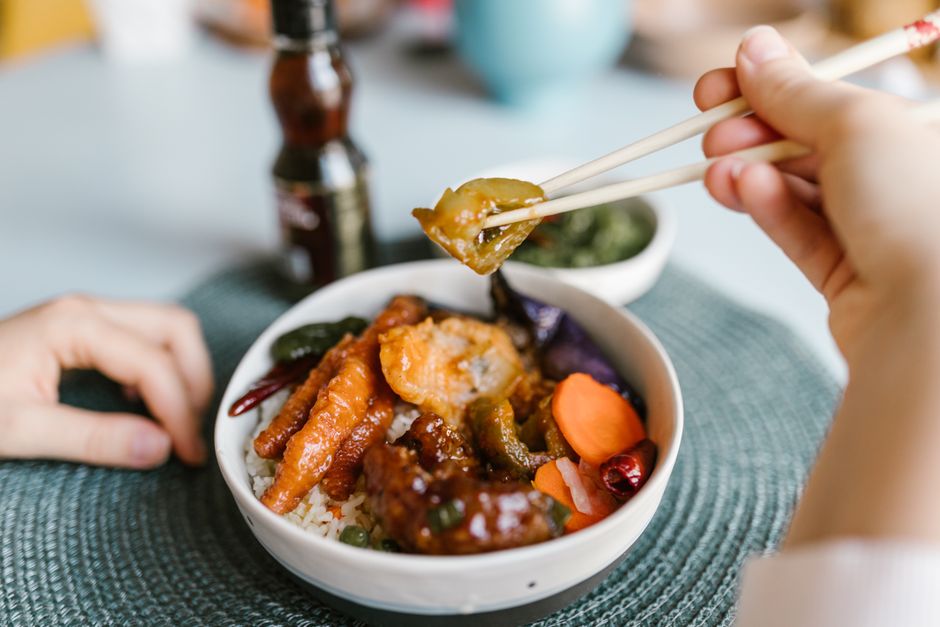
Yes, Chinese food can be very salty. A single order of many popular takeout dishes can carry more sodium than your body needs in an entire day. The salt comes from soy sauce, oyster sauce, MSG, and added table salt, and it adds up fast because these dishes are built on layered seasonings.
The good news is that sodium in Chinese food is not fixed. It depends on the dish, the sauce, and the kitchen. Some choices are naturally lighter. Others are salt bombs. Knowing which is which is the whole game.
Is Chinese Food Salty Sodium Facts And Tips?
Sodium is the part of salt that affects your body, and Chinese cooking uses a lot of it. The core seasonings in most Chinese kitchens are all high in sodium: light soy sauce, dark soy sauce, oyster sauce, hoisin sauce, and fermented bean paste.
A single tablespoon of regular soy sauce contains roughly 900 to 1,000 milligrams of sodium. Most people should keep total daily sodium under 2,300 milligrams, which is the limit set in the Dietary Guidelines for Americans. That one tablespoon uses up close to half of it.
Now think about how a restaurant cooks. A stir-fry might get soy sauce, oyster sauce, and a pinch of salt. A sauce might be reduced for thickness, which concentrates the sodium. Marinades add more. The final plate is a stack of salty layers, not a single sprinkle.
Here is a point that surprises many people. The saltiness you taste is not a reliable guide to how much sodium is in a dish. A sweet-and-sour sauce can taste sugary and still be loaded with sodium from the soy sauce and ketchup base. Sweetness hides salt. So does heavy spice. Your tongue is a poor sodium meter.
How Much Sodium Is in Common Chinese Dishes?
Exact numbers vary widely between restaurants, so treat any single figure as a rough guide. Still, the general pattern is consistent. Dishes built on dark sauces and heavy seasoning run highest. Steamed and plain dishes run lowest.
| Dish type | Typical sodium level | What drives it |
|---|---|---|
| Soy-sauce-based stir-fries (beef and broccoli, General Tso’s, lo mein) | High | Multiple soy-based sauces plus added salt |
| Deep-fried dishes with thick sauces | High | Breading plus sweet-salty sauce |
| Soups and noodle broths | High | Broth base, soy sauce, salt |
| Steamed dishes with light sauce | Moderate | Light soy or a small amount of sauce |
| Plain steamed rice | Very low | No added sodium |
| Plain steamed vegetables | Very low | No added sodium |
Chain restaurants often publish nutrition information, and those numbers are worth checking when available. Independent restaurants rarely do. For those, the table above is a reasonable mental map, not a precise measurement.
Why Is Restaurant Chinese Food So Much Saltier Than Home Cooking?
Restaurant kitchens cook for flavor intensity and speed, and salt and sodium-rich sauces deliver both. A home cook might use a splash of soy sauce. A commercial wok station often uses far more, partly because high heat and fast cooking need strong seasoning to register on the palate.
There is also an economic reason. Sodium-rich sauces are cheap, and they make plain ingredients taste rich. That is not a conspiracy. It is just how commercial cooking works.
Portion size multiplies the problem. A takeout container often holds two or three times a standard serving. Even a moderately salty dish becomes a high-sodium meal when you eat the whole box.
One clarification worth knowing: MSG contains sodium, but less than table salt by weight. The bigger sodium sources in Chinese takeout are usually the soy sauce and added salt, not the MSG. Cutting MSG alone rarely fixes the problem.
Does Chinese Food Have to Be High in Sodium?
No. Traditional Chinese cooking includes many low-sodium preparations. Steaming, blanching, and plain boiling use little or no salt. The heavy-sauce takeout style that dominates in the US is one branch of a very broad cuisine, not the whole thing.
Regional cooking varies a lot. Some regional styles lean on vinegar, garlic, ginger, and chili for flavor rather than salt. Others are built around fermented salty pastes. Knowing the style helps you predict the sodium.
At home, sodium is easy to control. Use low-sodium soy sauce, use less of it, and lean on aromatics. A dish can taste full and savory without drowning in salt.
What Are Practical Tips to Lower Sodium in Chinese Food?
You can cut sodium substantially without giving up the food. The key is to change how the dish is built, not just how it tastes on the surface.
- Ask for sauce on the side. Dip rather than drench. You control how much reaches your plate.
- Choose steamed over fried. Steamed dishes usually carry far less sauce and breading.
- Request less soy sauce or low-sodium preparation. Many kitchens can do this. Not all will, but asking costs nothing.
- Skip or limit the broth. Soup bases are often the saltiest part of a noodle dish.
- Order plain steamed rice. It is very low in sodium and helps fill you up.
- Share a dish. Halving the portion roughly halves the sodium.
- Go easy on dipping sauces. Soy sauce, duck sauce, and hot mustard all add sodium quickly.
These steps help, but they do not make a high-sodium dish low-sodium. They reduce the load. If you are watching sodium for a medical reason, portion control matters as much as any request you make.
Who Should Pay Closest Attention to Sodium?
Sodium matters for everyone, but it matters more for some people. The Dietary Guidelines for Americans recommend keeping sodium under 2,300 milligrams a day for most adults, and lower for certain groups.
People with high blood pressure, heart failure, or kidney disease are often advised to limit sodium more strictly. So are some older adults. If you fall into one of these groups, talk to your doctor about your target rather than guessing.
For healthy adults, an occasional salty Chinese meal is not a crisis. The body handles sodium through the kidneys and adjusts over hours to days. The concern is the pattern, not one dinner. A steady diet of high-sodium takeout is what adds up.
If you are unsure how much sodium you are eating, a food diary for a few days can be eye-opening. Most people underestimate it.
Frequently Asked Questions
Is Chinese food high in sodium?
Yes, many popular Chinese takeout dishes are high in sodium because they rely on soy sauce, oyster sauce, and added salt. Steamed dishes and plain rice are much lower.
How much sodium is in a tablespoon of soy sauce?
A tablespoon of regular soy sauce contains roughly 900 to 1,000 milligrams of sodium. Low-sodium versions contain less, so check the label.
Can I ask a restaurant to make Chinese food with less salt?
You can ask, and many kitchens will reduce soy sauce or leave sauce on the side. Results vary by restaurant, so it is not guaranteed.
Is MSG the main source of sodium in Chinese food?
No, soy sauce and added salt usually contribute more sodium than MSG. MSG does contain sodium, but it is rarely the biggest source in a takeout dish.
