
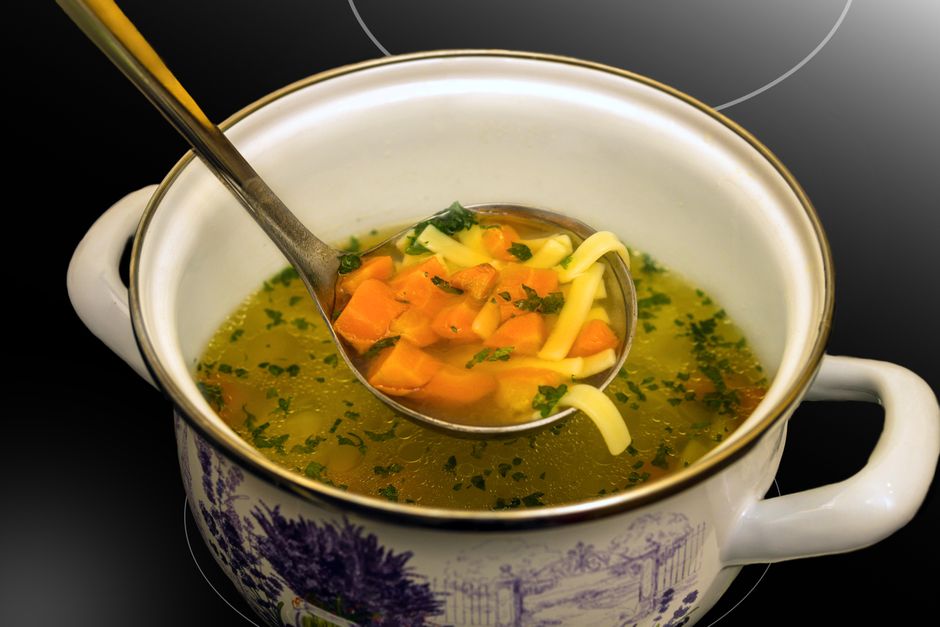
Chicken noodle soup is not a weight loss food, but it is not a weight gain food either. Its effect on your waistline depends almost entirely on how it is made and how much of it you eat. A bowl of homemade broth-based soup with plenty of chicken and vegetables can fit comfortably into a weight loss plan. A can of condensed soup loaded with sodium and refined noodles, eaten with crackers, is a different story.
The real answer sits in the details: calories per bowl, protein content, sodium, and what else you eat alongside it.
How Many Calories Are in Chicken Noodle Soup?
Calories vary widely depending on whether the soup is homemade, canned, or from a restaurant. There is no single number that applies to all chicken noodle soup.
A typical homemade version made with skinless chicken breast, low-sodium broth, egg noodles, and vegetables generally lands somewhere in the range of 150 to 250 calories per one-cup serving. Canned condensed soup, prepared with water, tends to be similar or slightly lower in calories per cup, though portion sizes on the label are often smaller than what people actually eat.
Restaurant versions are the outlier. A large bowl at a chain restaurant can exceed 400 calories, sometimes significantly, because of larger portions, added fat, and thicker noodles. Some versions also contain more sodium than a person should consume in an entire day.
The practical takeaway: read the label or measure your ingredients. A bowl of soup is not automatically low-calorie just because it is soup.
Is Chicken Noodle Soup Good for Weight Loss?
It can support weight loss when it is broth-based, high in protein, and eaten as part of a balanced diet. It works against weight loss when it is high in sodium, low in protein, and paired with bread or crackers.
The strongest argument for chicken noodle soup in a weight loss context is satiety. Soup has a high water content, which adds volume without adding calories. Research on meal volume and fullness has consistently found that foods with high water content tend to produce greater feelings of fullness compared to dry foods with the same calorie count. A broth-based soup eaten at the start of a meal may help you eat less overall.
Protein matters too. Chicken provides protein, which is more satiating than fat or carbohydrate on a per-calorie basis. A soup with a generous amount of chicken will keep you fuller longer than a broth-only soup with a few noodle strands.
What undermines the weight loss case is the noodle-to-everything-else ratio. Egg noodles are refined carbohydrates. A soup that is mostly noodles and broth with little chicken or vegetables delivers calories without much staying power. You will be hungry again soon.
Sodium is a separate concern. It does not cause weight gain in the sense of adding fat, but a high-sodium meal can cause temporary water retention that shows up on the scale. If you are tracking weight daily, this can be discouraging and misleading.
What Makes Some Chicken Noodle Soups Better Than Others?
The difference between a weight-loss-friendly bowl and one that works against you comes down to a few factors. Portion size, protein content, fiber, and sodium are the main levers.
Here is how common versions compare on the factors that matter most:
| Type | Typical calories per cup | Protein | Sodium | Fiber |
|---|---|---|---|---|
| Homemade, skinless chicken breast, low-sodium broth, vegetables | 150–200 | Moderate to high | Low to moderate | Low to moderate |
| Canned condensed, prepared with water | 120–180 | Low to moderate | High | Low |
| Restaurant or deli, large bowl | 300–450+ | Moderate | Very high | Low |
These ranges are approximate. Actual values depend on the specific recipe or product. Check the nutrition label when buying packaged soup.
The homemade version wins on almost every front. You control the sodium, you can load it with vegetables, and you can use more chicken than most commercial versions contain. You also avoid the added sugars and modified starches that appear in some canned soups.
Does Chicken Noodle Soup Help You Feel Full?
Yes, primarily because of its water content and protein. Both are well-established drivers of satiety.
Soup is mostly water. When water is incorporated into a food, it slows the rate at which you eat and adds volume to the stomach. Studies comparing soup to solid meals with the same ingredients and calories have generally found that the soup version produces greater fullness. This is not a magic property of soup specifically. It is the effect of water bound into the food matrix rather than drunk separately alongside it.
Protein from chicken adds another layer. Protein triggers the release of satiety hormones and takes longer to digest than refined carbohydrates. A soup with a solid amount of chicken will keep hunger at bay longer than one that is mostly noodles.
Vegetables, if you add them, contribute fiber and more volume. Carrots, celery, and onions are standard for a reason. They add bulk and nutrients without many calories.
One caveat: creamy chicken soups or versions thickened with roux contain more fat and calories, which changes the equation. The satiety benefit still exists, but the calorie cost is higher.
What Should You Watch Out For?
Sodium is the biggest issue with most commercial chicken noodle soups. A single can of condensed soup can contain well over 1,000 milligrams of sodium, and a restaurant bowl can approach or exceed 2,000 milligrams. The American Heart Association recommends no more than 2,300 milligrams of sodium per day for most adults, and ideally closer to 1,500 milligrams for people with high blood pressure.
If soup is a regular part of your diet, that sodium adds up quickly.
Refined noodles are the second concern. They provide calories with little fiber or protein. Swapping in whole grain noodles or reducing the noodle quantity and increasing the vegetables are simple adjustments that improve the nutritional profile without changing the character of the soup.
Portion size is the third. A mug of soup as a snack is one thing. A large bowl eaten with a stack of saltines or a piece of buttered bread is another. Those additions can easily double the calorie content of the meal.
Finally, chicken noodle soup is not a meal replacement strategy. It works as part of a balanced eating pattern, not as a standalone weight loss tool. Relying on soup alone for multiple meals will likely leave you short on calories, protein, and micronutrients over time.
How Can You Make Chicken Noodle Soup Work for Weight Loss?
Start with the broth. Use low-sodium or unsalted chicken broth and adjust the seasoning yourself. This alone can cut hundreds of milligrams of sodium per serving.
Increase the protein. Use more skinless chicken breast than a standard recipe calls for. Some people add a handful of white beans or lentils for extra protein and fiber, though this changes the traditional flavor.
Reduce or replace the noodles. Use fewer noodles and more vegetables. Zucchini noodles, whole grain pasta, or a smaller portion of egg noodles all work. The goal is to shift the ratio toward protein and vegetables.
Add vegetables generously. Carrots, celery, onions, spinach, and green beans all add volume, fiber, and nutrients with minimal calories.
Watch the salt. Taste before adding more. Many recipes call for more salt than necessary, and the flavor of homemade broth with fresh vegetables and herbs is often enough.
Eat it as a meal, not a side. Pair it with a side salad or a piece of fruit rather than bread or crackers. This keeps the calorie total in check and adds fiber.
If you are buying canned or prepared soup, compare labels. Look for versions with lower sodium and higher protein. Some brands now offer reduced-sodium options that are meaningfully lower.
Is Chicken Noodle Soup Better Than Other Soups for Weight Loss?
It is comparable to other broth-based soups and generally a better choice than cream-based soups. But it is not necessarily superior to vegetable soup, minestrone, or lentil soup.
Lentil soup and bean-based soups often have more fiber and protein than chicken noodle soup, which can make them more filling per calorie. Vegetable soup is lower in calories but also lower in protein. Chicken noodle soup sits in a middle ground: decent protein, moderate calories, low fiber unless you add vegetables.
The best soup for weight loss is the one you will actually eat and that fits your overall calorie and nutrition goals. There is no single soup that outperforms all others by a meaningful margin.
What matters more than the type of soup is the pattern. A broth-based soup with protein and vegetables, eaten as part of a balanced diet, supports weight loss. A creamy, high-sodium soup eaten with bread does not, regardless of what it is called.
Frequently Asked Questions
Can I eat chicken noodle soup every day and still lose weight?
Yes, if it fits within your daily calorie needs and the rest of your diet is balanced. Watch the sodium, especially with canned or restaurant versions, and make sure you are getting enough protein and fiber from other foods.
Is canned chicken noodle soup bad for weight loss?
Not inherently, but many canned versions are high in sodium and low in protein and fiber. Compare labels and choose lower-sodium options, or add extra chicken and vegetables to improve the balance.
Does chicken noodle soup burn fat?
No food burns fat. Chicken noodle soup can support weight loss by helping you feel full on relatively few calories, but it does not increase fat burning or metabolism.
Is chicken noodle soup good for you when you are sick?
It provides fluids, electrolytes, and easily digested calories, which can be helpful when you are unwell. The evidence for specific medicinal effects beyond hydration and comfort is limited.
