
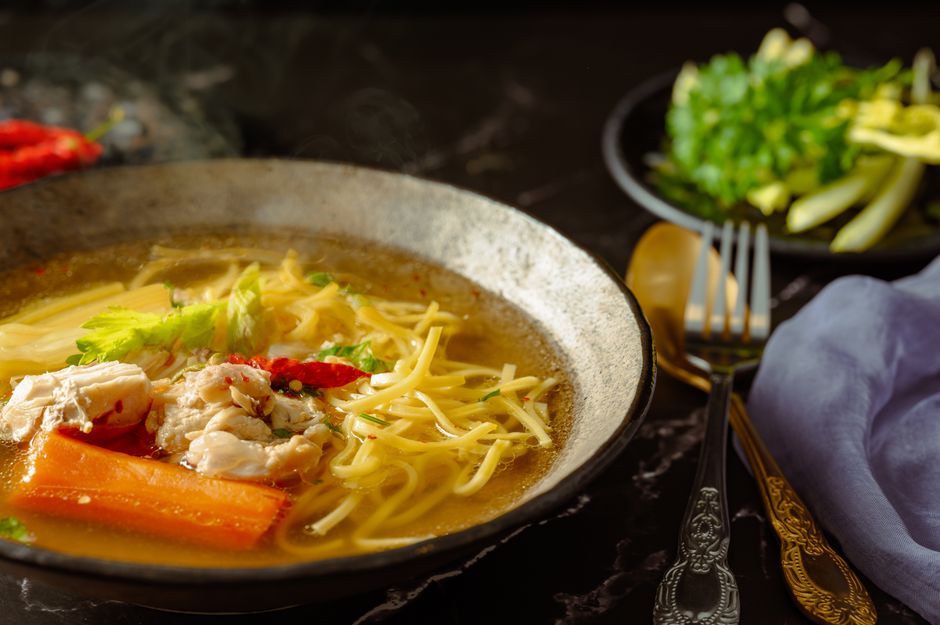
Chicken noodle soup is a reasonable choice for an upset stomach, but it is not a treatment. Warm, salty broth helps replace some fluid and electrolytes, and the gentle mix of soft noodles and lean protein is easy for most people to digest. It will not cure an infection or settle every kind of stomach problem, and some ingredients in commercial versions can make symptoms worse.
What makes it helpful is fairly simple. Warm liquid, salt, and easily digested food are the same things clinicians have long suggested for mild stomach upset. The soup itself is not magic. It is a convenient way to get those three things at once.
Is Chicken Noodle Soup Good For an Upset Stomach?
For most mild cases of nausea, diarrhea, or a queasy stomach, chicken noodle soup is a sensible food. It delivers fluid, sodium, and gentle calories at a time when eating feels difficult. Those are the properties that matter, not any special ingredient in the recipe.
The broth does most of the work. When you are losing fluid through vomiting or diarrhea, you lose water and electrolytes, mainly sodium and potassium. Broth contains sodium and some potassium, so it helps replace part of what is lost. It is not a full oral rehydration solution, which is formulated with precise ratios of sodium and glucose, but for mild illness it is a reasonable substitute for plain water.
The noodles and chicken provide carbohydrate and protein that are easy to tolerate. Soft, cooked food tends to sit gently in the stomach. Lean chicken is low in fat, and fat is the part of a meal that slows stomach emptying and can worsen nausea in some people.
What the soup does not do is treat the cause. If you have a viral stomach bug, your immune system clears it. If you have food poisoning, the soup does not remove the toxin or the bacteria. It supports you while your body does its job.
What Does the Research Actually Show?
The famous claim that chicken soup fights colds and flu has been studied, but not in a way that proves much. A small laboratory study from decades ago suggested chicken soup might affect how certain immune cells move, but that work was done in cells, not in people. It does not show that eating soup shortens illness or eases symptoms.
No large human trials have confirmed that chicken noodle soup treats stomach upset, colds, or any specific illness. The evidence for its benefits is largely practical and physiological, not clinical. It helps with hydration and provides tolerable nutrition. That is a real benefit, but it is not the same as a proven remedy.
This distinction matters. The soup is useful because it is warm, salty, wet, and easy to eat. Those properties are well understood. Any claim beyond that is not supported by strong evidence.
How Does It Help With Hydration and Electrolytes?
Dehydration is the main risk in stomach illness, especially when vomiting or diarrhea lasts more than a day. Broth helps because it contains sodium, which helps your body hold onto the water you drink. Plain water alone does not replace sodium lost through illness.
That said, broth is not the same as an oral rehydration solution. Products designed for rehydration, available at pharmacies, contain a specific balance of sodium and glucose that helps the gut absorb water more efficiently. For mild upset, soup is fine. For significant fluid loss, especially in children or older adults, a proper rehydration solution is the better choice.
Commercial soups vary widely in sodium content. Some canned and instant versions contain high amounts of salt, which matters if you have high blood pressure or are watching sodium for other reasons. Reading the label is worth the few seconds it takes.
What Kind of Chicken Noodle Soup Is Best?
Simple is better. A basic broth with soft noodles and plain chicken is easier on an upset stomach than a heavily seasoned or creamy version. The plainer the soup, the fewer ingredients that might trigger nausea or irritation.
- Broth-based, not cream-based. Creamy soups are higher in fat, which can slow digestion and worsen nausea.
- Low in added spice and strong seasoning. Heavy pepper, chili, or acidic ingredients can irritate a sensitive stomach.
- Soft, well-cooked noodles. Firm or al dente pasta is harder to digest than soft noodles.
- Moderate sodium. Some salt helps, but very high-sodium soups are not ideal, especially for people with high blood pressure.
- Lean chicken. Skinless chicken is lower in fat and easier to tolerate.
Homemade soup gives you control over salt and ingredients. If you are making it yourself, a simple broth with chicken, noodles, carrots, and a little salt is a good template. You do not need a special recipe.
One thing worth knowing: the noodles and chicken matter less than the liquid. If you can only manage the broth, that still helps with hydration and sodium. Many people find the broth easiest to keep down early on and add the solid pieces as their stomach settles.
When Should You Avoid Chicken Noodle Soup?
Chicken noodle soup is not right for everyone. Some people with a sensitive stomach find that the fat in chicken or the gluten in noodles makes symptoms worse. Others find dairy-based or heavily seasoned versions hard to tolerate. If a particular soup bothers you, a simpler alternative may work better.
People with certain conditions should be cautious. If you have kidney disease and are on a sodium-restricted diet, high-sodium soup may not fit your plan. If you have celiac disease or a gluten sensitivity, standard wheat noodles are not appropriate. If you have trouble swallowing, thin broth can be a choking risk, and thickened liquids may be safer.
There is also a practical limit. Soup alone does not provide enough calories or nutrients for more than a day or two. If you are relying on it for longer, you need to add other foods as your appetite returns.
When Should You See a Doctor?
Most stomach upset settles within a day or two without medical care. Some situations need attention. Seek medical help if you cannot keep any fluids down, if you show signs of dehydration such as dizziness, dark urine, or a dry mouth, if there is blood in vomit or stool, if you have a high fever, or if symptoms last more than a couple of days.
Children and older adults are at higher risk of dehydration and should be watched more closely. Infants and young children can become dehydrated quickly, and the signs can be subtle. If you are unsure, it is reasonable to check with a clinician rather than wait.
Severe or persistent stomach pain, especially pain that is localized or worsening, is another reason to get medical attention. Soup is a comfort food, not a diagnostic tool. If something feels wrong beyond a mild bug, trust that instinct and get it checked.
What Else Helps an Upset Stomach?
Rest and fluids are the foundation. Small, frequent sips of liquid are easier to keep down than large amounts at once. Bland foods such as crackers, rice, bananas, and toast are often recommended as the stomach settles, though the evidence for a specific “BRAT” diet is limited. What matters most is that you stay hydrated and eat what you can tolerate.
Avoid alcohol, caffeine, and very fatty or spicy foods while you recover. These can irritate the stomach and worsen nausea. If you take medications, check with a pharmacist or clinician about whether any of them could be contributing to stomach upset.
Probiotics are sometimes suggested for stomach upset, but the evidence is mixed and depends on the specific strain and the cause of the illness. No single probiotic is proven to help all stomach problems. If you are considering one, it is worth asking a clinician whether it makes sense for your situation.
Frequently Asked Questions
Is chicken noodle soup good for an upset stomach?
Yes, for most mild cases it is a reasonable choice because it provides warm fluid, sodium, and easy-to-digest food. It supports hydration but does not treat the underlying cause.
Can chicken noodle soup help with diarrhea?
It can help replace some fluid and sodium lost through diarrhea, but it is not a substitute for an oral rehydration solution in significant fluid loss. Seek medical advice if diarrhea is severe or lasts more than a couple of days.
Is canned chicken noodle soup as good as homemade?
The basic properties are similar, but canned versions vary widely in sodium and added ingredients. A simple, lower-sodium canned soup is fine; homemade gives you more control.
Should you eat chicken noodle soup when you have a stomach bug?
Yes, if you can tolerate it, since staying hydrated and getting some calories helps during recovery. If solid food makes nausea worse, start with the broth and add noodles and chicken as you feel able.
