
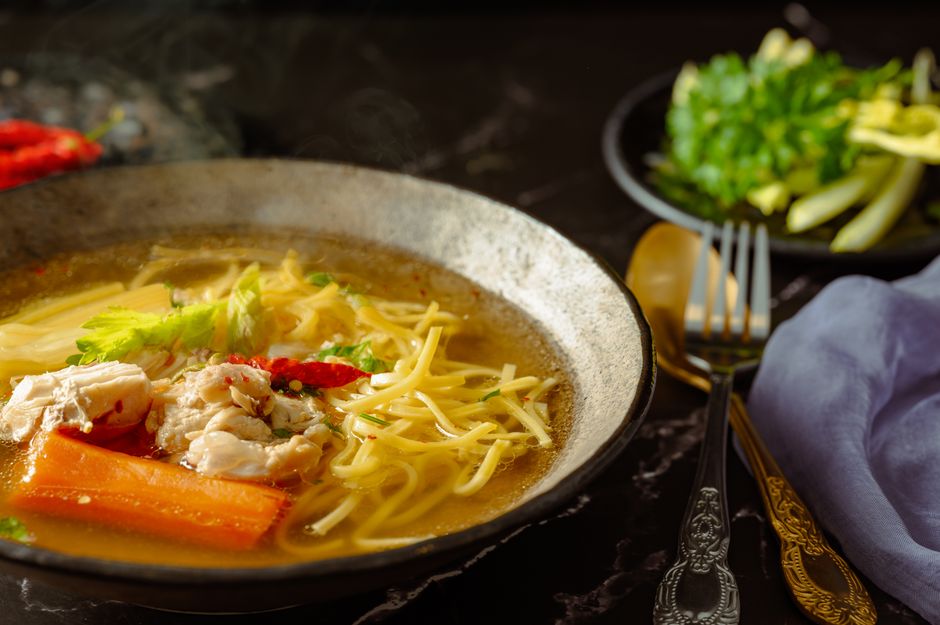
Chicken noodle soup is not inherently fattening. A typical serving made with broth, chicken, vegetables, and noodles contains a moderate number of calories, usually between 150 and 300 per bowl. Whether it contributes to weight gain depends entirely on the ingredients, portion size, and what you add to it, not on the soup itself.
What Determines If Chicken Noodle Soup Is Fattening?
The calorie content of chicken noodle soup varies widely. A clear broth-based soup with lean chicken breast, carrots, celery, and a modest amount of noodles is a low-calorie, filling meal. The same soup made with cream, butter, heavy oil, or a large pile of egg noodles becomes a different dish entirely.
Most of the calories in chicken noodle soup come from three places: the noodles, any added fat, and the chicken itself. Broth is mostly water with some sodium and flavor compounds, contributing very few calories. Vegetables add bulk and nutrients for almost no caloric cost.
Restaurant versions and canned soups often contain more fat and sodium than homemade versions. A single restaurant bowl can easily exceed 400 calories if it includes a creamy base or is served with bread or crackers. Canned soups vary by brand, but many contain added oils and higher sodium levels.
How Many Calories Are in a Typical Bowl?
A homemade chicken noodle soup using low-sodium broth, skinless chicken breast, mixed vegetables, and about one cup of cooked egg noodles per serving lands around 200 to 250 calories per bowl. That is a reasonable calorie count for a meal, especially one that provides protein, vegetables, and some carbohydrates.
Compare that to a creamy chicken noodle soup made with heavy cream or whole milk. That version can reach 400 to 500 calories per serving, largely because dairy fat adds significant calories without adding much volume or fullness.
The noodles are the most variable ingredient. A half-cup of cooked egg noodles adds roughly 100 calories. Doubling the noodles doubles that number. Pasta portions are easy to underestimate, and in soup, they tend to absorb broth and expand, making portion control harder to judge by eye.
Does Chicken Noodle Soup Help With Weight Management?
Soup can be a useful tool for weight management, and chicken noodle soup fits that pattern. Research has consistently shown that consuming broth-based soups before or as part of a meal increases fullness and reduces total calorie intake at that meal. The high water content adds volume without adding calories, which helps you feel satisfied on fewer calories.
Protein also plays a role. Chicken provides a solid amount of protein, which is the most satiating macronutrient. A bowl with 20 to 30 grams of protein will keep you full longer than a bowl with the same calories but less protein.
That said, chicken noodle soup is not a magic food. It is not a metabolism booster, and it does not burn fat. It simply offers a way to eat a filling, reasonably low-calorie meal. If you eat it in addition to your normal meals rather than as a replacement, it will not help with weight loss.





What Makes Chicken Noodle Soup Fattening in Practice?
Several common habits turn a light soup into a calorie-dense meal. Adding butter or oil to the pot, using fatty cuts of chicken with skin, or stirring in cream or cheese all raise the calorie count quickly.
Portion size matters more than any single ingredient. A bowl is a reasonable serving. A pot, or a second bowl, is not. Soup is easy to overeat because it is warm, comforting, and goes down quickly.
Side dishes also contribute. Serving soup with a grilled cheese sandwich, a large bread roll, or a handful of crackers can double or triple the total meal calories. The soup itself may be light, but the meal may not be.
Sodium is a separate concern. Many canned and restaurant soups are high in sodium, often containing 700 to 900 milligrams per serving or more. The Dietary Guidelines for Americans recommend limiting sodium to less than 2,300 milligrams per day. High sodium intake does not directly cause fat gain, but it can cause water retention and temporary weight fluctuations on the scale.
Is Canned Chicken Noodle Soup Fattening?
Canned chicken noodle soup is not automatically fattening, but it is worth reading the label. A standard serving of many canned chicken noodle soups contains 150 to 200 calories. That is a reasonable number for a light meal.
The problem is that most people eat more than the labeled serving size. A can often contains two servings, and a hungry adult can finish the whole can without thinking about it. That brings the total to 300 to 400 calories, which is still moderate but higher than expected.
Canned versions also tend to have less chicken and more noodles relative to homemade soup. That shifts the macronutrient balance toward carbohydrates and away from protein, which reduces how filling the soup is. Some brands also add significant amounts of fat in the form of chicken fat or vegetable oil.
If you eat canned soup regularly, compare nutrition labels. Look for options with higher protein, lower sodium, and fewer ingredients. Some brands now offer reduced-sodium versions with more chicken and vegetables.
How to Make Chicken Noodle Soup That Is Not Fattening
Making soup at home gives you full control over calories and ingredients. Start with a low-sodium chicken broth as the base. Add plenty of vegetables such as carrots, celery, onions, and garlic. These add fiber, volume, and flavor for very few calories.
Use skinless chicken breast or thigh meat. Skinless chicken breast has the lowest calorie density, but skinless thigh meat is still a reasonable choice and has more flavor. Remove any visible fat before adding it to the pot.
Measure the noodles. One cup of cooked egg noodles per serving is a reasonable portion. If you want to cut calories further, use less pasta and add more vegetables or an extra portion of chicken to keep the meal filling.
Skip the cream and butter. The soup does not need them. If you want a richer texture, consider blending some of the cooked vegetables into the broth or adding a small amount of plain Greek yogurt at the end, off the heat, to avoid curdling.
Season with herbs and spices rather than salt. Thyme, parsley, bay leaf, black pepper, and a squeeze of lemon juice add flavor without sodium. This is especially important if you are watching your blood pressure or trying to reduce water retention.
Is Chicken Noodle Soup Good for Weight Loss?
Chicken noodle soup can fit into a weight loss plan, but it is not a weight loss food on its own. Weight loss happens when you consistently eat fewer calories than you burn. A bowl of chicken noodle soup can help you do that because it is filling relative to its calorie content.
It also provides protein, which supports muscle maintenance during weight loss. Maintaining muscle keeps your metabolism from dropping as much as it otherwise would when you eat fewer calories.
The key is to treat it as a meal, not a snack. If you eat a bowl of soup and then eat your normal dinner an hour later, you have simply added calories to your day. Use it as a lunch or dinner option, and pair it with a side salad or a piece of fruit if you are still hungry.
There is no evidence that chicken noodle soup has any special fat-burning property. It is not a detox food, and it does not speed up metabolism. It is simply a practical, nutritious meal that happens to be lower in calories than many other comfort foods.
Frequently Asked Questions
Can I eat chicken noodle soup every day without gaining weight?
Yes, if the soup is broth-based and portion-controlled, eating it daily will not cause weight gain. The total calories you eat across the whole day determine weight changes, not any single food.
Is chicken noodle soup healthier than other soups?
It depends on the soup. Broth-based chicken noodle soup is generally lower in calories and saturated fat than cream-based soups like clam chowder or broccoli cheddar. Compared to lentil or bean soups, it has less fiber and often more sodium.
Does the type of noodle matter for calories?
Yes. Egg noodles, white pasta, and rice noodles have similar calorie counts per serving, around 100 to 110 calories per half-cup cooked. Whole wheat noodles add more fiber but do not significantly change calories.
Is chicken noodle soup fattening at night?
No. Eating soup at night does not cause weight gain any more than eating it during the day. Your body does not store food differently based on the time of day, provided your total daily calorie intake stays the same.
