
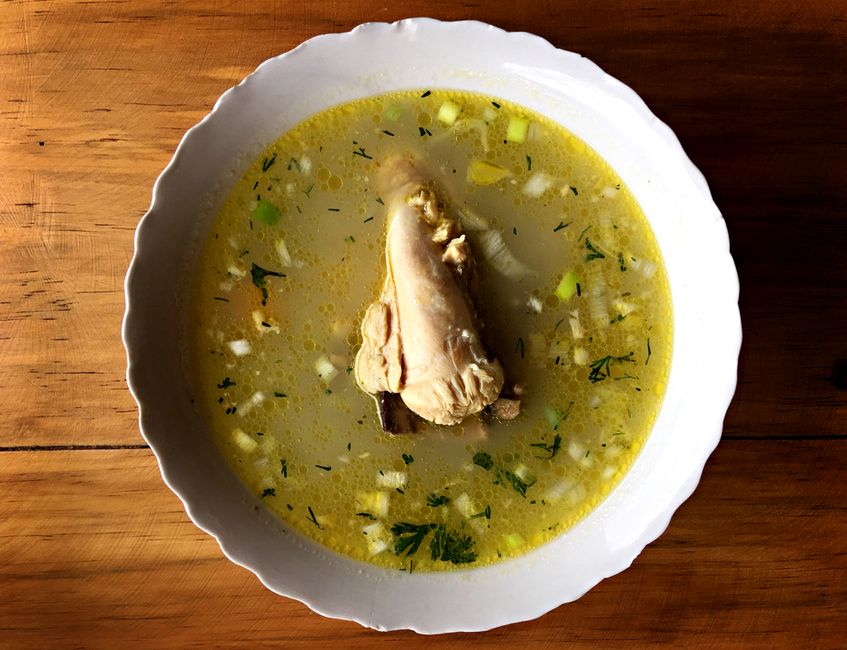
Chicken broth has been a fixture of home remedies for generations, and it shows up in everything from soup recipes to fasting routines. The short answer: chicken broth is a source of fluids and electrolytes, and it can be a comforting, easily digested food when you are sick or not hungry. But it is not a nutritional powerhouse, and many of the health claims attached to it go well beyond what research supports.
What broth actually does well is modest and specific. It hydrates. It supplies sodium and some minerals. It is easy on the stomach. What it does not do is cure illness, rebuild joints, or replace protein-rich foods. The gap between what broth is and what people say it is happens to be wide, and that gap is worth understanding before you decide how much of it to drink.
What Is Actually in Chicken Broth?
Broth is what you get when you simmer bones, meat, and vegetables in water, then strain the solids out. What remains is mostly water with dissolved minerals, a small amount of protein, and whatever fat and flavor compounds made it into the liquid.
The exact nutrient content varies enormously depending on how it was made. A long simmer with lots of bones produces a different liquid than a quick stock from a cube. Commercial broth is often quite different from homemade, particularly in sodium content.
According to USDA nutritional data, a cup of typical chicken broth contains roughly:
- About 10 to 40 calories
- Around 1 to 2 grams of protein
- Very little fat or carbohydrate
- A variable but often substantial amount of sodium
That protein figure matters. A cup of broth delivers a fraction of the protein in a cup of chicken meat or a glass of milk. Broth is not a protein source in any practical sense. It is a flavored, mineral-containing liquid.
Sodium is the nutrient most people should pay attention to here. Some commercial broths and bouillon cubes contain a large share of a day’s recommended sodium in a single cup. If you are watching your blood pressure or your salt intake, the label matters more than the word “broth” on the front of the carton.
Does Chicken Broth Help When You Are Sick?
Broth can genuinely help you feel better during a cold or flu, mostly through hydration and warmth rather than any direct antiviral effect. When you are sick and not eating much, fluids and electrolytes are exactly what your body needs, and broth delivers both in a form that is easy to keep down.
The warm liquid can soothe a sore throat and loosen mucus temporarily. That relief is real but short-lived. It does not shorten the illness or fight the infection.
There is a persistent idea that chicken broth contains compounds that reduce inflammation or boost immune function. Some laboratory research has looked at whether certain components of chicken soup affect immune cell activity. That work is preliminary and has not translated into demonstrated clinical benefit in people. It is reasonable to say the evidence here is limited.
What is well established is simpler: staying hydrated helps you feel better and supports normal body function when you are ill. Broth is one convenient way to do that, especially when solid food is unappealing.
Is Bone Broth Different From Regular Chicken Broth?
Bone broth is made by simmering bones for a long time, often with a splash of acid like vinegar. The idea is that longer simmering extracts more minerals and collagen from the bones. In practice, the difference between bone broth and regular broth is smaller than the marketing suggests.
Collagen and gelatin do end up in the liquid. But collagen is an incomplete protein, meaning it lacks some of the amino acids your body needs in full. And the amount of collagen in a cup of bone broth is modest compared to what you would get from a serving of meat or a collagen supplement.
The claim that bone broth strengthens your joints or rebuilds cartilage is not supported by clinical evidence. Eating collagen does not automatically become collagen in your joints. Your digestive system breaks it down into amino acids, and your body uses them wherever it needs them.
Minerals like calcium and magnesium do leach into bone broth, but the amounts are generally small and vary widely based on the bones, the simmer time, and the acid used. Bone broth is a fine food. It is not a supplement, and it is not a treatment.





Who Should Be Careful With Chicken Broth?
For most people, chicken broth is harmless and can be part of a normal diet. There are a few situations where it deserves more caution.
If you have high blood pressure or heart failure, sodium is a real concern. Some commercial broths and bouillon products are very high in sodium, and a few cups a day can add up quickly. Lower-sodium or unsalted versions exist, and reading the label is the only reliable way to know what you are getting.
If you have kidney disease, your doctor may have told you to limit fluids, sodium, potassium, or phosphorus. Broth can contribute to all of these, so it is worth checking with your care team before making it a daily habit.
People with gout sometimes worry about broth because it is made from animal tissue, which contains purines. Purines can raise uric acid levels. Whether a given broth is a meaningful trigger depends on how concentrated it is and how your body handles purines. If you have gout, this is a reasonable question for your doctor rather than something to guess at.
Infants and young children should not be given broth as a substitute for breast milk, formula, or appropriate solid food. It does not provide the nutrition they need, and its sodium content is not appropriate for them in any meaningful quantity. No clinical guidelines support using broth as a nutritional source for infants.
Can Chicken Broth Help With Weight Loss or Fasting?
Broth shows up in fasting routines and low-calorie diets because it provides flavor and some electrolytes with very few calories. That is a legitimate use. It can make a fast more tolerable and help you stay hydrated.
But broth does not cause weight loss. Any weight lost during a fast comes from eating fewer calories overall, not from the broth itself. Drinking broth alongside a normal diet will not produce weight loss.
There is also a practical concern with extended fasting. Broth provides sodium and some other electrolytes, which can help with the lightheadedness and fatigue that sometimes come with fasting. But it does not provide the protein, fat, or full range of nutrients your body needs over days. If you are considering a prolonged fast, that is a decision to make with a doctor, not a reason to drink more broth.
Used as a low-calorie, satisfying drink within a balanced diet, broth is a reasonable choice. Used as a weight-loss strategy on its own, it does not do the work.
How Does Chicken Broth Compare to Other Foods?
Broth is often described as nutrient-dense, but that description does not hold up next to actual nutrient-dense foods. The table below shows roughly what a cup of chicken broth provides compared with foods people often substitute for it.
| Food (1 cup) | Calories | Protein | Main contribution |
|---|---|---|---|
| Chicken broth | ~10-40 | ~1-2 g | Fluids, sodium, warmth |
| Chicken meat (diced) | ~200 | ~30 g | Complete protein |
| Milk | ~100-150 | ~8 g | Protein, calcium, fluids |
| Sports drink | ~50-80 | 0 g | Fluids, electrolytes, sugar |
The comparison makes the point. Broth is closest to a sports drink in what it actually delivers. It is a hydrating, electrolyte-containing liquid. It is not a meal and not a protein source.
That does not make it useless. It makes it what it is. If you are sick, cold, or not hungry, a warm cup of broth can be genuinely helpful. If you are looking to build muscle, recover from exercise, or meet your protein needs, broth will not get you there.
Is Chicken Broth Good For You?
Yes, in a limited and specific way. It is a hydrating, low-calorie liquid that provides sodium and some minerals, and it is easy to tolerate when you are sick or off your food. Those are real benefits, even if they are modest.
It is not a cure for colds, a joint remedy, a protein source, or a weight-loss tool. The claims that go beyond hydration and comfort are not backed by clinical evidence. If you enjoy broth and it fits your diet, there is no reason to avoid it. Just do not expect it to do more than it can.
For most people, the main thing to watch is sodium. Check the label, especially if you have high blood pressure, heart failure, or kidney disease. Beyond that, broth is a simple food that does a simple job well.
Frequently Asked Questions
Is chicken broth good for you when you are sick?
Yes, mainly because it provides fluids and electrolytes when you are not eating or drinking much. It can soothe a sore throat and loosen mucus briefly, but it does not shorten an illness or fight infection.
Is bone broth better than regular chicken broth?
Bone broth contains slightly more collagen and minerals from longer simmering, but the difference is small and the joint-health claims are not supported by clinical evidence. Both are hydrating liquids with modest nutritional value.
Can you drink chicken broth every day?
For most healthy adults, daily broth is fine, but watch the sodium if you have high blood pressure, heart failure, or kidney disease. Check the label, since some commercial broths are very high in sodium.
Does chicken broth have enough protein to count as a protein source?
No. A cup of chicken broth contains roughly 1 to 2 grams of protein, far less than a serving of chicken meat or milk. It cannot replace protein-rich foods in your diet.
