
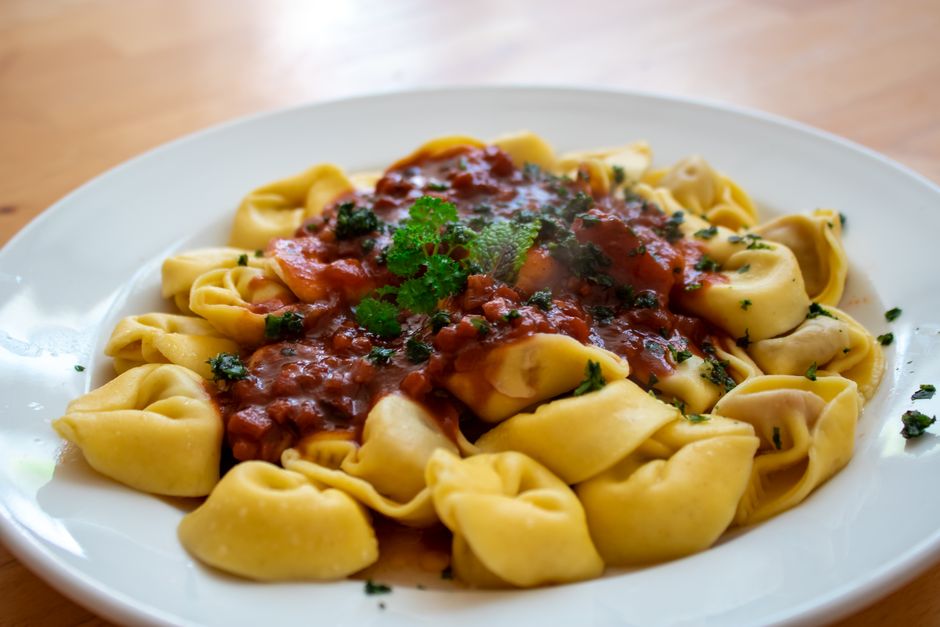
Cheese tortellini is not a health food, but it is not a junk food either. A typical serving of plain cheese tortellini lands around 280 to 330 calories, with most of those calories coming from refined flour and cheese filling. Whether it counts as healthy depends almost entirely on what you serve with it and how often it appears on your plate.
The pasta itself provides protein and a modest amount of calcium from the cheese. It is also low in fiber and can be high in sodium. The bigger issue for most people is portion size and what goes on top.
Is Cheese Tortellini Healthy Calories Nutrition?
Cheese tortellini sits in the middle of the nutrition spectrum. It supplies real protein and some calcium, but it is made from refined white flour and filled with cheese that adds saturated fat and sodium.
A standard serving — roughly 1 cup of cooked tortellini, or about 100 grams — delivers approximately 280 to 330 calories. Most of that comes from carbohydrates in the pasta dough and fat in the cheese filling. Protein runs around 10 to 13 grams per serving, depending on the brand and the cheese blend.
That protein number is worth noting. It is higher than plain spaghetti, which has about 6 to 8 grams per cup. The cheese filling does real work here. For someone building a meal around pasta, tortellini offers more protein per bite than most plain noodles.
The tradeoff is fiber. Refined flour pasta has very little. A serving of cheese tortellini typically provides only 1 to 2 grams of fiber. Whole wheat pasta delivers roughly three times that. Fiber matters for blood sugar response, satiety, and digestive health, so this gap is not trivial.
How Many Calories Are in a Serving of Cheese Tortellini?
Calories vary by brand, filling ratio, and pasta thickness, but the range is fairly consistent across the market. Here is what typical nutrition labels show for a 1-cup cooked serving.
| Nutrient | Typical Amount per 1 Cup Cooked |
|---|---|
| Calories | 280–330 |
| Protein | 10–13 g |
| Carbohydrates | 35–45 g |
| Fat | 8–13 g |
| Saturated fat | 4–7 g |
| Sodium | 400–700 mg |
| Fiber | 1–2 g |
| Calcium | 80–150 mg |
Those ranges are wide because tortellini is not standardized. A cheese-heavy filling raises fat and calories. A thinner pasta shell lowers them. Fresh refrigerated tortellini and dried tortellini can also differ in density and filling proportion.
Read the label on the specific product you buy. The serving size on the package is usually based on dry or fresh weight, not cooked volume, which is where people get tripped up. A package listing “2 servings” often contains what most people would eat as one meal.
What Is Actually Inside Cheese Tortellini?
Tortellini is a filled pasta. The dough is made from flour, eggs or water, and sometimes oil. The filling is typically a mix of cheeses — often ricotta, Parmesan, or a blend — bound with egg and seasoned with salt.
That simple ingredient list is one reason tortellini can fit into a balanced diet. It is not a highly processed food in the way a frozen pizza or a snack chip is. The core ingredients are flour, egg, and cheese.
Commercial versions complicate the picture. Many add sodium for preservation and flavor. Some use fillers or stabilizers. Frozen and shelf-stable varieties may include more additives than fresh refrigerated ones. None of this makes them unsafe, but it does affect the sodium and fat numbers.
One clarification worth making: the cheese in tortellini is real cheese, not a cheese-flavored powder. That means it contributes actual calcium and protein, not just flavoring. The amounts are moderate, but they are not zero.
Is Cheese Tortellini High in Sodium?
Yes, sodium is one of the weaker points. A single cup of cooked cheese tortellini can supply 400 to 700 milligrams of sodium before you add any sauce. The current Dietary Guidelines for Americans recommend keeping sodium under 2,300 milligrams per day for most adults.
That means one serving of tortellini could account for roughly a quarter of your daily sodium budget. Add a jarred marinara or Alfredo sauce and you can easily push a single meal past 1,000 milligrams.
Pasta water is another hidden source. Many cooking instructions call for salting the water heavily. Some of that salt absorbs into the pasta. If sodium is a concern for you, salting the water lightly or not at all makes a measurable difference.
People with high blood pressure or kidney disease should pay particular attention here. For everyone else, sodium is worth watching but rarely the deciding factor in whether a food fits.
How Does Cheese Tortellini Fit Into a Healthy Diet?
Tortellini works best as a base, not a standalone meal. On its own it is carbohydrate-heavy and low in fiber, with moderate protein. What you add determines the nutritional outcome.
Pair it with vegetables and a lean protein to round out the plate. A cup of tortellini with roasted broccoli, cherry tomatoes, and a small amount of grilled chicken or white beans delivers fiber, additional protein, and volume without excessive calories.
Sauce choice matters more than most people realize. Cream-based Alfredo sauce can add 200 to 300 calories and significant saturated fat per half-cup. A simple tomato sauce or a drizzle of olive oil with garlic and herbs keeps the calorie load much lower.
Portion control is the other lever. A measured cup of cooked tortellini is a reasonable serving. A large bowl piled high might be two or three servings, which triples the calories without feeling like it.
- Choose a tomato-based sauce over cream-based
- Add at least one cup of vegetables
- Measure the pasta rather than eyeballing it
- Go light on added salt and cheese toppings
- Consider whole wheat tortellini if fiber is a priority
For people watching their weight, tortellini can fit within a calorie budget as long as portions are controlled and the sauce is not heavy. For people managing blood sugar, the refined flour and low fiber mean it can spike glucose faster than whole grain alternatives. Pairing it with protein and vegetables slows that response.
Is Whole Wheat or Alternative Tortellini Better?
Whole wheat tortellini is nutritionally stronger on paper. It typically offers two to three times the fiber of white flour versions and a slightly lower glycemic impact. Whether it tastes better is a personal matter — whole wheat pasta has a denser texture and a nuttier flavor that some people like and others do not.
Alternative pastas made from chickpea, lentil, or chickpea flour are another option. These tend to be higher in protein and fiber than traditional tortellini. Some studies suggest legume-based pastas produce a lower blood sugar response than refined wheat pasta, though the research is not extensive and results vary by product.
These alternatives are not automatically healthier in every way. Some contain more sodium or additives to mimic the texture of wheat pasta. Read the label. The word “alternative” on a package does not guarantee a better nutrition profile.
For most people, the difference between white and whole wheat tortellini is meaningful but not dramatic. If you eat pasta a few times a week, switching to a higher-fiber version is a reasonable improvement. If it is an occasional meal, the choice matters less.
What About Gluten and Dairy Concerns?
Traditional cheese tortellini contains both wheat gluten and dairy. Anyone with celiac disease or a wheat allergy should avoid standard tortellini. Gluten-free versions exist and are made with rice, corn, or other alternative flours, but they often have a different texture and may contain less protein.
For people with lactose intolerance, the cheese filling can be a problem. Hard cheeses like Parmesan are lower in lactose than soft cheeses like ricotta, so the specific blend matters. Some people tolerate small amounts of tortellini without symptoms.
A dairy allergy is different from lactose intolerance and requires avoiding the food entirely. If you have a diagnosed allergy to milk protein, standard cheese tortellini is not safe for you.
Frequently Asked Questions
How many calories are in cheese tortellini?
A one-cup cooked serving of cheese tortellini typically contains 280 to 330 calories. The exact number depends on the brand, filling, and pasta thickness.
Is cheese tortellini healthy?
It can be part of a healthy diet when paired with vegetables and a light sauce. On its own it is low in fiber and can be high in sodium, so it works best as one component of a balanced meal rather than a daily staple.
Is cheese tortellini high in carbs?
Yes, a one-cup serving provides roughly 35 to 45 grams of carbohydrates, mostly from refined flour. Pairing it with protein and vegetables helps slow digestion and reduce the blood sugar impact.
Is cheese tortellini better than regular pasta?
It has more protein because of the cheese filling, but similar fiber and often more sodium. Neither is clearly superior — the better choice depends on what else is on your plate.
