
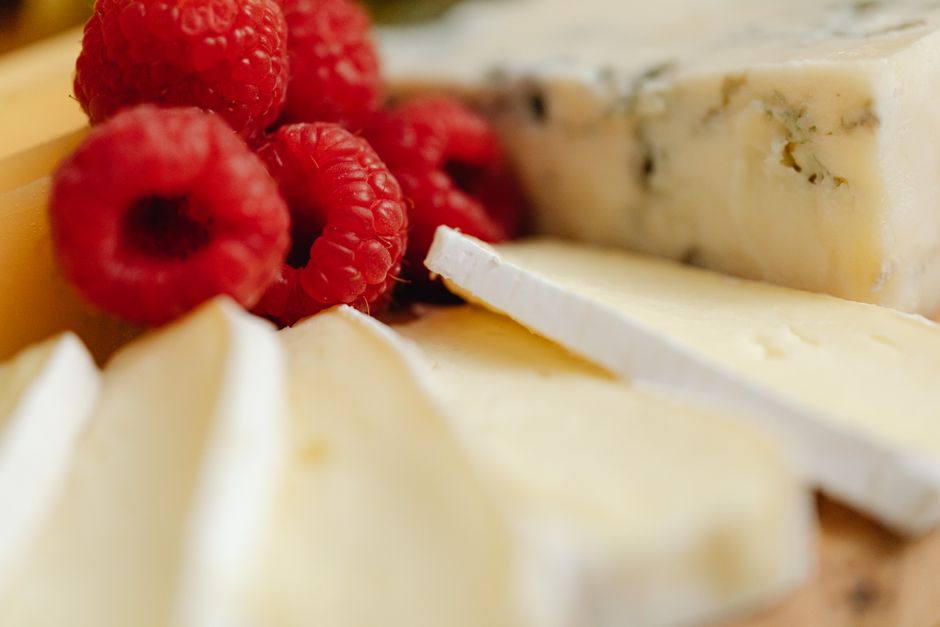
Cheese is not a fat-loss food, and it is not a fat-gain food either. It is a calorie-dense source of protein and fat that fits into a weight-loss diet only when its calories are accounted for. Whether cheese helps or hinders fat loss depends almost entirely on how much you eat, what it replaces in your diet, and how it fits your total daily calorie intake.
That answer is less satisfying than the internet’s two favorite stories — that cheese is a metabolism-boosting superfood, or that it is a hormone-disrupting villain. Neither holds up. The physiology is more ordinary and more useful than either story.
Why Is Cheese So Calorie-Dense?
Cheese is concentrated milk. Making cheese removes much of the water from milk, which concentrates the protein, fat, and minerals into a smaller volume. That is why a small piece of cheese can carry the calories of a much larger glass of milk.
Most of cheese’s calories come from fat. A typical hard cheese is roughly one-third fat by weight, and fat delivers about 9 calories per gram compared with about 4 calories per gram for protein or carbohydrate. Protein and fat together are what make cheese filling — and what make it easy to overeat without noticing.
Here is a comparison of common cheeses per one-ounce (28-gram) serving, based on standard USDA nutrient data:
| Cheese (1 oz / 28 g) | Calories | Protein | Fat |
|---|---|---|---|
| Cheddar | ~115 | ~7 g | ~9 g |
| Mozzarella (part-skim) | ~85 | ~7 g | ~6 g |
| Swiss | ~110 | ~8 g | ~9 g |
| Feta | ~75 | ~4 g | ~6 g |
| Cottage cheese (low-fat, 1/2 cup) | ~90 | ~12 g | ~2.5 g |
Notice the range. Cottage cheese and part-skim mozzarella deliver far more protein per calorie than cheddar or Swiss. That difference matters for fat loss.
Does the Protein in Cheese Help With Fat Loss?
Protein supports fat loss through two well-established mechanisms: it increases satiety, and it helps preserve muscle mass during a calorie deficit. Both effects are supported by a large body of research.
Cheese is a genuine protein source. Hard cheeses provide roughly 7 to 8 grams per ounce, and cottage cheese provides about 12 grams per half-cup. That is meaningful, though it is not the most protein-efficient way to eat. You would need several ounces of cheddar to match the protein in a single chicken breast, and you would take in a lot of fat and calories along the way.
The satiety effect is real but modest. Fat slows digestion and can help you feel full, and protein does the same. Some studies suggest that dairy foods, including cheese, may increase feelings of fullness compared with equivalent-calorie foods lower in protein. That is a helpful property, not a fat-burning one. Feeling full makes a calorie deficit easier to maintain. It does not cause fat loss on its own.
Is Cheese Good For Fat Loss?
Cheese can be part of a fat-loss diet, but it is not a food that promotes fat loss. The distinction is important. No food causes fat loss in isolation — fat loss happens when you take in fewer calories than you burn over time.
Whether cheese helps or hurts comes down to three things:
- Portion size. A one-ounce serving is small — about the size of a pair of dice. Many people eat several times that amount without measuring.
- What it replaces. Cheese swapped for a refined carbohydrate snack may improve satiety. Cheese added on top of an already adequate diet adds calories.
- Which cheese. Cottage cheese, part-skim mozzarella, and feta deliver more protein and fewer calories per serving than cheddar, Swiss, or full-fat cheeses.
There is one clarification worth making. Some popular claims suggest dairy calcium or conjugated linoleic acid in cheese “burns” fat. The evidence for meaningful fat-loss effects from these compounds in humans is weak and inconsistent. Some studies show small differences in body composition with higher dairy intake, but results vary and the effects are modest at best. No clinical evidence currently confirms that eating cheese increases fat loss directly.
What Does the Research Actually Show About Dairy and Weight?
The evidence on dairy and body weight is mixed. Some observational studies have linked higher dairy intake with lower body weight or less weight gain over time. Others have found no meaningful association.
Observational studies cannot prove cause and effect. People who eat more dairy may differ in other ways — income, overall diet quality, physical activity — that explain the difference. When researchers have run controlled trials comparing higher versus lower dairy intake during weight loss, the results have generally shown little to no difference in fat loss when calories are matched.
The most defensible reading of the evidence: dairy foods, including cheese, are compatible with weight loss, but they do not appear to produce additional fat loss beyond what calorie restriction achieves. The protein and satiety benefits are real. The “dairy accelerates fat burning” story is not supported.
What About Full-Fat Versus Low-Fat Cheese?
Low-fat and part-skim cheeses generally have fewer calories per serving, which can make a calorie deficit easier to maintain. That is the main practical advantage. Full-fat cheese is not inherently fattening — it is simply more calorie-dense per bite.
Some people find full-fat cheese more satisfying and eat less of it. Others find low-fat cheese less satisfying and eat more. Neither pattern is universal. The better choice is the one that fits your calorie target without leaving you hungry.
One note on low-fat cheese: many reduced-fat products add starches or gums to improve texture, and some have more carbohydrate than the full-fat version. Reading the label is worth the ten seconds.
How Can You Include Cheese in a Fat-Loss Diet?
Cheese fits into a fat-loss diet when it is treated as a measured ingredient, not a free food. A few practical approaches:
- Measure it. Use a scale or pre-portioned slices rather than estimating by eye.
- Choose higher-protein, lower-calorie options more often — cottage cheese, part-skim mozzarella, feta.
- Use cheese as a flavoring rather than a base. A little sharp cheddar or parmesan goes a long way on vegetables, eggs, or salads.
- Watch cheese-heavy meals. Pizza, macaroni and cheese, and cheese boards can carry a large share of a day’s calories in a single sitting.
- Pair cheese with fiber and protein. Cheese on its own is easy to overeat; cheese with vegetables or lean protein is harder to.
None of this is a rule. It is a way to keep a food you enjoy in your diet without losing track of the calories it carries. That is the whole game with calorie-dense foods.
Does Cheese Cause Inflammation or Hormone Problems?
No. The claim that cheese causes chronic inflammation or disrupts hormones in a way that blocks fat loss is not supported by clinical evidence. Some people with lactose intolerance or a diagnosed dairy allergy react to cheese, and that is a separate medical issue.
Cheese does contain saturated fat, and most major health organizations recommend limiting saturated fat to a modest share of daily calories. That recommendation is about long-term cardiovascular health, not fat loss. It is reasonable to keep cheese intake moderate for that reason, but it is not a reason to fear cheese as a fat-loss food.
Frequently Asked Questions
Is cheese good for fat loss?
Cheese is not a fat-loss food, but it can fit into a fat-loss diet when its calories are counted. Its protein and fat can help with fullness, but it does not cause fat loss on its own.
What is the best cheese for weight loss?
Cottage cheese and part-skim mozzarella are good choices because they provide more protein and fewer calories per serving than most hard cheeses. Feta is also relatively low in calories.
Does eating cheese at night make you gain weight?
No. Weight gain depends on total daily calorie intake, not the time of day you eat. Eating cheese at night only matters if it pushes your total calories above what your body needs.
Is full-fat cheese bad for fat loss?
Full-fat cheese is more calorie-dense, so portion size matters more. It is not inherently fattening, but it is easier to overeat than lower-fat options.
