
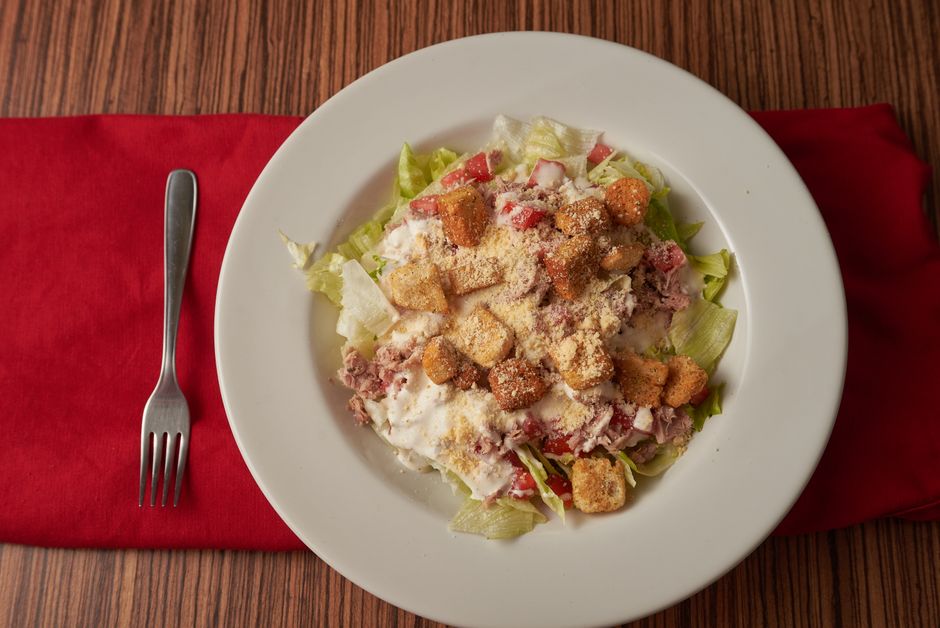
Caesar dressing is a calorie-dense condiment, and a standard two-tablespoon serving typically contains around 150 to 190 calories, most of which come from fat. While it does contain some beneficial nutrients from ingredients like olive oil, anchovies, and garlic, its high saturated fat and sodium content mean it is not something to pour freely over your salad. The honest answer is that Caesar dressing is not unhealthy in moderation, but it is easy to overuse, and the calories and sodium add up quickly.
What Is Actually in Caesar Dressing?
Classic Caesar dressing starts with a few core ingredients: olive oil, egg yolks, anchovies, garlic, lemon juice, Dijon mustard, and Parmesan cheese. Some versions add Worcestershire sauce, which itself contains anchovies and salt. Commercial bottled versions often swap olive oil for soybean or canola oil to cut costs, and they frequently add extra sugar, thickeners, and preservatives.
The traditional ingredients are not inherently bad. Olive oil provides monounsaturated fats, which are linked to better heart health. Anchovies and Parmesan add umami flavor and a small amount of protein. Garlic and lemon juice bring antioxidants and vitamin C. The problem is not the ingredient list itself—it is the quantity of fat and salt in a typical serving, and how easy it is to eat far more than a serving size.
Many restaurant Caesar salads are dressed with two to four times the standard serving. That can push a side salad into the calorie range of a main course before you add croutons or grilled chicken.
Is Caesar Dressing Healthy Calories Fat Sodium?
Let us break this down by the three things people usually ask about: calories, fat, and sodium.
Calories: A two-tablespoon serving of commercial Caesar dressing contains roughly 150 to 190 calories. That is similar to ranch dressing and slightly less than blue cheese. It is more than vinaigrettes, which typically run 60 to 120 calories per serving. The calories come almost entirely from fat, not sugar, which is actually a point in its favor—fat keeps you full longer than sugar does.
Fat: Most of the fat in Caesar dressing is unsaturated, which is the heart-healthy kind. However, commercial versions often use soybean oil, which is high in omega-6 fatty acids. A diet too heavy in omega-6s and too light in omega-3s can promote inflammation, though the evidence for this being harmful at typical intake levels is not conclusive. The bigger concern is total fat calories. If you are watching your weight, the fat in dressing is easy to underestimate.
Sodium: This is where Caesar dressing is genuinely problematic. A two-tablespoon serving of many commercial brands contains 300 to 500 milligrams of sodium. That is 13 to 20 percent of the recommended daily limit of 2,300 milligrams. If you use three tablespoons, you are consuming nearly a third of your daily sodium allowance before eating anything else. People with high blood pressure or kidney issues should be especially careful here.
How Much Caesar Dressing Is a Real Serving?
Most people use far more dressing than they think. A standard serving is two tablespoons, which is about the size of a golf ball. Studies on portion perception consistently show that people underestimate how much dressing they pour by a factor of two or more.
At a restaurant, the dressing often comes already tossed into the salad. That makes it nearly impossible to control how much you get. A typical restaurant Caesar salad can contain four to six tablespoons of dressing, which adds 300 to 500 calories and 800 to 1,200 milligrams of sodium before you factor in croutons, cheese, and any protein.
If you are eating Caesar salad at home, measuring the dressing is the single most effective change you can make. Use a tablespoon measure once or twice, and you will quickly learn what a real serving looks like. Most people are surprised.





Is Caesar Dressing Worse Than Other Salad Dressings?
Compared to other creamy dressings, Caesar is roughly in the middle. Ranch and blue cheese are similar in calories and fat. Thousand Island tends to be higher in sugar. Light vinaigrettes are lower in calories but often higher in added sugar to compensate for less oil.
Here is a rough comparison based on typical commercial products, using a two-tablespoon serving:
- Caesar: 150–190 calories, 15–18 g fat, 300–500 mg sodium
- Ranch: 130–150 calories, 13–15 g fat, 250–350 mg sodium
- Blue cheese: 140–160 calories, 14–16 g fat, 300–400 mg sodium
- Balsamic vinaigrette: 80–120 calories, 7–10 g fat, 150–300 mg sodium
- Oil and vinegar: 120 calories, 14 g fat, 0 mg sodium (before salt added)
The numbers vary by brand, and some restaurant recipes are far richer. But the pattern is clear: Caesar is not an outlier. It is a typical creamy dressing with typical creamy dressing problems.
The real issue is not which dressing you choose—it is how much you use. A salad with one tablespoon of Caesar is healthier than a salad with four tablespoons of a light vinaigrette, because the total calories and sodium are lower.
Can You Make a Healthier Caesar Dressing at Home?
Yes, and it is not difficult. Homemade Caesar dressing lets you control the oil, the salt, and the portion size. The traditional recipe uses raw egg yolks, which carry a small risk of salmonella. Pasteurized eggs eliminate that risk, and many commercial brands use them as well.
A lighter homemade version can use Greek yogurt in place of some of the oil. This cuts calories and saturated fat while adding protein. The flavor changes slightly, but many people find it just as satisfying. You can also reduce the anchovies and Parmesan, which are the main sources of sodium, and rely more on garlic and lemon for flavor.
If you are buying bottled dressing, check the nutrition label for two things: serving size and sodium. Some brands now make reduced-sodium versions with 150 to 200 milligrams per serving. Others add sugar to mask the reduced salt, so check the carbohydrate line as well.
What About the Anchovies and Raw Egg?
Anchovies are a nutritional positive. They are rich in omega-3 fatty acids, calcium, and protein. The concern with anchovies is sodium, not the fish itself. A single anchovy fillet contains about 50 to 80 milligrams of sodium, and a dressing recipe typically uses two to four fillets for an entire batch.
Raw egg yolks are the main food safety concern in traditional Caesar dressing. The risk of salmonella from eggs is low but not zero. Pasteurized eggs, which are heated to a temperature that kills bacteria without cooking the egg, eliminate this risk. Many grocery stores sell pasteurized shell eggs, and they work the same way in dressing recipes.
Commercial Caesar dressings use pasteurized eggs or egg products, so the food safety risk applies mainly to homemade versions made with raw eggs. If you are pregnant, over 65, or have a weakened immune system, use pasteurized eggs or choose a cooked version of the dressing.
Should You Avoid Caesar Dressing Entirely?
No. There is no evidence that Caesar dressing is uniquely harmful, and no reason to ban it from your diet. The evidence consistently shows that total calorie intake and overall dietary pattern matter far more than any single condiment.
The practical approach is portion control. Use one to two tablespoons, not a quarter cup. If you are eating out, ask for dressing on the side and dip your fork into it before each bite. This simple technique reduces dressing intake by half or more without changing the flavor experience much.
If you have high blood pressure or are on a sodium-restricted diet, Caesar dressing is a food to limit. The sodium content alone can push you over your daily target. In that case, a homemade version with reduced anchovies and salt, or a commercial reduced-sodium brand, is the better choice.
Frequently Asked Questions
How many calories are in Caesar dressing?
A standard two-tablespoon serving contains roughly 150 to 190 calories, depending on the brand and recipe. Restaurant versions often contain double that amount or more.
Is Caesar dressing high in sodium?
Yes, most commercial Caesar dressings contain 300 to 500 milligrams of sodium per two-tablespoon serving. That is 13 to 20 percent of the recommended daily limit of 2,300 milligrams.
Is Caesar dressing healthier than ranch?
They are similar in calories and fat, though Caesar tends to have slightly more sodium. The healthier choice is the one you use in smaller amounts, not the specific type of dressing.
Can I eat Caesar dressing while trying to lose weight?
Yes, if you control the portion. Stick to one or two tablespoons, or use the fork-dip method when eating out, and the calorie impact is manageable within a balanced diet.
