
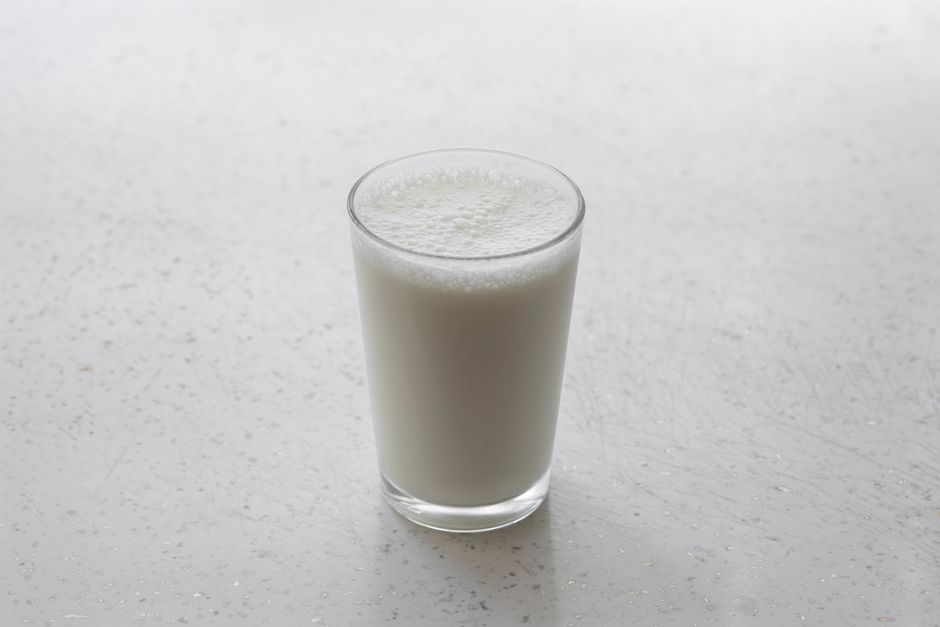
Buttermilk is not a reliable probiotic for IBS, and it is not a safe choice for people who react to lactose. Traditional cultured buttermilk contains live bacterial cultures, but most commercial buttermilk sold in the US is made by adding cultures to milk and does not carry a meaningful dose of probiotics. The bigger issue is lactose: buttermilk is a dairy product, and lactose is a common trigger for IBS symptoms.
If you have IBS and you tolerate dairy, a small amount of buttermilk may be fine. If you are lactose intolerant or your IBS symptoms flare with dairy, buttermilk is likely to cause gas, bloating, and cramping. The probiotic benefit people assume they are getting from buttermilk is largely overstated.
Is Buttermilk Good For IBS Probiotics Vs Lactose?
Buttermilk does not work as a probiotic for IBS, and its lactose content makes it a problem food for many people with the condition. These are two separate issues that often get blurred together.
The probiotic question and the lactose question need to be answered independently. A food can contain live cultures and still fail as a probiotic. A food can be low in lactose and still trigger IBS through other mechanisms. Buttermilk sits at the intersection of both problems.
The probiotic claim
Probiotics are defined by three things: a specific strain, a sufficient dose, and demonstrated health benefit in human studies. Buttermilk cultures do not reliably meet any of these criteria.
Traditional buttermilk was the liquid left after churning butter. It fermented naturally and contained a mix of lactic acid bacteria. Modern commercial buttermilk is different. It is usually low-fat milk with added cultures that thicken it and give it tang. The cultures are there for flavor and texture, not for therapeutic effect.
Even when live cultures are present, the strains are not the ones studied for IBS. Lactobacillus and Bifidobacterium strains with evidence in IBS are specific and studied at defined doses. Buttermilk cultures are not standardized, and the amount surviving to the colon is unknown.
No clinical guidelines recommend buttermilk as a probiotic for IBS. The evidence for probiotics in IBS is mixed even when specific strains are used. Buttermilk has not been studied in IBS at all in any meaningful way.
The lactose problem
Buttermilk contains lactose. Culturing reduces lactose content somewhat, but it does not eliminate it. A cup of buttermilk still contains a notable amount of lactose, and for people with lactose malabsorption, that is enough to cause symptoms.
Lactose malabsorption is common. It is more common in people of East Asian, West African, Arab, Jewish, Hispanic, and Southern European descent. Many people with IBS also have lactose malabsorption, though the two conditions are separate.
When undigested lactose reaches the colon, gut bacteria ferment it. This produces gas, which causes bloating, cramping, and diarrhea. In IBS, the gut is already more sensitive to normal gas volumes, so the same lactose load can cause more symptoms than it would in someone without IBS.
This is why buttermilk can be a double problem. It may not deliver probiotic benefit, and it can deliver a lactose load that triggers symptoms.
What Is The Difference Between Probiotics And Lactose In Buttermilk?
Probiotics and lactose are unrelated. One is about live bacteria that may benefit health. The other is a sugar that can cause digestive symptoms in people who cannot digest it well.
Confusing the two leads to bad decisions. Someone might drink buttermilk for the cultures and end up with cramps from the lactose. Someone else might avoid all fermented dairy thinking it is high in lactose, when some fermented products are actually low.
| Factor | Probiotics | Lactose |
|---|---|---|
| What it is | Live microorganisms with defined strains and doses | A sugar found in milk and dairy |
| Role in buttermilk | Cultures added for flavor and texture, not therapeutic dose | Present in varying amounts depending on fermentation |
| Effect on IBS | Evidence is mixed even for studied strains; buttermilk not studied | Can trigger gas, bloating, cramping, diarrhea in sensitive people |
| Who should be cautious | Anyone expecting buttermilk to act as a probiotic | People with lactose malabsorption or dairy-triggered IBS |
The table makes the point clear. Buttermilk sits on the wrong side of both questions for many people with IBS.
Can People With IBS Drink Buttermilk?
Some people with IBS can drink buttermilk without problems. Others cannot. It depends on whether dairy and lactose are triggers for that person.
IBS is not one condition. It is a group of symptoms with different triggers in different people. Some people react to FODMAPs, some to fat, some to caffeine, some to stress, and some to lactose. Buttermilk is only a problem if lactose is one of your triggers.
If you have IBS and you are not sure whether dairy triggers your symptoms, the honest answer is that you do not know until you test it. A small amount of buttermilk on a day when you are otherwise stable can tell you something. A large amount on a bad day tells you nothing.
If you already know dairy triggers your symptoms, buttermilk is not worth the risk. There are better ways to get probiotics if that is what you are after.
If you tolerate dairy well and enjoy buttermilk, there is no strong reason to avoid it. Just do not expect it to treat your IBS.


Are There Better Probiotic Sources For IBS?
Some probiotic strains have evidence in IBS. Buttermilk is not one of them. If you want to try probiotics for IBS, specific strains are a better starting point than a fermented drink.
Strains that have been studied in IBS include certain Bifidobacterium and Lactobacillus species, as well as Saccharomyces boulardii. Results vary by strain, dose, and IBS subtype. Some people respond, some do not, and the effect is usually modest.
Clinical guidelines do not recommend probiotics for IBS across the board. Some guidelines suggest they may help, while noting the evidence is low quality. This is not a strong endorsement.
If you want to try a probiotic, a few practical points matter:
- Look for a specific strain name, not just “probiotic blend.”
- Check the CFU count on the label. Doses studied in IBS are often in the billions.
- Give it a few weeks. If nothing changes, it is probably not helping.
- Stop if symptoms get worse. Probiotics can cause bloating in some people.
Yogurt with live cultures is another option, but it has the same lactose issue as buttermilk. Lactose-free yogurt or plant-based fermented foods may be better tolerated if dairy is a trigger.
What About Lactose-Free Buttermilk?
Lactose-free buttermilk exists in some markets, but it is not common. If you find it, the lactose problem is solved but the probiotic problem is not.
Lactose-free dairy is made by adding lactase, the enzyme that breaks down lactose. The sugar is split into glucose and galactose, which are easier to digest. This removes the lactose trigger but does not turn the product into a probiotic.
If you want the taste of buttermilk without the lactose, lactose-free versions may work. If you want probiotic benefit, you still need to look elsewhere.
Some people find that aged cheeses are easier to tolerate than fresh dairy because aging reduces lactose content. Buttermilk is not aged, so it does not get that benefit.
How Does Buttermilk Compare To Other Fermented Drinks?
Kefir and yogurt drinks contain more live cultures than buttermilk. They also contain lactose unless they are made lactose-free. The trade-off is similar.
Kefir is a fermented milk drink with a more diverse mix of bacteria and yeasts than buttermilk. Some small studies suggest kefir may help with digestion, but the evidence in IBS is limited. Kefir also contains lactose.
Yogurt drinks vary widely. Some contain added probiotic strains at defined doses. Others are just flavored milk with a small amount of culture. Reading labels matters more than the category name.
Plant-based fermented drinks like coconut kefir or water kefir avoid lactose entirely. Whether they help IBS is not well established. They are not a proven treatment.
The pattern is consistent. Fermented drinks may contain live cultures, but the probiotic benefit depends on strain, dose, and whether the product has been studied. Most have not been studied in IBS.
What Should You Do If You Have IBS And Want To Try Buttermilk?
Start small. A few ounces on a stable day will tell you more than a full glass on a bad day. If you get symptoms, stop.
Keep a simple record. Note what you ate, how much, and how you felt over the next 24 hours. This is more useful than trying to remember.
Do not expect buttermilk to treat your IBS. It is a food, not a therapy. If it sits well with you, fine. If it does not, there are other options.
If your IBS symptoms are frequent or severe, talk to a doctor or dietitian. A low-FODMAP diet guided by a professional helps some people identify triggers. Buttermilk is only one small piece of that picture.
Frequently Asked Questions
Is buttermilk a good probiotic for IBS?
No. Buttermilk cultures are added for flavor and texture, not at the strains or doses studied for IBS. No clinical guidelines recommend buttermilk as a probiotic for IBS.
Does buttermilk contain lactose?
Yes. Culturing reduces lactose content somewhat but does not remove it. People with lactose malabsorption can still get gas, bloating, and cramping from buttermilk.
Can I drink buttermilk if I have IBS?
It depends on whether dairy and lactose trigger your symptoms. If they do, buttermilk is likely to cause problems. If they do not, a small amount is probably fine.
What probiotic strains help IBS?
Some specific Bifidobacterium and Lactobacillus strains, and Saccharomyces boulardii, have been studied in IBS with mixed results. Effects are usually modest, and no strain works for everyone.
