
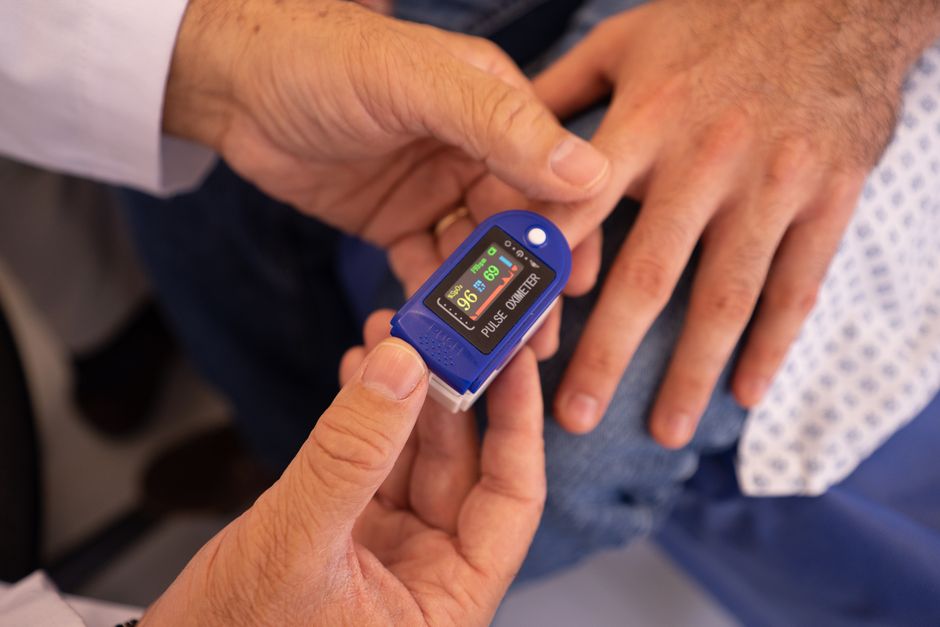
Blood oxygen and blood sugar are not the same thing. They are two completely different measurements of your health. Blood oxygen measures how much oxygen your red blood cells are carrying to your tissues. Blood sugar measures the amount of glucose in your blood. Both are vital signs, but they tell doctors very different things about what is happening inside your body.
What Is Blood Oxygen?
Blood oxygen, often called oxygen saturation, is a measure of how much oxygen is bound to hemoglobin in your red blood cells. Hemoglobin is the protein in red blood cells that carries oxygen from your lungs to the rest of your body.
The most common way to measure blood oxygen is with a pulse oximeter. This small device clips onto your fingertip and uses light to estimate the percentage of hemoglobin that is carrying oxygen. A normal reading for a healthy person is between 95% and 100%.
When your blood oxygen drops below 90%, this is called hypoxemia. This can be a medical emergency. Low blood oxygen means your organs and tissues are not getting the oxygen they need to function properly.
Your body regulates blood oxygen through your respiratory system. Your lungs take in oxygen when you breathe, and your heart pumps that oxygenated blood throughout your body. If your lungs are damaged or your airways are blocked, your blood oxygen levels can drop quickly.
What Is Blood Sugar?
Blood sugar, also called blood glucose, is the amount of glucose circulating in your bloodstream. Glucose is the main type of sugar in your blood and the primary source of energy for your cells.
Your body gets glucose from the food you eat, especially carbohydrates. After you eat, your digestive system breaks down carbohydrates into glucose, which then enters your bloodstream. Your pancreas releases insulin to help your cells absorb that glucose and use it for energy.
Normal fasting blood sugar is between 70 and 99 mg/dL. If your fasting blood sugar is 126 mg/dL or higher on two separate tests, this indicates diabetes. Blood sugar that stays too high over time can damage your blood vessels, nerves, kidneys, and eyes.
Your body regulates blood sugar through hormones, primarily insulin and glucagon. Insulin lowers blood sugar by helping cells absorb glucose. Glucagon raises blood sugar by signaling your liver to release stored glucose.
How Are Blood Oxygen and Blood Sugar Related?
Blood oxygen and blood sugar are not directly related, but they can influence each other in certain medical conditions. Having diabetes does not directly cause low blood oxygen. Having low blood oxygen does not directly change your blood sugar levels.
However, there are situations where these two systems interact. Poorly controlled diabetes can damage blood vessels over time. This damage can reduce blood flow to organs, including the lungs. In severe cases, this may affect how efficiently oxygen moves from the lungs into the blood.
Diabetes also increases the risk of conditions that can affect breathing and oxygen levels. These include heart disease, kidney disease, and sleep apnea. Sleep apnea causes repeated pauses in breathing during sleep, which can cause blood oxygen levels to drop temporarily.
Similarly, severe illness can affect both systems at once. For example, a serious infection can cause blood sugar to rise while also making it harder for the body to maintain normal oxygen levels. But in these cases, the two problems are separate consequences of the same underlying illness, not direct causes of each other.



Why People Confuse Blood Oxygen and Blood Sugar
The confusion between blood oxygen and blood sugar is understandable. Both are measured with a small device, often a finger clip or a finger prick. Both produce a number that reflects something important about your health. Both numbers can be checked at home.
But the measuring devices work completely differently. A pulse oximeter uses light to measure oxygen saturation through your skin. It does not require any blood to be drawn. A blood sugar meter requires a small drop of blood from a finger prick. The meter then analyzes that blood sample for glucose.
Another reason for confusion is that both conditions can cause fatigue and weakness. Low blood oxygen can make you feel short of breath and tired. High blood sugar can also cause fatigue. But the underlying problems and treatments are entirely different.
High blood sugar over time is primarily managed through diet, exercise, and medication. Low blood oxygen requires immediate medical attention and treatment of the underlying lung or heart condition. Mixing these two up could delay proper treatment.
Can a Pulse Oximeter Measure Blood Sugar?
No. A pulse oximeter cannot measure blood sugar. These devices measure only oxygen saturation and sometimes pulse rate. They use light wavelengths that detect how much oxygen is bound to hemoglobin. They have no ability to detect glucose in the blood.
Some companies are working on non-invasive glucose monitors that use light technology. These devices are still in development and face significant technical challenges. No light-based device has been proven accurate enough to replace traditional finger-prick blood sugar testing.
If you need to monitor blood sugar, you must use a blood glucose meter or a continuous glucose monitor. A continuous glucose monitor uses a small sensor inserted under the skin to measure glucose in the fluid between cells. This is different from measuring glucose directly in the blood, but it is accurate enough for clinical use.
Do not rely on a pulse oximeter to give you any information about your blood sugar. These are separate tools for separate measurements.
When Should You Check Each One?
You should check blood oxygen if you have symptoms of low oxygen. These include shortness of breath, rapid breathing, chest pain, confusion, or bluish coloring in your lips or fingertips. People with chronic lung conditions like COPD or asthma may monitor blood oxygen regularly at home.
You should check blood sugar if you have diabetes or prediabetes. Your doctor will tell you how often to test based on your condition and treatment plan. Some people with diabetes check their blood sugar multiple times per day. Others check less frequently.
If you do not have a medical condition that requires monitoring, routine home testing of either blood oxygen or blood sugar is generally not necessary. Healthy people do not need to track these numbers daily. Testing without a medical reason can create unnecessary anxiety and lead to confusion about what the numbers mean.
Talk to your doctor about whether home monitoring is right for you. Your doctor can tell you what numbers to watch for and when to seek medical care based on your specific health situation.
Key Differences at a Glance
| Feature | Blood Oxygen | Blood Sugar |
|---|---|---|
| What it measures | Oxygen carried by red blood cells | Glucose in the blood |
| Normal range | 95% to 100% saturation | 70 to 99 mg/dL fasting |
| Organ system involved | Lungs and heart | Pancreas and liver |
| How it is measured | Pulse oximeter on finger | Finger prick blood test |
| Primary concern | Getting oxygen to tissues | Energy for cells |
| Main conditions | COPD, asthma, pneumonia | Diabetes, hypoglycemia |
Frequently Asked Questions
Can low blood oxygen cause high blood sugar?
Low blood oxygen does not directly cause high blood sugar. Severe illness with low oxygen can trigger stress hormones that raise blood sugar, but this is an indirect effect of the illness itself.
Do I need to check both blood oxygen and blood sugar?
Only if your doctor has told you to monitor both. Healthy people generally do not need to check either one at home without a specific medical reason.
Is a finger pulse oximeter the same as a glucose meter?
No. A pulse oximeter measures oxygen saturation through your skin using light. A glucose meter requires a drop of blood and measures blood sugar. The two devices cannot be used interchangeably.
What is a dangerous blood oxygen level?
A blood oxygen reading below 90% is considered low and requires medical attention. Readings below 85% are serious and require emergency care.
