
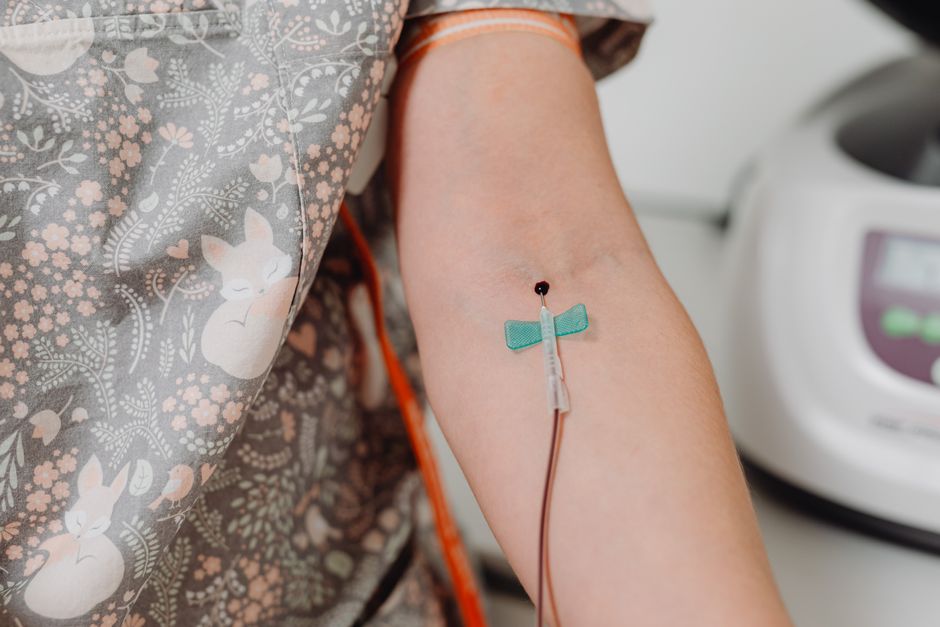
Is blood group A Rhesus negative rare? The short answer is: it is relatively uncommon, but it is not among the rarest blood types. In the United States, about 6 out of every 100 people have A negative blood. That makes it less common than A positive but more common than AB negative or B negative. Rarity also depends on ethnicity — it is more common in people of European descent and less common in Asian and African populations.
What Does Rhesus Negative Mean?
The Rhesus (Rh) factor is a protein that can be present on the surface of red blood cells. If you have the protein, you are Rh positive. If you do not, you are Rh negative. This is inherited from your parents. About 85% of people in the US are Rh positive. Being Rh negative is simply a genetic variation. It does not cause illness or affect how your blood functions.
How Common Is Blood Group A Rhesus Negative?
Blood type A negative makes up roughly 6% of the US population, according to data from blood donation organizations. Worldwide, the percentage varies. In Europe, especially among people with Northern European ancestry, A Rh negative can be around 7–8%. In Asian and African populations, Rh negative of any ABO type is much rarer — often less than 1%. So whether A negative is “rare” depends on where you live and your ethnic background. In global terms, it is uncommon but not exceptionally rare.
What Determines Your Blood Type?
Your blood type is determined by two genes: one for the ABO group and one for the Rh factor. You get one version of each gene from each parent. For the ABO gene, the A version is dominant over O, and A and B are codominant. For the Rh gene, positive (Rh+) is dominant over negative (Rh-). So a person with A negative blood must have inherited at least one A gene and two Rh-negative genes (one from each parent). This explains why Rh negative is less common — both parents must carry the negative version.




Why Does Rh Factor Matter in Pregnancy?
If an Rh-negative mother carries an Rh-positive baby, her immune system may see the baby’s Rh protein as foreign. This mismatch is called Rh incompatibility. It usually does not harm a first pregnancy because the immune system does not react quickly enough. But if the mother’s blood mixes with the baby’s blood during delivery, she can develop antibodies against Rh-positive blood. In a later pregnancy with another Rh-positive baby, these antibodies can cross the placenta and attack the baby’s red blood cells, causing hemolytic disease of the newborn. To prevent this, Rh-negative pregnant women receive a shot of Rh immunoglobulin (RhoGAM) around week 28 of pregnancy and after delivery. This stops antibody formation. Treatment is very effective when given on schedule.
Does Being Rh Negative Affect Your Daily Health?
For most people, being Rh negative has no effect on daily health. Some small studies have suggested possible links to slightly higher risks of certain autoimmune conditions, but the evidence is not strong enough to change medical advice. You do not need to eat differently, avoid activities, or take supplements because of your Rh status. The only time it becomes medically important is during pregnancy or if you need a blood transfusion.
Blood Transfusion Considerations for A Rhesus Negative
If you need a blood transfusion, you can safely receive packed red blood cells from donors with the same type: A negative. In an emergency when A negative is unavailable, O negative blood (the universal donor) can be used instead. You cannot receive A positive blood because the Rh positive proteins would trigger an immune reaction. As a donor, your A negative blood can be given to anyone with A positive, A negative, AB positive, or AB negative blood. The Rh negative factor is compatible with Rh positive recipients. Blood banks often value A negative donations because they can help a wide range of patients.
Common Myths About A Rhesus Negative Blood
One widespread myth claims that Rh negative people are not fully human or have alien ancestry. This has no scientific basis. Another myth says Rh negative blood makes you immune to certain diseases. No credible research supports this. Some people believe that Rh negative individuals have higher IQs or different physical traits. Studies have not confirmed any such connection. The Rh factor is simply a normal genetic variation, like having blue eyes or curly hair. It carries no special abilities or drawbacks.
Frequently Asked Questions
Is A negative the rarest blood type?
No. AB negative is the rarest, found in about 1% of the US population. A negative is the third rarest ABO/Rh combination, after AB negative and B negative.
Can a person with A negative blood have a baby who is Rh positive?
Yes, if the father is Rh positive and passes on the positive gene. This Rh incompatibility is manageable with RhoGAM shots during pregnancy.
Can Rh negative blood change to Rh positive later in life?
No. Your Rh status is determined by your genes at conception and remains the same for life. It cannot change.
